QUESTION IMAGE
Question
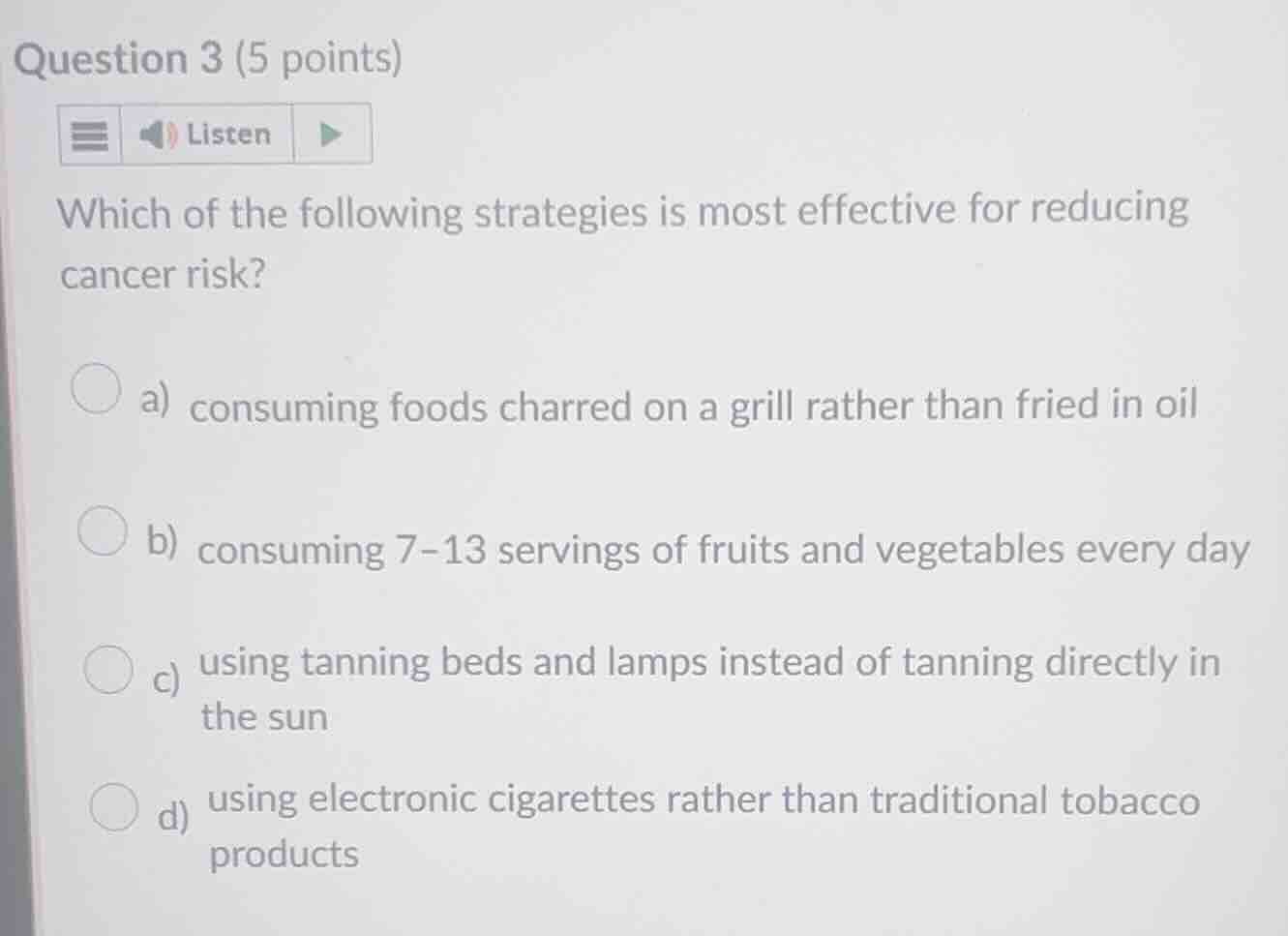
question 3 (5 points)
which of the following strategies is most effective for reducing cancer risk?
a) consuming foods charred on a grill rather than fried in oil
b) consuming 7-13 servings of fruits and vegetables every day
c) using tanning beds and lamps instead of tanning directly in the sun
d) using electronic cigarettes rather than traditional tobacco products
🆕 New Concept Discovered: Cancer Risk Reduction Strategies
Healthy lifestyle choices that lower carcinogen exposure
Step 1: Analyze the options for carcinogen exposure
- a) consuming foods charred on a grill rather than fried in oil: Charring meat at high temperatures produces heterocyclic amines (HCAs) and polycyclic aromatic hydrocarbons (PAHs), which are known mutagens and carcinogens. This increases risk rather than reducing it.
- b) consuming 7–13 servings of fruits and vegetables every day: Fruits and vegetables are rich in antioxidants, fiber, vitamins, and phytochemicals that help protect cells from damage, support the immune system, and actively reduce the risk of various cancers.
- c) using tanning beds and lamps instead of tanning directly in the sun: Tanning beds emit concentrated ultraviolet (UV) radiation, which is a Group 1 carcinogen. It does not reduce skin cancer risk and can often be more damaging than natural sunlight.
- d) using electronic cigarettes rather than traditional tobacco products: While marketed as alternatives, electronic cigarettes still contain harmful chemicals, nicotine, and potential carcinogens. They are not an established, effective strategy for overall cancer risk reduction compared to complete avoidance of inhalation products.
Step 2: Identify the most effective strategy
Consuming a diet rich in fruits and vegetables (7–13 servings daily) is a universally recommended, evidence-based lifestyle strategy that significantly lowers the risk of developing cancer.

Snap & solve any problem in the app
Get step-by-step solutions on Sovi AI
Photo-based solutions with guided steps
Explore more problems and detailed explanations
b) consuming 7–13 servings of fruits and vegetables every day