QUESTION IMAGE
Question
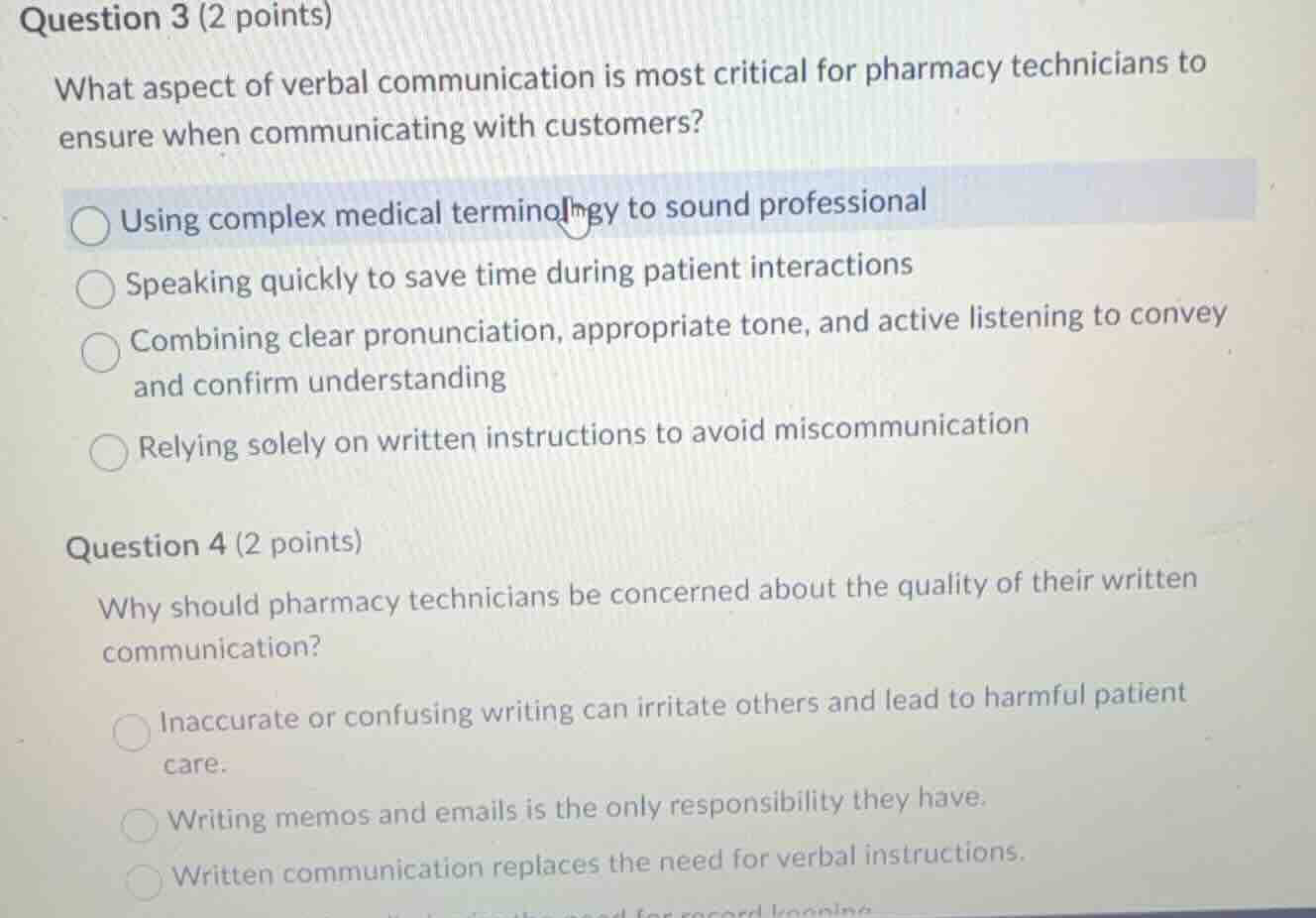
question 3 (2 points)
what aspect of verbal communication is most critical for pharmacy technicians to ensure when communicating with customers?
using complex medical terminology to sound professional
speaking quickly to save time during patient interactions
combining clear pronunciation, appropriate tone, and active listening to convey and confirm understanding
relying solely on written instructions to avoid miscommunication
question 4 (2 points)
why should pharmacy technicians be concerned about the quality of their written communication?
inaccurate or confusing writing can irritate others and lead to harmful patient care.
writing memos and emails is the only responsibility they have.
written communication replaces the need for verbal instructions.
Analyze verbal communication with customers
Using the Patient Communication and Active Listening knowledge points:
Effective verbal communication in a pharmacy setting requires clarity, empathy, and verification of understanding.
- Using complex medical jargon often confuses patients.
- Speaking too quickly can lead to missed details and errors.
- Relying only on written instructions ignores the interactive nature of patient care.
- Combining clear pronunciation, appropriate tone, and active listening ensures the patient understands their medication therapy.
Analyze written communication quality
Using the Professional Communication knowledge point:
Written communication in pharmacy (such as labels, documentation, and messages) directly impacts patient safety.
- Inaccurate or confusing written instructions can lead to medication errors, incorrect dosages, and harmful patient outcomes.
- Writing is not a technician's only responsibility, nor does it completely replace verbal communication or record-keeping.

Snap & solve any problem in the app
Get step-by-step solutions on Sovi AI
Photo-based solutions with guided steps
Explore more problems and detailed explanations
Question 3
- (A) Using complex medical terminology to sound professional
- (B) Speaking quickly to save time during patient interactions
- (C) Combining clear pronunciation, appropriate tone, and active listening to convey and confirm understanding (Correct answer)
- (D) Relying solely on written instructions to avoid miscommunication
Question 4
- (A) Inaccurate or confusing writing can irritate others and lead to harmful patient care. (Correct answer)
- (B) Writing memos and emails is the only responsibility they have.
- (C) Written communication replaces the need for verbal instructions.