QUESTION IMAGE
Question
question 4 (5 points)
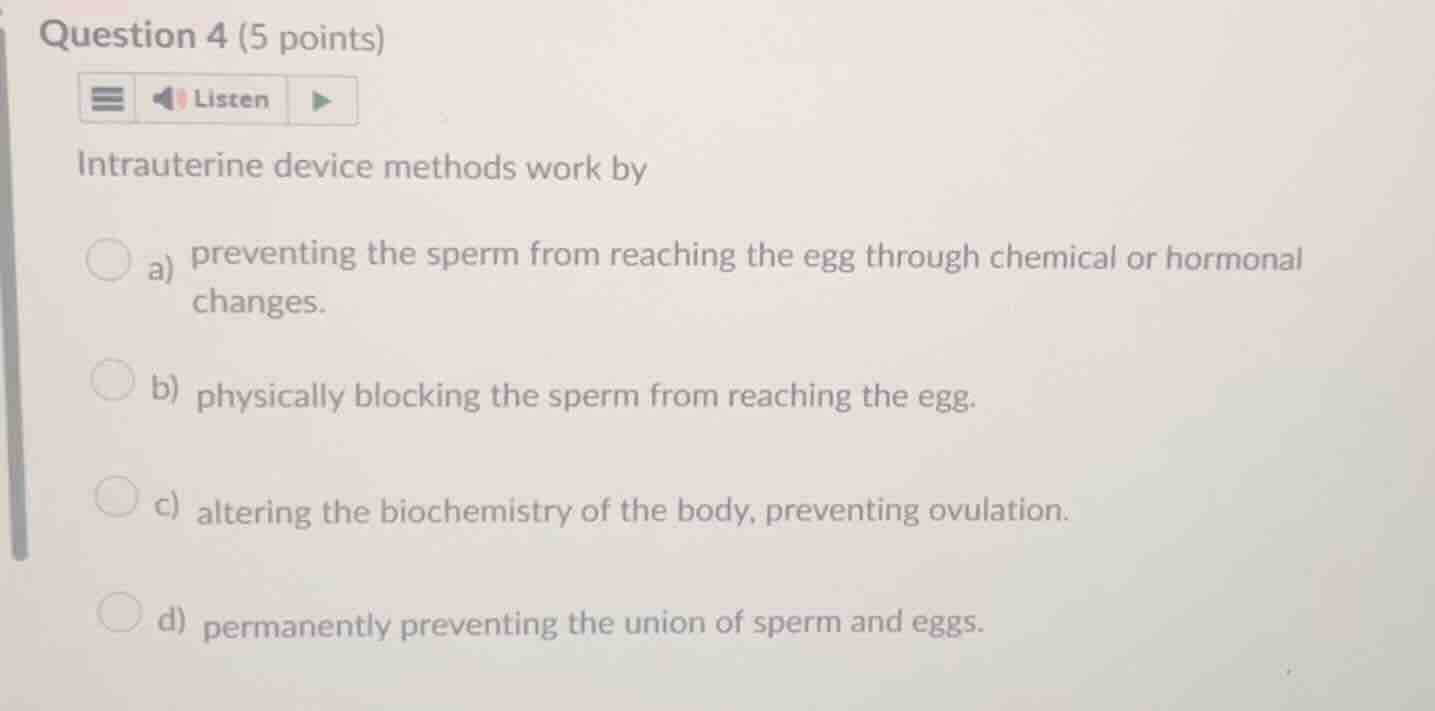
intrauterine device methods work by
a) preventing the sperm from reaching the egg through chemical or hormonal changes.
b) physically blocking the sperm from reaching the egg.
c) altering the biochemistry of the body, preventing ovulation.
d) permanently preventing the union of sperm and eggs.
🆕 New Concept Discovered: Mechanisms of Contraception
How different birth control methods prevent pregnancy.
Step 1: Understand how Intrauterine Devices (IUDs) work
An Intrauterine Device (IUD) is a small T-shaped device inserted into the uterus. There are two main types of IUDs:
- Copper IUDs: Release copper ions, which are toxic to sperm. This chemical change prevents sperm from moving and reaching the egg.
- Hormonal IUDs: Release progestin, which thickens cervical mucus to trap sperm and thins the uterine lining, preventing sperm from successfully reaching and fertilizing an egg.
Both mechanisms primarily work by creating chemical or hormonal changes in the local environment to prevent sperm from reaching and fertilizing the egg.
Step 2: Evaluate the given options
- a) preventing the sperm from reaching the egg through chemical or hormonal changes.
This matches the primary mechanism of both copper (chemical) and hormonal (hormonal) IUDs.
- b) physically blocking the sperm from reaching the egg.
This describes barrier methods (like condoms or diaphragms), not IUDs.
- c) altering the biochemistry of the body, preventing ovulation.
This describes systemic hormonal methods (like oral contraceptive pills), whereas IUDs act locally and do not consistently prevent ovulation.
- d) permanently preventing the union of sperm and eggs.
This describes sterilization (like a vasectomy or tubal ligation), whereas IUDs are fully reversible.

Snap & solve any problem in the app
Get step-by-step solutions on Sovi AI
Photo-based solutions with guided steps
Explore more problems and detailed explanations
a) preventing the sperm from reaching the egg through chemical or hormonal changes.