Sovi.AI - AI Math Tutor

Scan to solve math questions

QUESTION IMAGE

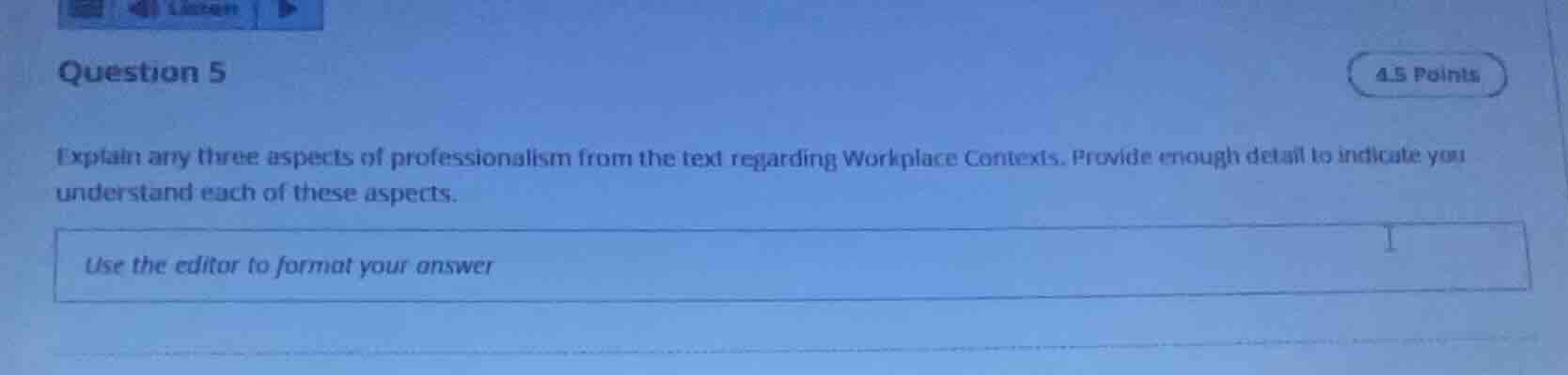
question 5 explain any three aspects of professionalism from the text r…

Question

question 5

explain any three aspects of professionalism from the text regarding workplace contexts. provide enough detail to indicate you understand each of these aspects.

Explanation:

Response

<pre_analysis>
{
"quality": "clear",
"question_count": 1,
"skills_matched": [
"direct_cot",
"explain_then_answer",
"tutor"
],
"needs_drawing": false,
"concepts_used": [],
"new_concepts": [
"Workplace Professionalism",
"Professional Communication",
"Workplace Contexts"
],
"current_concepts": [
"Workplace Professionalism",
"Professional Communication",
"Workplace Contexts"
]
}
</pre_analysis>

<reasoning>

Identify core aspects of workplace professionalism

Workplace professionalism encompasses several key behavioral, communicative, and ethical standards. Three primary aspects commonly emphasized in communication and business texts include:

  1. Competence and Reliability: Delivering high-quality work consistently, meeting deadlines, and taking responsibility for one's actions.
  2. Professional Communication: Using appropriate language (formal or respectful informal), active listening, and maintaining constructive digital etiquette across communication channels.
  3. Ethical Conduct and Respect: Demonstrating integrity, respecting diverse viewpoints, avoiding relational aggression, and maintaining appropriate boundaries.

Elaborate on Competence and Reliability

Competence involves having the necessary skills and knowledge to perform job duties effectively. Reliability means being dependable—arriving on time, fulfilling commitments, and producing consistent results. In a workplace context, this builds trust among colleagues and supervisors, ensuring organizational goals are met smoothly.

Elaborate on Professional Communication

Professional communication requires adapting one's verbal, nonverbal, and written messages to suit the workplace environment. This includes using clear, respectful language, practicing active listening during meetings, and adhering to professional digital etiquette (such as writing clear emails and maintaining a constructive tone in virtual spaces). It prevents misunderstandings and fosters a collaborative atmosphere.

Elaborate on Ethical Conduct and Respect

Ethical conduct involves honesty, integrity, and fairness in all professional interactions. Respect in the workplace means treating all colleagues, clients, and stakeholders with dignity, regardless of differences. This aspect of professionalism requires managing conflicts constructively, avoiding harmful behaviors like gossip or relational aggression, and respecting company policies and confidentiality.
</reasoning>

<answer>
Three key aspects of professionalism in workplace contexts are:

  1. Competence and Reliability

This aspect refers to possessing the essential skills to perform your job effectively and being dependable in your execution. It means consistently delivering high-quality work, meeting deadlines, taking responsibility for your tasks, and showing up prepared. This reliability builds trust with colleagues and supervisors.

  1. Professional Communication

This involves adapting your communication style to be respectful, clear, and constructive. It includes using appropriate language (avoiding overly casual slang or offensive terms), practicing active listening, and maintaining proper digital etiquette in emails and virtual meetings. Effective communication prevents workplace misunderstandings and fosters collaboration.

  1. Ethical Conduct and Respect

This aspect centers on integrity, honesty, and treating everyone in the workplace with dignity. It requires adhering to organizational policies, respecting diverse viewpoints, maintaining confidentiality, an…

Answer:

<pre_analysis>
{
"quality": "clear",
"question_count": 1,
"skills_matched": [
"direct_cot",
"explain_then_answer",
"tutor"
],
"needs_drawing": false,
"concepts_used": [],
"new_concepts": [
"Workplace Professionalism",
"Professional Communication",
"Workplace Contexts"
],
"current_concepts": [
"Workplace Professionalism",
"Professional Communication",
"Workplace Contexts"
]
}
</pre_analysis>

<reasoning>

Identify core aspects of workplace professionalism

Workplace professionalism encompasses several key behavioral, communicative, and ethical standards. Three primary aspects commonly emphasized in communication and business texts include:

  1. Competence and Reliability: Delivering high-quality work consistently, meeting deadlines, and taking responsibility for one's actions.
  2. Professional Communication: Using appropriate language (formal or respectful informal), active listening, and maintaining constructive digital etiquette across communication channels.
  3. Ethical Conduct and Respect: Demonstrating integrity, respecting diverse viewpoints, avoiding relational aggression, and maintaining appropriate boundaries.

Elaborate on Competence and Reliability

Competence involves having the necessary skills and knowledge to perform job duties effectively. Reliability means being dependable—arriving on time, fulfilling commitments, and producing consistent results. In a workplace context, this builds trust among colleagues and supervisors, ensuring organizational goals are met smoothly.

Elaborate on Professional Communication

Professional communication requires adapting one's verbal, nonverbal, and written messages to suit the workplace environment. This includes using clear, respectful language, practicing active listening during meetings, and adhering to professional digital etiquette (such as writing clear emails and maintaining a constructive tone in virtual spaces). It prevents misunderstandings and fosters a collaborative atmosphere.

Elaborate on Ethical Conduct and Respect

Ethical conduct involves honesty, integrity, and fairness in all professional interactions. Respect in the workplace means treating all colleagues, clients, and stakeholders with dignity, regardless of differences. This aspect of professionalism requires managing conflicts constructively, avoiding harmful behaviors like gossip or relational aggression, and respecting company policies and confidentiality.
</reasoning>

<answer>
Three key aspects of professionalism in workplace contexts are:

  1. Competence and Reliability

This aspect refers to possessing the essential skills to perform your job effectively and being dependable in your execution. It means consistently delivering high-quality work, meeting deadlines, taking responsibility for your tasks, and showing up prepared. This reliability builds trust with colleagues and supervisors.

  1. Professional Communication

This involves adapting your communication style to be respectful, clear, and constructive. It includes using appropriate language (avoiding overly casual slang or offensive terms), practicing active listening, and maintaining proper digital etiquette in emails and virtual meetings. Effective communication prevents workplace misunderstandings and fosters collaboration.

  1. Ethical Conduct and Respect

This aspect centers on integrity, honesty, and treating everyone in the workplace with dignity. It requires adhering to organizational policies, respecting diverse viewpoints, maintaining confidentiality, and managing conflicts constructively rather than engaging in workplace gossip or relational aggression.
</answer>

<post_analysis>
{
"subject": "Social Science",
"question_type": "Free Response",
"knowledge_point": [
"Social Science",
"Communication Studies",
"Professional Communication"
]
}
</post_analysis>