QUESTION IMAGE
Question
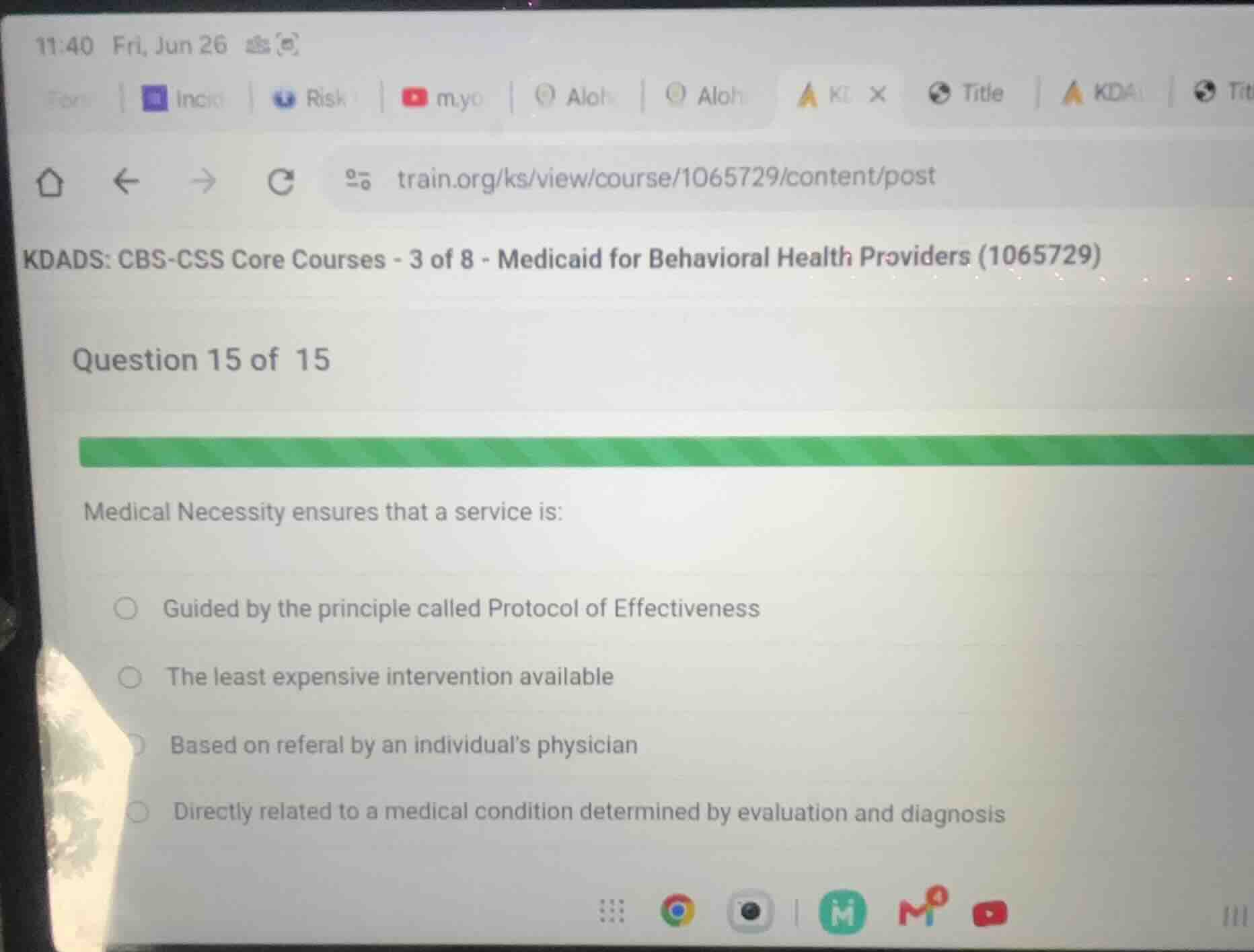
question 15 of 15
medical necessity ensures that a service is:
guided by the principle called protocol of effectiveness
the least expensive intervention available
based on referral by an individuals physician
directly related to a medical condition determined by evaluation and diagnosis
Define Medical Necessity
Medical necessity in healthcare and Medicaid contexts refers to services, treatments, or supplies that are proper and needed for the diagnosis or treatment of a medical condition, meet the standards of good medical practice, and are not mainly for the convenience of the patient or provider.
Evaluate the options
- "Guided by the principle called Protocol of Effectiveness": This is not a standard regulatory definition or primary requirement for medical necessity.
- "The least expensive intervention available": While cost-effectiveness is considered, medical necessity does not strictly mandate the absolute cheapest intervention if it is clinically inappropriate.
- "Based on referral by an individual's physician": A referral alone does not automatically establish clinical medical necessity.
- "Directly related to a medical condition determined by evaluation and diagnosis": This directly aligns with the core definition of medical necessity, which requires services to address a specific diagnosed condition.

Snap & solve any problem in the app
Get step-by-step solutions on Sovi AI
Photo-based solutions with guided steps
Explore more problems and detailed explanations
- (A) Guided by the principle called Protocol of Effectiveness
- (B) The least expensive intervention available
- (C) Based on referral by an individual's physician
- (D) Directly related to a medical condition determined by evaluation and diagnosis (Correct answer)