QUESTION IMAGE
Question
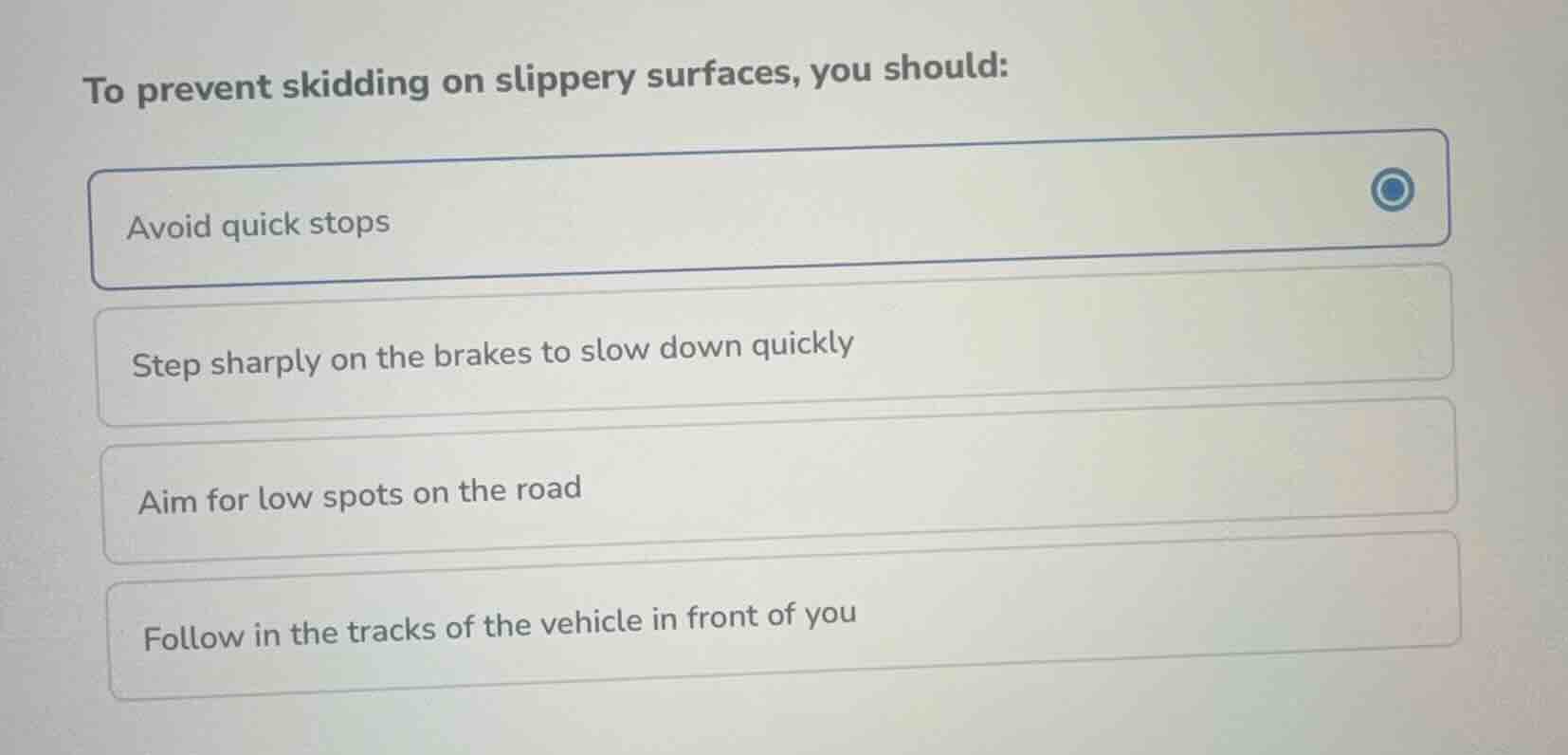
to prevent skidding on slippery surfaces, you should:
avoid quick stops
step sharply on the brakes to slow down quickly
aim for low spots on the road
follow in the tracks of the vehicle in front of you
Analyze the mechanics of skidding on slippery surfaces
Skidding occurs when tires lose traction with the road surface. Sudden changes in speed or direction, such as hard braking, rapid acceleration, or sharp turns, disrupt the grip between the tires and the slippery road, leading to a loss of vehicle control.
Evaluate the given options
- Avoid quick stops: Reducing speed gradually and avoiding sudden braking prevents tires from locking up and losing traction, which directly helps prevent skidding.
- Step sharply on the brakes to slow down quickly: Applying brakes sharply on a slippery surface is highly likely to lock the wheels and initiate a skid.
- Aim for low spots on the road: Low spots on roads often accumulate water, ice, or slush, which increases the risk of hydroplaning or skidding.
- Follow in the tracks of the vehicle in front of you: While following tracks can sometimes offer slightly better traction on snow, it does not actively prevent skidding as effectively as avoiding sudden maneuvers, and following too closely reduces safe stopping distance.
Determine the most effective preventive action
Avoiding quick stops, sudden turns, and rapid acceleration is the primary rule for maintaining traction and preventing skids on slippery roads.

Snap & solve any problem in the app
Get step-by-step solutions on Sovi AI
Photo-based solutions with guided steps
Explore more problems and detailed explanations
- Avoid quick stops (Correct answer)
- Step sharply on the brakes to slow down quickly
- Aim for low spots on the road
- Follow in the tracks of the vehicle in front of you