Sovi.AI - AI Math Tutor

Scan to solve math questions

QUESTION IMAGE

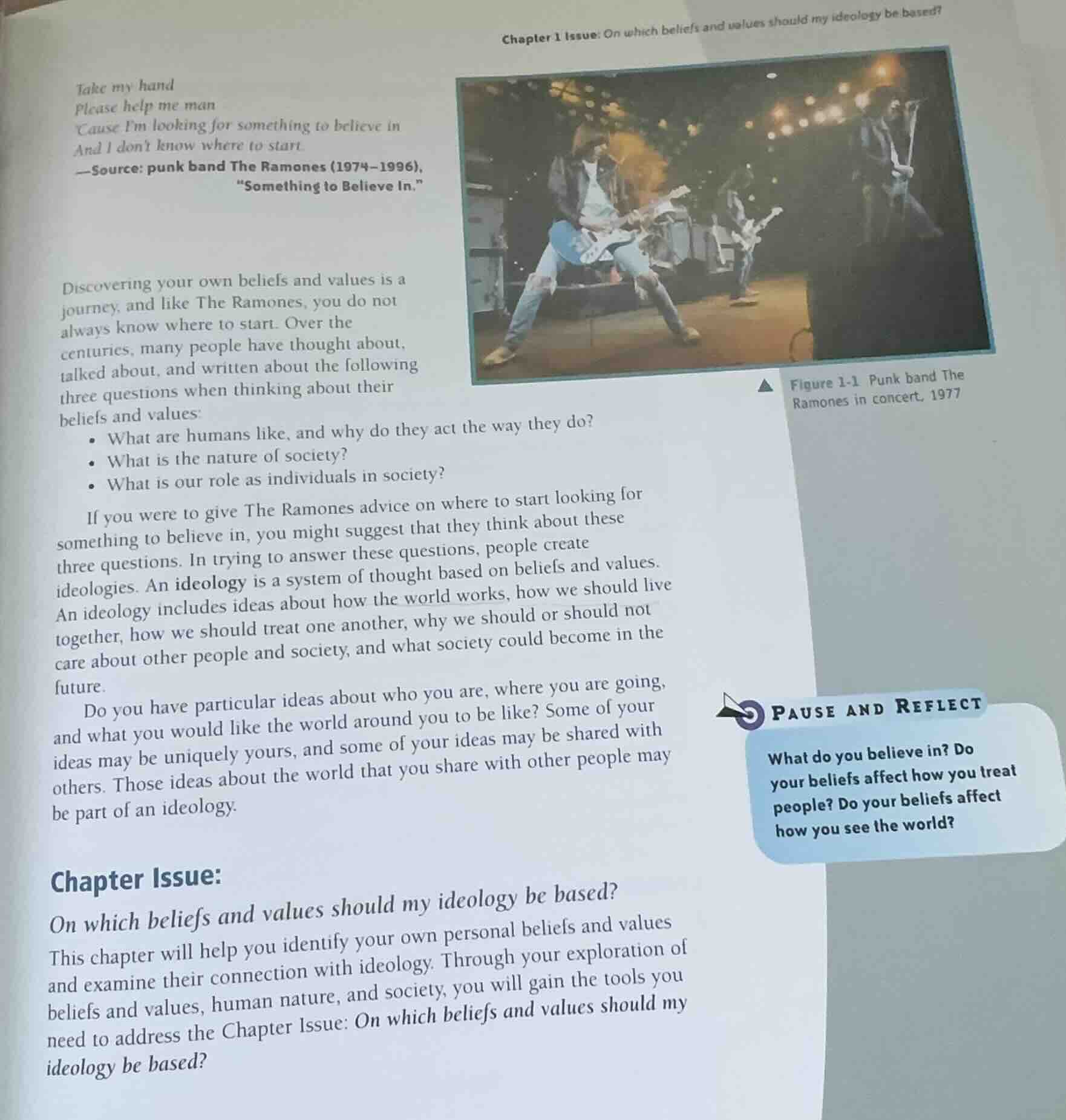
pause and reflect what do you believe in? do your beliefs affect how yo…

Question

pause and reflect

what do you believe in? do your beliefs affect how you treat people? do your beliefs affect how you see the world?

Explanation:

Response

<pre_analysis>
{
"quality": "clear",
"question_count": 1,
"skills_matched": [
"direct_cot",
"explain_then_answer",
"tutor"
],
"needs_drawing": false,
"concepts_used": [],
"new_concepts": [
"Ideology",
"Beliefs and Values",
"Social Studies"
],
"current_concepts": [
"Ideology",
"Beliefs and Values",
"Social Studies"
]
}
</pre_analysis>

<reasoning>

Analyze the prompt questions

The "PAUSE AND REFLECT" box asks three related questions:

  1. What do you believe in?
  2. Do your beliefs affect how you treat people?
  3. Do your beliefs affect how you see the world?

Define core concepts

An ideology is a system of thought based on beliefs and values. It shapes how we understand human nature, the structure of society, and our individual roles.

Connect beliefs to actions

Beliefs act as a moral compass. If you believe in inherent human dignity, you treat others with respect and empathy.

Connect beliefs to worldview

Beliefs act as a lens. They filter how we interpret events, social structures, and what we envision for the future of society.

Synthesize a reflective response

We will construct a structured, thoughtful response that addresses each of the three reflective questions directly.
</reasoning>

<answer>
Based on the "PAUSE AND REFLECT" prompt, here is a structured reflection on beliefs, values, and ideology:

  • What do you believe in?

Beliefs can center on core values such as empathy, equality, freedom, and community responsibility. These are the foundational principles that guide personal identity.

  • Do your beliefs affect how you treat people?

Yes. Beliefs serve as a moral framework. For instance, believing in the inherent dignity of every individual leads to treating others with respect, kindness, and fairness in daily interactions.

  • Do your beliefs affect how you see the world?

Yes. Beliefs act as a lens through which we interpret society, justice, and human behavior. They shape our vision of how the world currently works and what it has the potential to become in the future.
</answer>

<post_analysis>
{
"subject": "Social Science",
"question_type": "Free Response",
"knowledge_point": [
"Social Science",
"Political Science",
"Ideology"
]
}
</post_analysis>

Answer:

<pre_analysis>
{
"quality": "clear",
"question_count": 1,
"skills_matched": [
"direct_cot",
"explain_then_answer",
"tutor"
],
"needs_drawing": false,
"concepts_used": [],
"new_concepts": [
"Ideology",
"Beliefs and Values",
"Social Studies"
],
"current_concepts": [
"Ideology",
"Beliefs and Values",
"Social Studies"
]
}
</pre_analysis>

<reasoning>

Analyze the prompt questions

The "PAUSE AND REFLECT" box asks three related questions:

  1. What do you believe in?
  2. Do your beliefs affect how you treat people?
  3. Do your beliefs affect how you see the world?

Define core concepts

An ideology is a system of thought based on beliefs and values. It shapes how we understand human nature, the structure of society, and our individual roles.

Connect beliefs to actions

Beliefs act as a moral compass. If you believe in inherent human dignity, you treat others with respect and empathy.

Connect beliefs to worldview

Beliefs act as a lens. They filter how we interpret events, social structures, and what we envision for the future of society.

Synthesize a reflective response

We will construct a structured, thoughtful response that addresses each of the three reflective questions directly.
</reasoning>

<answer>
Based on the "PAUSE AND REFLECT" prompt, here is a structured reflection on beliefs, values, and ideology:

  • What do you believe in?

Beliefs can center on core values such as empathy, equality, freedom, and community responsibility. These are the foundational principles that guide personal identity.

  • Do your beliefs affect how you treat people?

Yes. Beliefs serve as a moral framework. For instance, believing in the inherent dignity of every individual leads to treating others with respect, kindness, and fairness in daily interactions.

  • Do your beliefs affect how you see the world?

Yes. Beliefs act as a lens through which we interpret society, justice, and human behavior. They shape our vision of how the world currently works and what it has the potential to become in the future.
</answer>

<post_analysis>
{
"subject": "Social Science",
"question_type": "Free Response",
"knowledge_point": [
"Social Science",
"Political Science",
"Ideology"
]
}
</post_analysis>