QUESTION IMAGE
Question
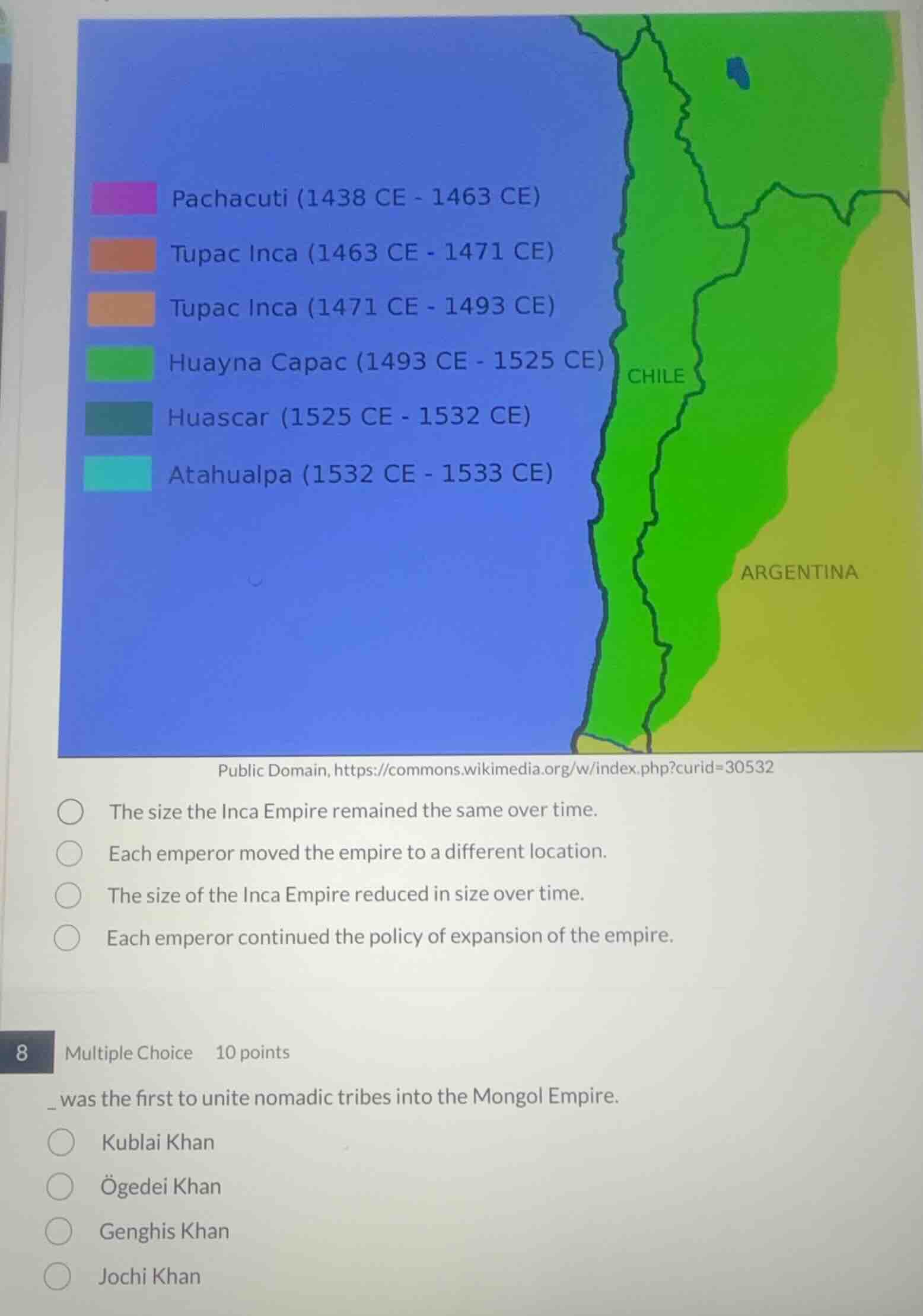
pachacuti (1438 ce - 1463 ce)
tupac inca (1463 ce - 1471 ce)
tupac inca (1471 ce - 1493 ce)
huayna capac (1493 ce - 1525 ce)
huascar (1525 ce - 1532 ce)
atahualpa (1532 ce - 1533 ce)
the size the inca empire remained the same over time.
each emperor moved the empire to a different location.
the size of the inca empire reduced in size over time.
each emperor continued the policy of expansion of the empire.
8 multiple choice 10 points
_ was the first to unite nomadic tribes into the mongol empire.
kublai khan
ögedei khan
genghis khan
jochi khan
Analyze the Inca Empire map and expansion trends
The map legend shows successive reigns of Inca emperors from Pachacuti (1438 CE) to Atahualpa (1533 CE), with each ruler associated with a specific color representing territorial acquisitions. The colored regions on the map expand geographically over time, demonstrating that successive emperors continued to expand the borders of the empire.
Identify the unifier of the Mongol tribes
Genghis Khan (born Temüjin) successfully united the nomadic Mongol tribes of Northeast Asia and was proclaimed ruler of all Mongols in 1206 CE, founding the Mongol Empire.

Snap & solve any problem in the app
Get step-by-step solutions on Sovi AI
Photo-based solutions with guided steps
Explore more problems and detailed explanations
Question 1
- The size the Inca Empire remained the same over time.
- Each emperor moved the empire to a different location.
- The size of the Inca Empire reduced in size over time.
- Each emperor continued the policy of expansion of the empire. (Correct answer)
Question 2
- Kublai Khan
- Ögedei Khan
- Genghis Khan (Correct answer)
- Jochi Khan