QUESTION IMAGE
Question
the novel
ight\
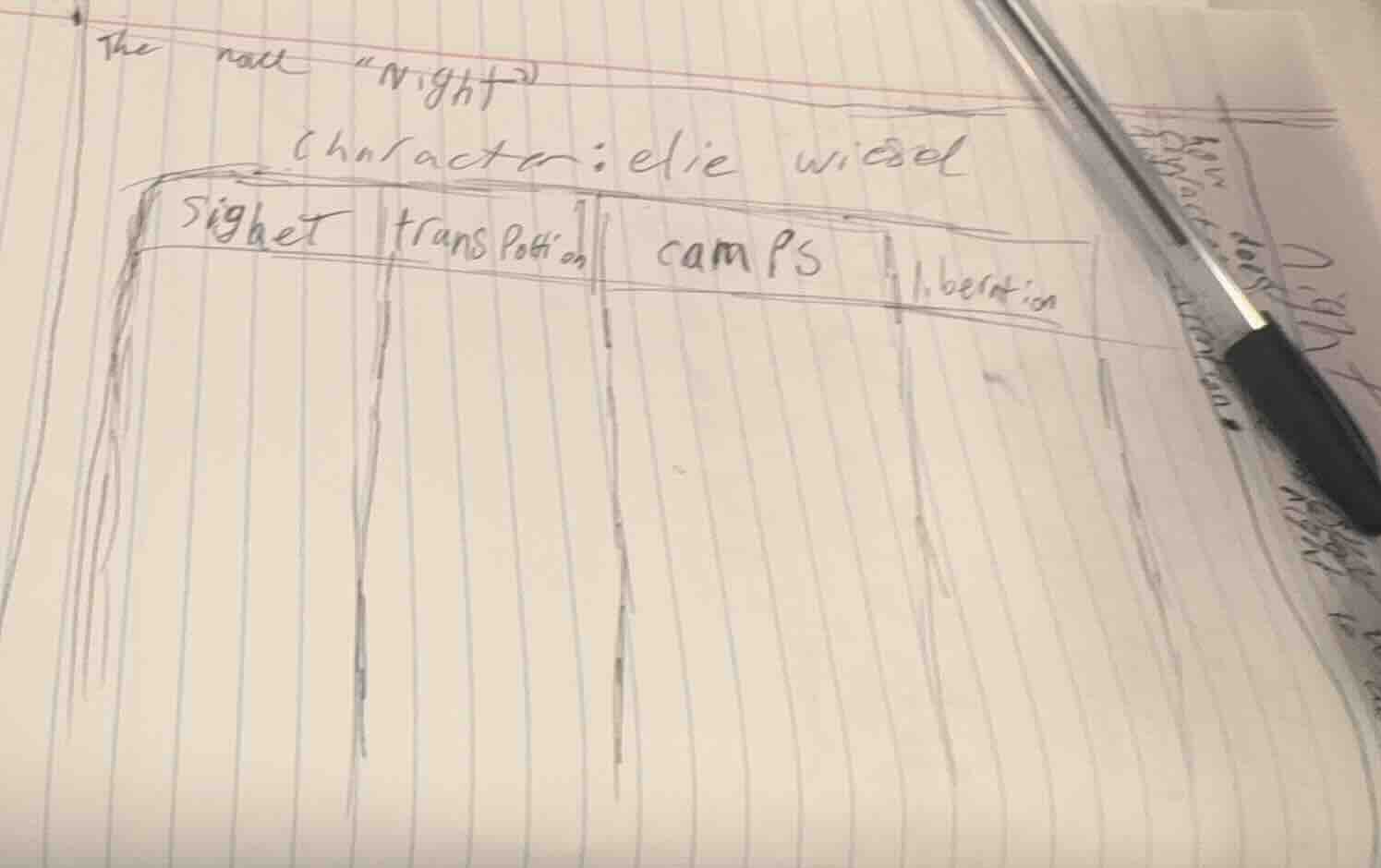
character: elie wiesel
sighet | transportation | camps | liberation
how does elie wiesel change?
Identify the chart structure
The handwritten chart is titled "Night" and focuses on the character Elie Wiesel. It outlines four distinct chronological stages of his journey in the memoir: "Sighet", "Transportation", "Camps", and "Liberation". This reflects the Memoir Structure of Elie Wiesel's work.
Analyze Elie's character in Sighet
In Sighet, Elie is a deeply religious, innocent, and observant Jewish teenager. He is eager to study the Kabbalah and has an unquestioning faith in God. This represents the starting point of his Character Development.
Analyze Elie during Transportation
During the forced deportation in cattle cars, Elie experiences the initial shock, dehumanization, and loss of illusions. He witnesses the breakdown of social order and the terror of the unknown, which begins to test his faith and resilience.
Analyze Elie in the Camps
In the concentration camps (Auschwitz, Buna, Buchenwald), Elie undergoes a profound existential crisis. His primary focus shifts to physical survival. He witnesses extreme cruelty, leading to a deep struggle with his faith in God and a complex, painful dynamic in his relationship with his father.
Analyze Elie at Liberation
At the moment of liberation, Elie is emotionally numb, physically depleted, and spiritually transformed. Looking at himself in a mirror, he describes seeing a corpse contemplating him, symbolizing the death of his former innocent self and the permanent scars of his trauma.

Snap & solve any problem in the app
Get step-by-step solutions on Sovi AI
Photo-based solutions with guided steps
Explore more problems and detailed explanations
Based on the chronological stages outlined in your chart for Elie Wiesel's memoir Night, here is an analysis of Elie's character development across each phase:
| Stage | Character State & Key Developments |
|---|---|
| Transportation | Disoriented and Shocked: Dehumanized in crowded cattle cars, Elie experiences the first major crack in his worldview. He witnesses the panic of his community and the terrifying breakdown of social and familial bonds under extreme stress. |
| Camps | Existentially Shattered: In Auschwitz and Buchenwald, Elie faces systematic starvation and brutality. His faith in God is deeply shaken as he struggles to reconcile his beliefs with the horrors around him. His relationship with his father becomes his sole motivation to survive, though it is strained by the brutal instinct for self-preservation. |
| Liberation | Gravely Scarred but Alive: Upon liberation, Elie is physically and emotionally hollowed out. When he looks in the mirror, he sees a "corpse" staring back, symbolizing that while his body survived, his childhood innocence and pre-war identity were permanently lost. |