Sovi.AI - AI Math Tutor

Scan to solve math questions

QUESTION IMAGE

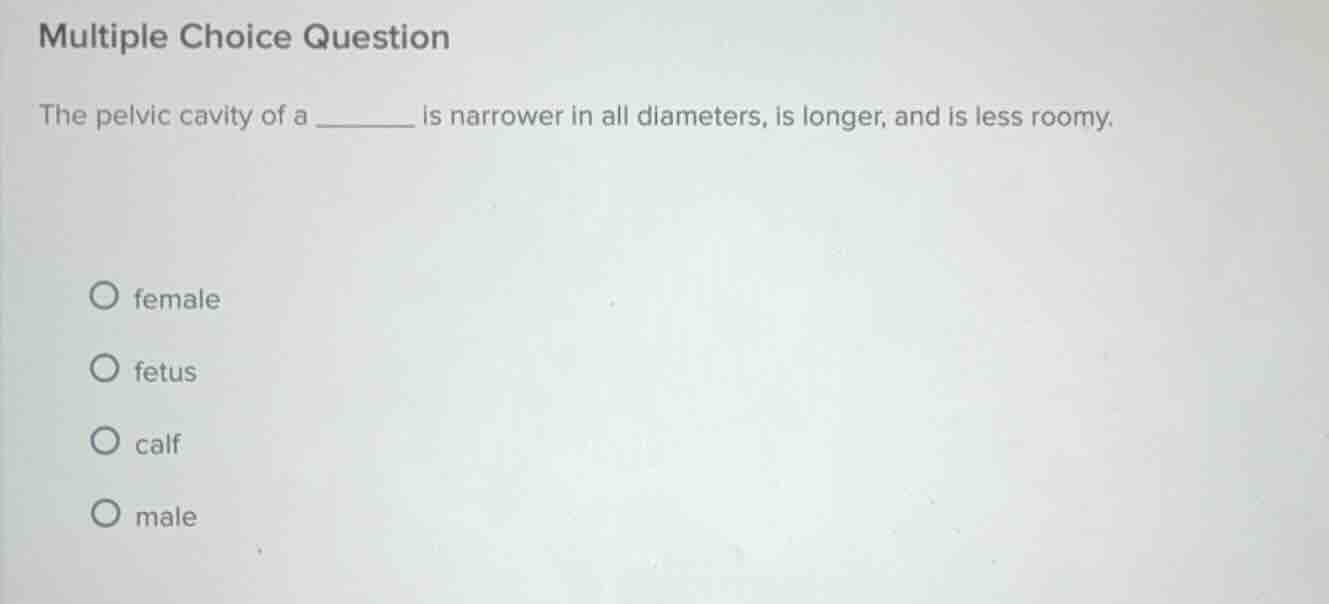
multiple choice question the pelvic cavity of a ______ is narrower in a…

Question

multiple choice question

the pelvic cavity of a ______ is narrower in all diameters, is longer, and is less roomy.

female
fetus
calf
male

Explanation:

Response

<pre_analysis>
{
"quality": "clear",
"question_count": 1,
"skills_matched": [
"direct_cot",
"multiple_choice_formatter",
"explain_then_answer",
"tutor",
"mastery_adaptive_brevity"
],
"needs_drawing": false,
"concepts_used": [
"Skeletal Anatomy",
"Skeletal System"
],
"new_concepts": [
"Pelvic Sexual Dimorphism",
"Male Pelvis Anatomy"
],
"current_concepts": [
"Skeletal Anatomy",
"Skeletal System",
"Pelvic Sexual Dimorphism",
"Male Pelvis Anatomy"
]
}
</pre_analysis>

<reasoning>

Analyze pelvic sexual dimorphism

Using the Skeletal Anatomy and Skeletal System knowledge points

The human pelvis exhibits distinct anatomical differences between biological sexes to accommodate childbirth in females. The female pelvis is wider, shallower, and roomier, with a broader pubic angle. Conversely, the male pelvis is adapted for a heavier physical build and stronger musculature, making it narrower in all diameters, longer (deeper), and less roomy.

Evaluate the given options

  • female: The female pelvic cavity is wider, shorter, and roomier to facilitate childbirth.
  • fetus: The fetal pelvis is underdeveloped and does not fit this specific comparative adult anatomical description.
  • calf: This refers to a young cow, which is not relevant to human anatomical comparisons.
  • male: The male pelvic cavity is narrower, longer, and less roomy.

</reasoning>

<answer>
<mcq-option>female</mcq-option>
<mcq-option>fetus</mcq-option>
<mcq-option>calf</mcq-option>
<mcq-correct>male</mcq-correct>
</answer>

<post_analysis>
{
"subject": "Natural Science",
"question_type": "Multiple Choice",
"knowledge_point": [
"Natural Science",
"Anatomy",
"Pelvic Sexual Dimorphism"
]
}
</post_analysis>

Answer:

<pre_analysis>
{
"quality": "clear",
"question_count": 1,
"skills_matched": [
"direct_cot",
"multiple_choice_formatter",
"explain_then_answer",
"tutor",
"mastery_adaptive_brevity"
],
"needs_drawing": false,
"concepts_used": [
"Skeletal Anatomy",
"Skeletal System"
],
"new_concepts": [
"Pelvic Sexual Dimorphism",
"Male Pelvis Anatomy"
],
"current_concepts": [
"Skeletal Anatomy",
"Skeletal System",
"Pelvic Sexual Dimorphism",
"Male Pelvis Anatomy"
]
}
</pre_analysis>

<reasoning>

Analyze pelvic sexual dimorphism

Using the Skeletal Anatomy and Skeletal System knowledge points

The human pelvis exhibits distinct anatomical differences between biological sexes to accommodate childbirth in females. The female pelvis is wider, shallower, and roomier, with a broader pubic angle. Conversely, the male pelvis is adapted for a heavier physical build and stronger musculature, making it narrower in all diameters, longer (deeper), and less roomy.

Evaluate the given options

  • female: The female pelvic cavity is wider, shorter, and roomier to facilitate childbirth.
  • fetus: The fetal pelvis is underdeveloped and does not fit this specific comparative adult anatomical description.
  • calf: This refers to a young cow, which is not relevant to human anatomical comparisons.
  • male: The male pelvic cavity is narrower, longer, and less roomy.

</reasoning>

<answer>
<mcq-option>female</mcq-option>
<mcq-option>fetus</mcq-option>
<mcq-option>calf</mcq-option>
<mcq-correct>male</mcq-correct>
</answer>

<post_analysis>
{
"subject": "Natural Science",
"question_type": "Multiple Choice",
"knowledge_point": [
"Natural Science",
"Anatomy",
"Pelvic Sexual Dimorphism"
]
}
</post_analysis>