QUESTION IMAGE
Question
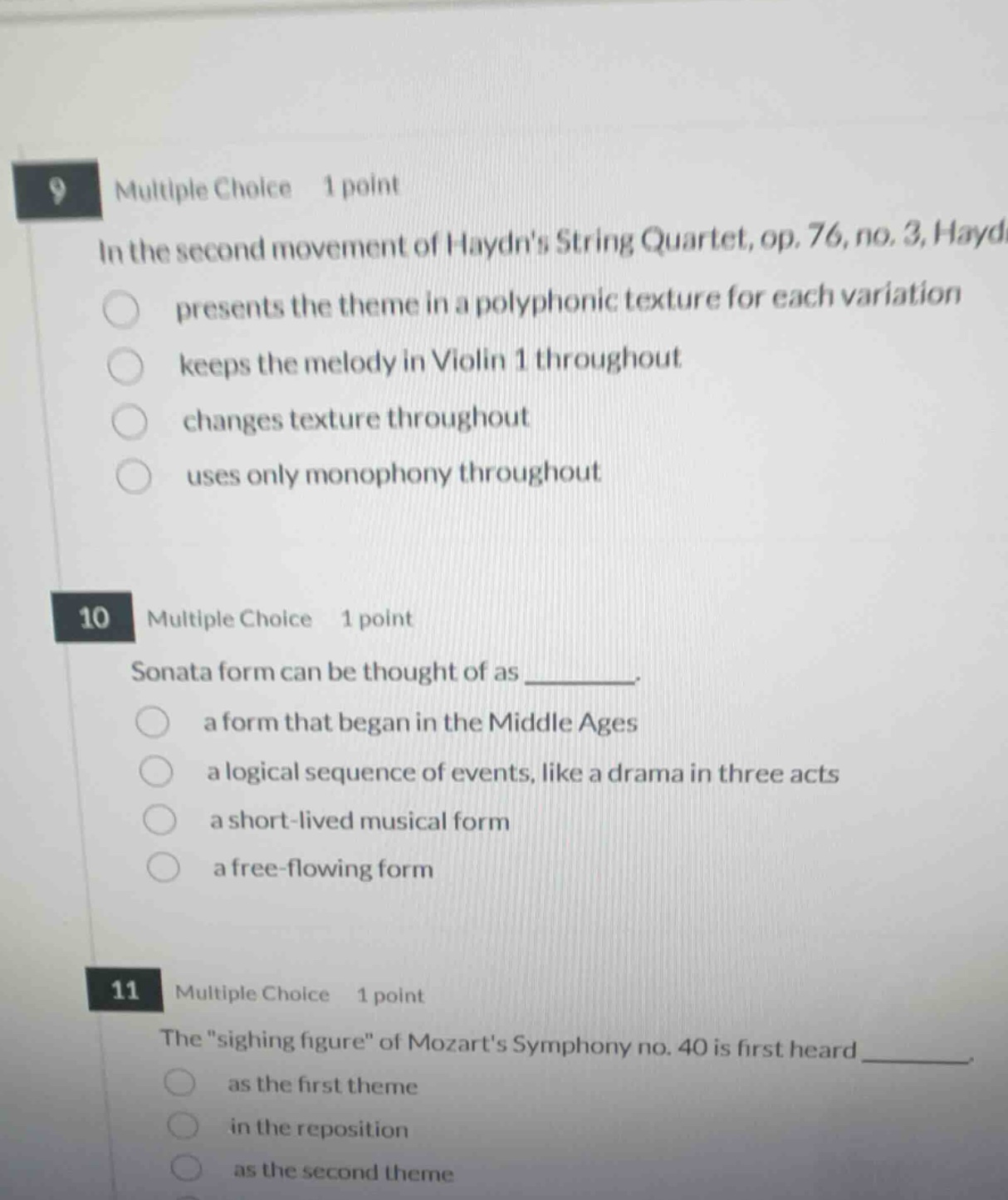
9 multiple choice 1 point
in the second movement of haydns string quartet, op. 76, no. 3, haydn
presents the theme in a polyphonic texture for each variation
keeps the melody in violin 1 throughout
changes texture throughout
uses only monophony throughout
10 multiple choice 1 point
sonata form can be thought of as ______.
a form that began in the middle ages
a logical sequence of events, like a drama in three acts
a short-lived musical form
a free-flowing form
11 multiple choice 1 point
the \sighing figure\ of mozarts symphony no. 40 is first heard ______.
as the first theme
in the exposition
as the second theme
Analyze Haydn's String Quartet Op. 76 No. 3
Using the Haydn String Quartet knowledge point
The second movement of Haydn's "Emperor" Quartet, Op. 76, No. 3, is a theme and variations based on the "Kaiserhymne." In each variation, the complete, unaltered melody is passed to a different instrument (Violin 1, Violin 2, Viola, and Cello) rather than remaining in Violin 1. The surrounding accompaniment changes, which alters the texture throughout the movement.
Analyze Sonata Form Analogy
Using the Sonata Form Analogy knowledge point
Sonata form is a highly structured, dramatic instrumental form of the Classical era. It consists of three main sections: exposition, development, and recapitulation. This structure functions like a three-act drama, presenting a logical sequence of musical events, conflict, and resolution.
Analyze Mozart's Symphony No. 40
The famous opening theme of the first movement of Mozart's Symphony No. 40 in G minor begins with a distinctive, repetitive two-note falling motive known as the "sighing figure" (or Seufzer motive). This figure is introduced immediately as part of the very first theme.

Snap & solve any problem in the app
Get step-by-step solutions on Sovi AI
Photo-based solutions with guided steps
Explore more problems and detailed explanations
Question 9
- presents the theme in a polyphonic texture for each variation
- keeps the melody in Violin 1 throughout
- changes texture throughout (Correct answer)
- uses only monophony throughout
Question 10
- a form that began in the Middle Ages
- a logical sequence of events, like a drama in three acts (Correct answer)
- a short-lived musical form
- a free-flowing form
Question 11
- as the first theme (Correct answer)
- in the reposition
- as the second theme