QUESTION IMAGE
Question
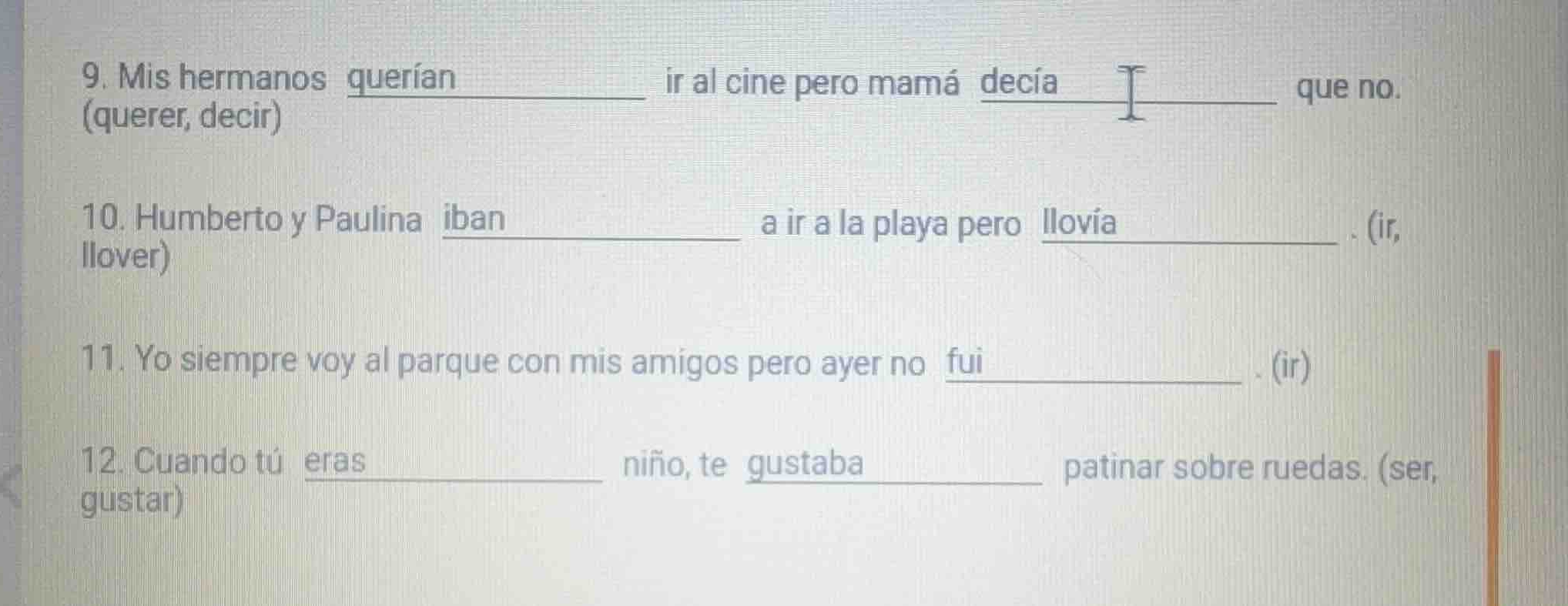
- mis hermanos querían ir al cine pero mamá decía que no. (querer, decir)
- humberto y paulina iban a ir a la playa pero llovía. (ir, llover)
- yo siempre voy al parque con mis amigos pero ayer no fui. (ir)
- cuando tú eras niño, te gustaba patinar sobre ruedas. (ser, gustar)
Analyze Question 9
The sentence describes ongoing mental states and background actions in the past. "Mis hermanos" (plural) wanting to go to the movies is an ongoing desire, so we use the imperfect of querer: querían. "Mamá" (singular) saying no is also background/ongoing description here, so we use the imperfect of decir: decía.
Analyze Question 10
The sentence describes a past intention that was interrupted by background weather. "Humberto y Paulina" (plural) were going to go, which is an ongoing intention, so we use the imperfect of ir: iban. The weather "it was raining" is background description, so we use the imperfect of llover: llovía.
Analyze Question 11
The sentence contrasts a habitual action in the present ("Yo siempre voy...") with a specific completed action in the past ("pero ayer..."). "Ayer" (yesterday) triggers the preterite tense for a completed action. The first-person singular preterite of ir is fui.
Analyze Question 12
The sentence describes habitual characteristics and preferences in childhood. "Cuando tú eras niño" uses the imperfect of ser (eras) for a past state. "Te gustaba patinar" uses the imperfect of gustar (gustaba) for a past ongoing preference.

Snap & solve any problem in the app
Get step-by-step solutions on Sovi AI
Photo-based solutions with guided steps
Explore more problems and detailed explanations
Question 9
- Mis hermanos <blank>querían</blank> ir al cine pero mamá <blank>decía</blank> que no. (querer, decir)
Question 10
- Humberto y Paulina <blank>iban</blank> a ir a la playa pero <blank>llovía</blank>. (ir, llover)
Question 11
- Yo siempre voy al parque con mis amigos pero ayer no <blank>fui</blank>. (ir)
Question 12
- Cuando tú <blank>eras</blank> niño, te <blank>gustaba</blank> patinar sobre ruedas. (ser, gustar)