QUESTION IMAGE
Question
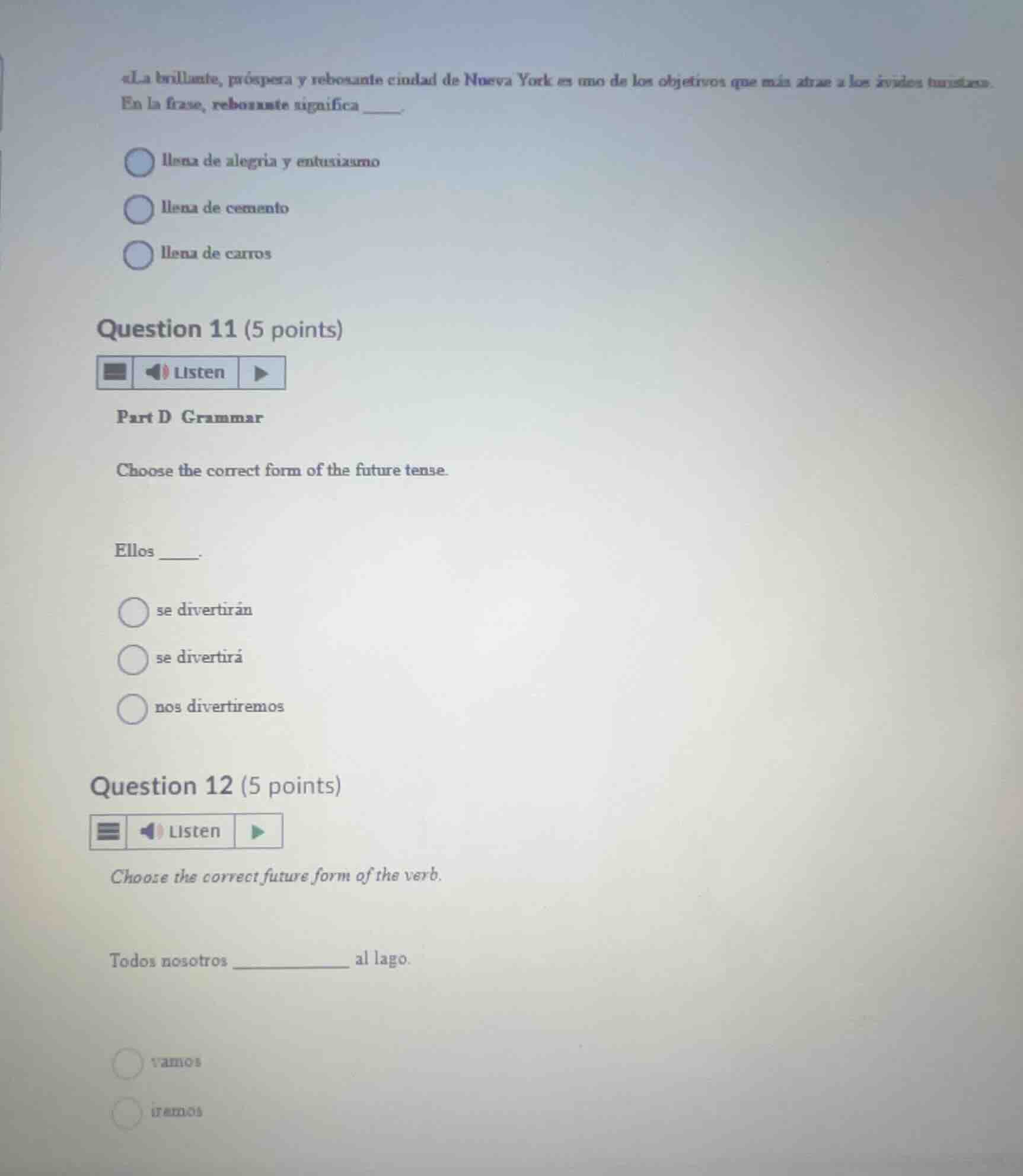
«la brillante, próspera y rebosante ciudad de nueva york es uno de los objetivos que más atrae a los ávidos turistas».
en la frase, rebosante significa ______.
- llena de alegría y entusiasmo
- llena de cemento
- llena de carros
question 11 (5 points)
part d grammar
choose the correct form of the future tense.
ellos ______.
- se divertirán
- se divertirá
- nos divertiremos
question 12 (5 points)
choose the correct future form of the verb.
todos nosotros ______ al lago.
- vamos
- iremos
<pre_analysis>
{
"quality": "clear",
"question_count": 3,
"skills_matched": [
"direct_cot",
"multiple_choice_formatter",
"explain_then_answer",
"quick"
],
"needs_drawing": false,
"concepts_used": [],
"new_concepts": [
"Spanish Future Tense",
"Spanish Vocabulary"
],
"current_concepts": [
"Spanish Vocabulary",
"Spanish Future Tense",
"Spanish Verb Conjugation"
]
}
</pre_analysis>
<reasoning>
Analyze the vocabulary question
The sentence is: "La brillante, próspera y rebosante ciudad de Nueva York..."
"Rebosante" means overflowing, bursting, or brimming with something positive.
Among the options:
- "llena de alegría y entusiasmo" (full of joy and enthusiasm) matches the positive, overflowing connotation of "rebosante".
- "llena de cemento" (full of cement) and "llena de carros" (full of cars) are literal and do not capture the figurative meaning of "rebosante" in this literary context.
Analyze Question 11
The prompt asks to choose the correct form of the future tense for: "Ellos ________."
The verb is "divertirse" (reflexive verb "to have fun").
- Subject: "Ellos" (third-person plural).
- Reflexive pronoun for "ellos": "se".
- Future tense ending for "-ir" verbs with "ellos": "-irán" (divertirán).
- Combined: "se divertirán".
Analyze Question 12
The prompt asks to choose the correct future form of the verb for: "Todos nosotros ________ al lago."
The verb is "ir" (to go).
- Subject: "Todos nosotros" (first-person plural).
- Future tense conjugation of "ir" for "nosotros": "iremos".
- "vamos" is the present tense form.
</reasoning>
<answer>
Question 10
<mcq-correct>llena de alegría y entusiasmo</mcq-correct>
<mcq-option>llena de cemento</mcq-option>
<mcq-option>llena de carros</mcq-option>
Question 11
<mcq-correct>se divertirán</mcq-correct>
<mcq-option>se divertirá</mcq-option>
<mcq-option>nos divertiremos</mcq-option>
Question 12
<mcq-option>vamos</mcq-option>
<mcq-correct>iremos</mcq-correct>
</answer>
<post_analysis>
{
"subject": "Others",
"question_type": "Multiple Choice",
"knowledge_point": [
"Others",
"Spanish",
"Spanish Grammar and Vocabulary"
]
}
</post_analysis>
Snap & solve any problem in the app
Get step-by-step solutions on Sovi AI
Photo-based solutions with guided steps
Explore more problems and detailed explanations
<pre_analysis>
{
"quality": "clear",
"question_count": 3,
"skills_matched": [
"direct_cot",
"multiple_choice_formatter",
"explain_then_answer",
"quick"
],
"needs_drawing": false,
"concepts_used": [],
"new_concepts": [
"Spanish Future Tense",
"Spanish Vocabulary"
],
"current_concepts": [
"Spanish Vocabulary",
"Spanish Future Tense",
"Spanish Verb Conjugation"
]
}
</pre_analysis>
<reasoning>
Analyze the vocabulary question
The sentence is: "La brillante, próspera y rebosante ciudad de Nueva York..."
"Rebosante" means overflowing, bursting, or brimming with something positive.
Among the options:
- "llena de alegría y entusiasmo" (full of joy and enthusiasm) matches the positive, overflowing connotation of "rebosante".
- "llena de cemento" (full of cement) and "llena de carros" (full of cars) are literal and do not capture the figurative meaning of "rebosante" in this literary context.
Analyze Question 11
The prompt asks to choose the correct form of the future tense for: "Ellos ________."
The verb is "divertirse" (reflexive verb "to have fun").
- Subject: "Ellos" (third-person plural).
- Reflexive pronoun for "ellos": "se".
- Future tense ending for "-ir" verbs with "ellos": "-irán" (divertirán).
- Combined: "se divertirán".
Analyze Question 12
The prompt asks to choose the correct future form of the verb for: "Todos nosotros ________ al lago."
The verb is "ir" (to go).
- Subject: "Todos nosotros" (first-person plural).
- Future tense conjugation of "ir" for "nosotros": "iremos".
- "vamos" is the present tense form.
</reasoning>
<answer>
Question 10
<mcq-correct>llena de alegría y entusiasmo</mcq-correct>
<mcq-option>llena de cemento</mcq-option>
<mcq-option>llena de carros</mcq-option>
Question 11
<mcq-correct>se divertirán</mcq-correct>
<mcq-option>se divertirá</mcq-option>
<mcq-option>nos divertiremos</mcq-option>
Question 12
<mcq-option>vamos</mcq-option>
<mcq-correct>iremos</mcq-correct>
</answer>
<post_analysis>
{
"subject": "Others",
"question_type": "Multiple Choice",
"knowledge_point": [
"Others",
"Spanish",
"Spanish Grammar and Vocabulary"
]
}
</post_analysis>