Sovi.AI - AI Math Tutor

Scan to solve math questions

QUESTION IMAGE

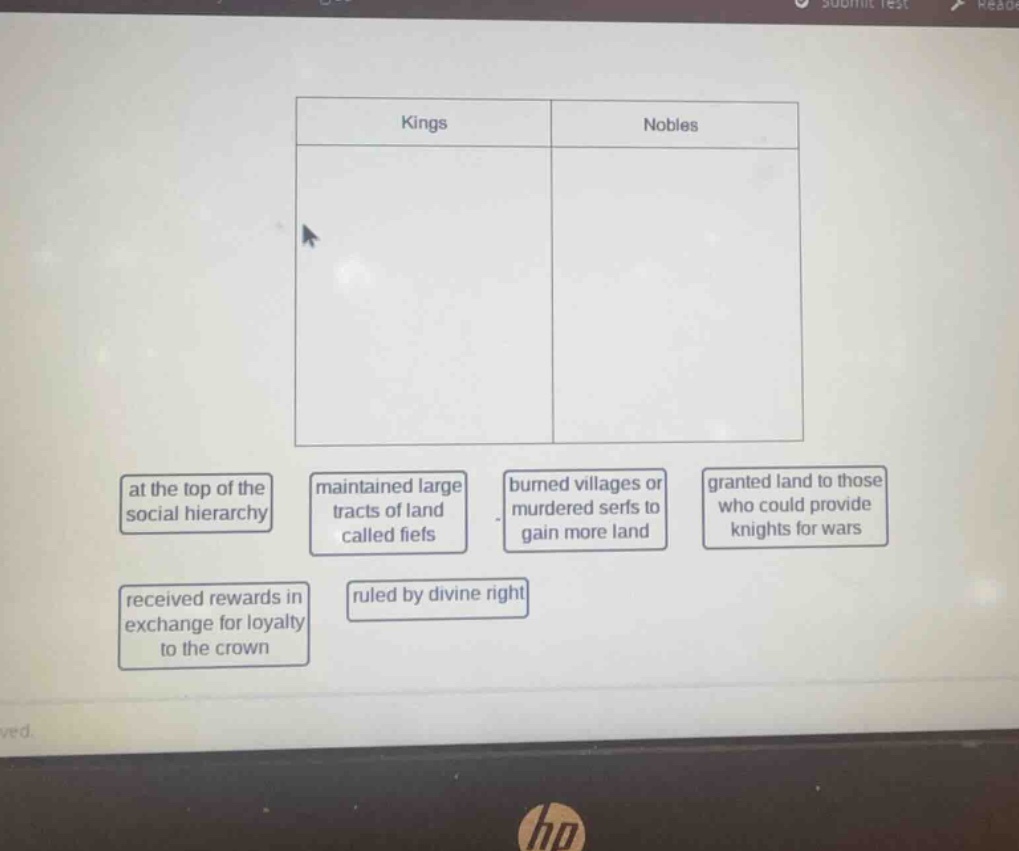
kings | nobles at the top of the social hierarchy maintained large trac…

Question

kings | nobles

at the top of the social hierarchy
maintained large tracts of land called fiefs
burned villages or murdered serfs to gain more land
granted land to those who could provide knights for wars
received rewards in exchange for loyalty to the crown
ruled by divine right

Explanation:

Response

<pre_analysis>
{
"quality": "clear",
"question_count": 1,
"skills_matched": [
"direct_cot",
"explain_then_answer",
"tutor"
],
"needs_drawing": false,
"concepts_used": [
"Feudalism",
"Medieval Social Structure"
],
"new_concepts": [],
"current_concepts": [
"Feudalism",
"Medieval Social Structure"
]
}
</pre_analysis>

<reasoning>

Identify roles of Kings

Using our understanding of Feudalism and the Medieval Social Structure, we analyze the characteristics of medieval monarchs. Kings sat at the absolute peak of the political and social pyramid. They ruled by claiming authority directly from God, a concept known as divine right. To secure their realm, they granted large tracts of land (fiefs) to loyal nobles in exchange for military service and knights.

  • "at the top of the social hierarchy"
  • "granted land to those who could provide knights for wars"
  • "ruled by divine right"

Identify roles of Nobles

Under the Medieval Social Structure, nobles (or lords) were vassals to the king. They maintained the large tracts of land (fiefs) granted to them. In return for this land, they swore loyalty and received rewards or protection from the crown.

  • "maintained large tracts of land called fiefs"
  • "received rewards in exchange for loyalty to the crown"

Evaluate remaining options

The option "burned villages or murdered serfs to gain more land" does not represent a standard, defining institutional role or characteristic of either category in a typical feudal classification diagram.
</reasoning>

<answer>

KingsNobles

</answer>

<post_analysis>
{
"subject": "Social Science",
"question_type": "Fill-in-the-blank",
"knowledge_point": [
"Social Science",
"History",
"Medieval Feudalism"
]
}
</post_analysis>

Answer:

<pre_analysis>
{
"quality": "clear",
"question_count": 1,
"skills_matched": [
"direct_cot",
"explain_then_answer",
"tutor"
],
"needs_drawing": false,
"concepts_used": [
"Feudalism",
"Medieval Social Structure"
],
"new_concepts": [],
"current_concepts": [
"Feudalism",
"Medieval Social Structure"
]
}
</pre_analysis>

<reasoning>

Identify roles of Kings

Using our understanding of Feudalism and the Medieval Social Structure, we analyze the characteristics of medieval monarchs. Kings sat at the absolute peak of the political and social pyramid. They ruled by claiming authority directly from God, a concept known as divine right. To secure their realm, they granted large tracts of land (fiefs) to loyal nobles in exchange for military service and knights.

  • "at the top of the social hierarchy"
  • "granted land to those who could provide knights for wars"
  • "ruled by divine right"

Identify roles of Nobles

Under the Medieval Social Structure, nobles (or lords) were vassals to the king. They maintained the large tracts of land (fiefs) granted to them. In return for this land, they swore loyalty and received rewards or protection from the crown.

  • "maintained large tracts of land called fiefs"
  • "received rewards in exchange for loyalty to the crown"

Evaluate remaining options

The option "burned villages or murdered serfs to gain more land" does not represent a standard, defining institutional role or characteristic of either category in a typical feudal classification diagram.
</reasoning>

<answer>

KingsNobles

</answer>

<post_analysis>
{
"subject": "Social Science",
"question_type": "Fill-in-the-blank",
"knowledge_point": [
"Social Science",
"History",
"Medieval Feudalism"
]
}
</post_analysis>