QUESTION IMAGE
Question
Question was provided via image upload.
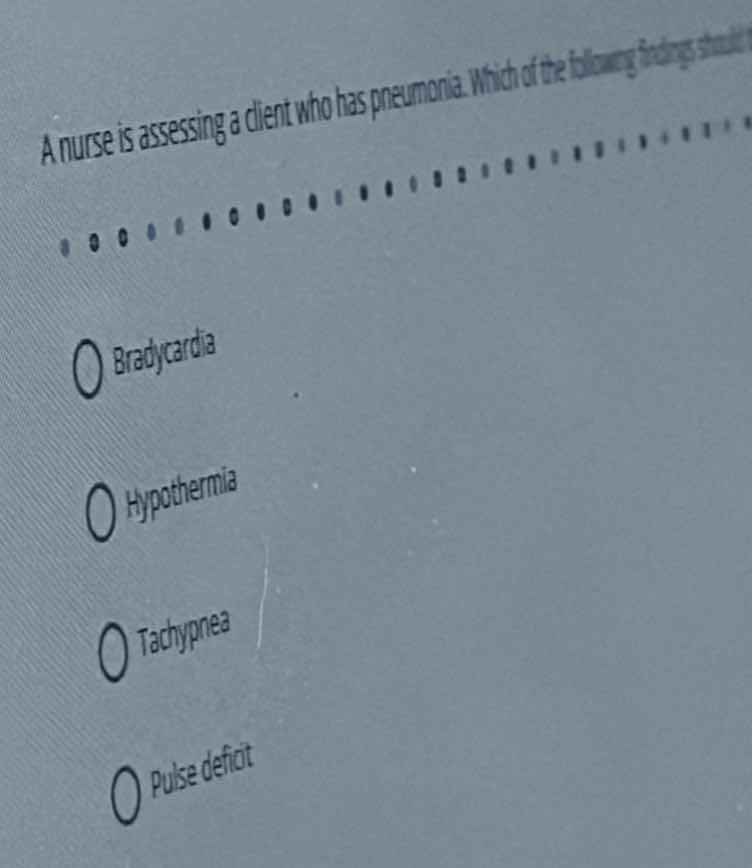
Analyze the pathophysiology of pneumonia
Pneumonia is an inflammatory condition of the lung parenchyma, typically caused by an infectious agent (bacterial, viral, or fungal). This inflammation leads to alveolar consolidation, where the alveoli fill with exudate, inflammatory cells, and fluid. Consequently, alveolar gas exchange is impaired, leading to ventilation-perfusion mismatch and arterial hypoxemia.
Identify expected clinical manifestations
To compensate for decreased oxygenation and meet the metabolic demands of an active infection, the body initiates compensatory mechanisms:
- The respiratory center in the brainstem is stimulated by hypoxemia and hypercapnia, leading to an increased respiratory rate (tachypnea).
- The cardiovascular system responds to hypoxia and fever by increasing the heart rate (tachycardia), not decreasing it (bradycardia).
- The systemic inflammatory response typically causes an elevated body temperature (fever/hyperthermia), rather than hypothermia (except occasionally in elderly or immunocompromised clients, but it is not the classic expected finding).
- A pulse deficit (a difference between the apical and radial pulse rates) is associated with dysrhythmias like atrial fibrillation, not directly with uncomplicated pneumonia.
Evaluate the given options
- Bradycardia: Incorrect. An infection and hypoxia typically cause tachycardia (increased heart rate).
- Hypothermia: Incorrect. Fever (hyperthermia) is the standard infectious response.
- Tachypnea: Correct. An increased respiratory rate is a classic compensatory mechanism for impaired gas exchange in pneumonia.
- Pulse deficit: Incorrect. This is indicative of cardiac dysrhythmias, not a primary respiratory infection like pneumonia.

Snap & solve any problem in the app
Get step-by-step solutions on Sovi AI
Photo-based solutions with guided steps
Explore more problems and detailed explanations
- Bradycardia
- Hypothermia
- Tachypnea (Correct answer)
- Pulse deficit