QUESTION IMAGE
Question
Question was provided via image upload.
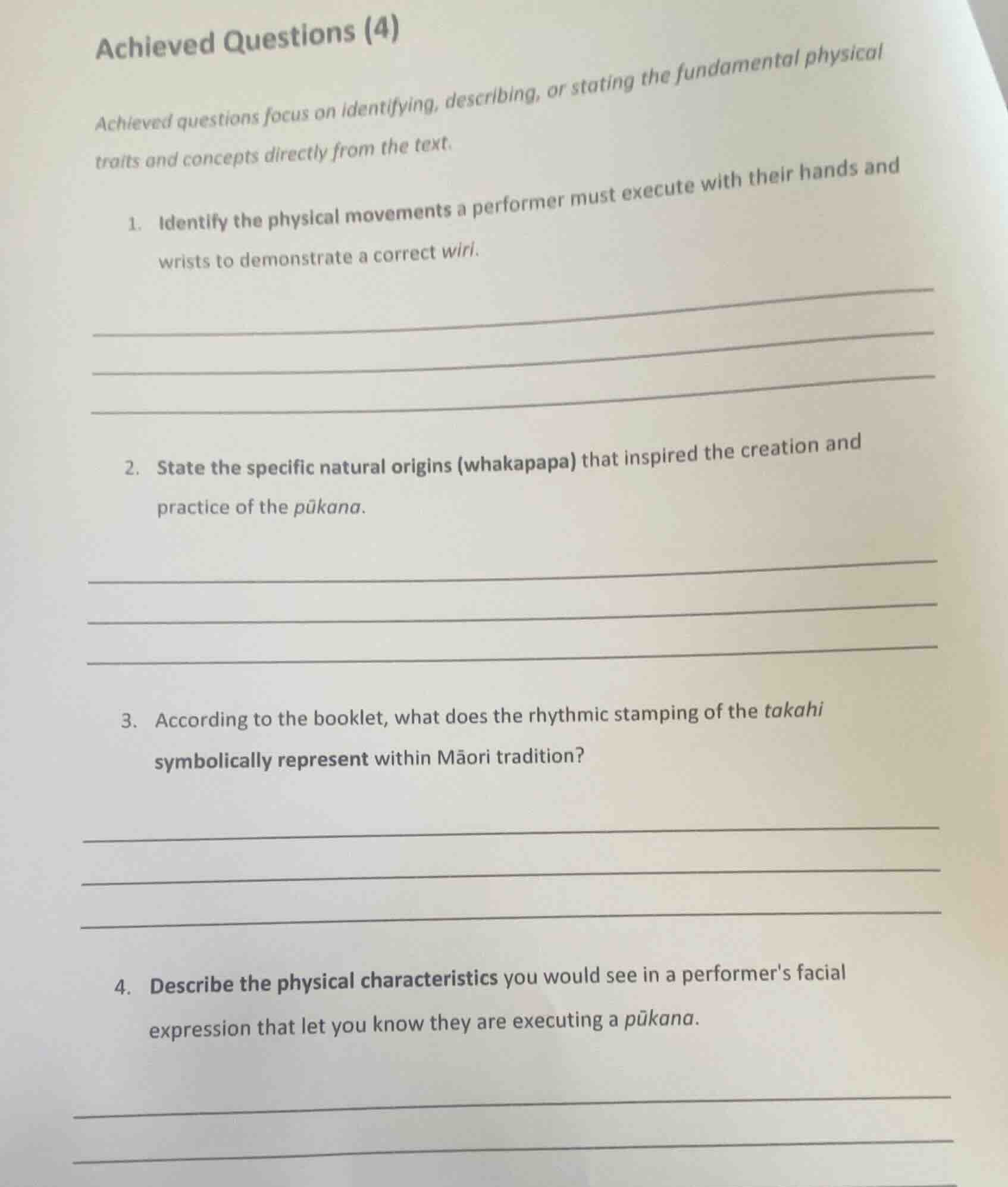
Analyze the physical movements of wiri
The wiri (quivering of the hands) represents the shimmering of heat waves (Te Rehia) or the wind. It is executed by keeping the arms extended or bent naturally while rapidly and subtly shaking or quivering the hands and fingers from the wrists, without moving the entire arm stiffly.
Determine the natural origins of pūkana
The pūkana (facial expressions) has its whakapapa (origins) in the natural world, specifically inspired by the shimmering heat waves of summer, associated with Tānerore (the personification of heat waves, son of Tama-nui-te-rā, the sun god, and Hine-raumati, the summer maiden).
Identify the symbolic representation of takahi
The takahi (rhythmic stamping of the foot) represents the heartbeat of Papatūānuku (the Earth Mother). It establishes the rhythm and connects the performers directly to the earth, grounding the performance.
Describe the physical characteristics of pūkana
A pūkana is characterized by wide-opened, staring eyes (showing the whites of the eyes, or whetero) and, for men, a protruding tongue, while for women, it often involves opening the mouth wide and thrusting the chin forward to display the moko kauae (chin tattoo).

Snap & solve any problem in the app
Get step-by-step solutions on Sovi AI
Photo-based solutions with guided steps
Explore more problems and detailed explanations
Question 1
To execute a correct wiri, a performer must rapidly and subtly quiver or shake their hands and fingers from the wrists, mimicking shimmering heat waves.
Question 2
The pūkana is inspired by the shimmering heat waves of summer, personified by Tānerore, the son of the sun god Tama-nui-te-rā and the summer maiden Hine-raumati.
Question 3
The rhythmic stamping of the takahi symbolically represents the heartbeat of Papatūānuku (the Earth Mother) and connects the performers to the land.
Question 4
A pūkana is characterized by bulging, wide-opened eyes (showing the whites) and a wide-open mouth, which may include a protruding tongue (primarily for men) or a thrust chin (for women).