QUESTION IMAGE
Question
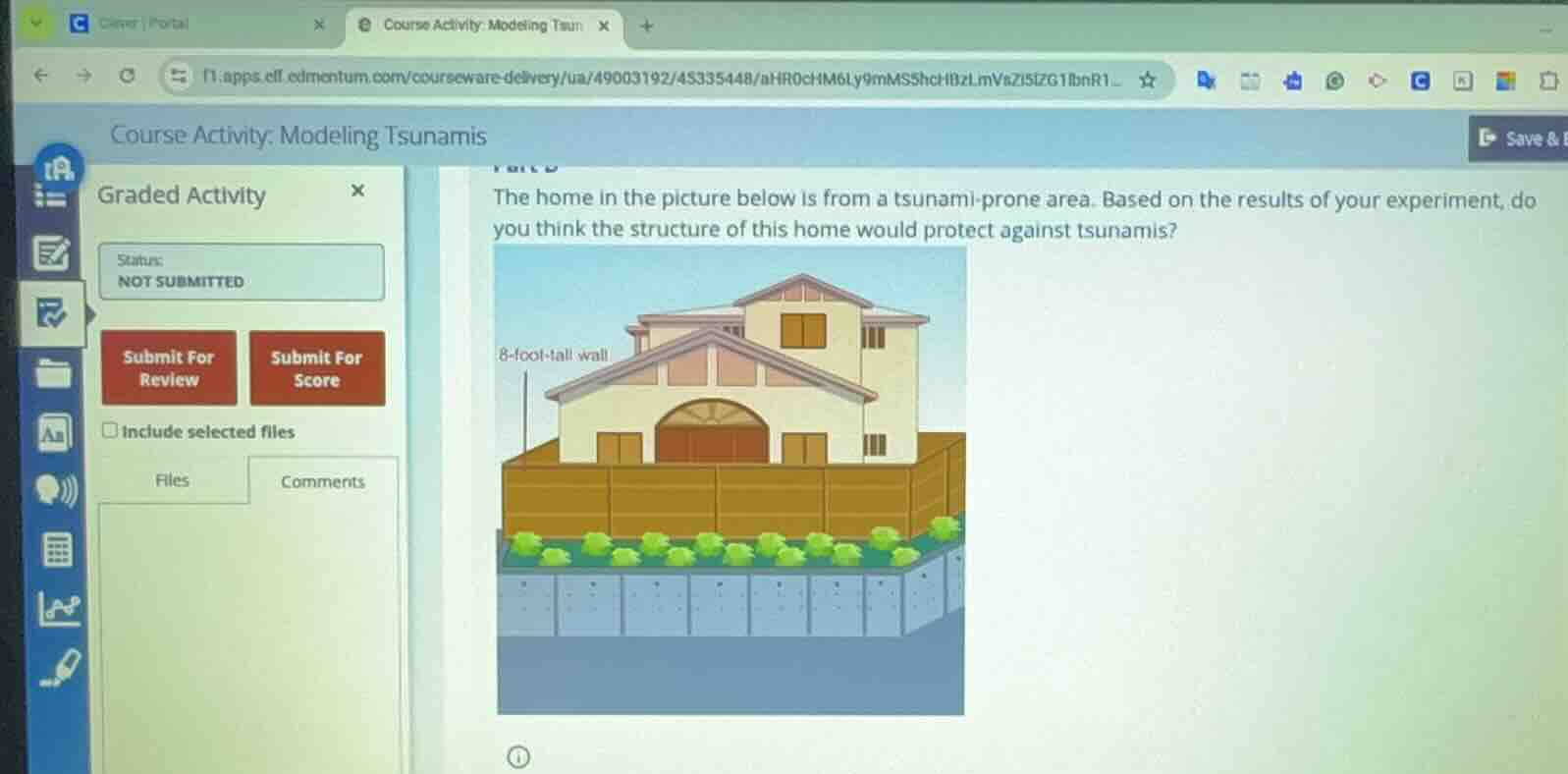
the home in the picture below is from a tsunami-prone area. based on the results of your experiment, do you think the structure of this home would protect against tsunamis?
Analyze structural features of the home
The image shows a multi-story residential home built on a flat plot, surrounded by a wooden fence and a concrete retaining wall labeled "8-foot-tall wall." The house is constructed directly at ground level with standard wood or light-frame materials, large glass windows, and wide garage doors facing the front.
Evaluate tsunami impact forces
Tsunamis generate immense hydrostatic and hydrodynamic forces, carrying heavy debris and causing severe inundation. An 8-foot-tall wall is insufficient to block major tsunami surges, and water can easily overtop or bypass it, while the hydrodynamic pressure can easily destroy standard wooden walls, garage doors, and windows.
Assess overall protective capability
Because the structure lacks elevation (such as being built on open stilts or pilings to let water pass underneath) and relies on a low, non-engineered barrier wall, it does not possess the structural engineering required to withstand or protect against a tsunami.

Snap & solve any problem in the app
Get step-by-step solutions on Sovi AI
Photo-based solutions with guided steps
Explore more problems and detailed explanations
No, the structure of this home would not protect against tsunamis.
While the 8-foot-tall wall provides minor protection against small waves or low-level flooding, it is insufficient to withstand the hydrodynamic forces, high velocity, and debris impact of a major tsunami. Additionally, the house is built directly at ground level with standard residential materials (such as wood framing, large windows, and garage doors) that are highly vulnerable to structural failure under intense water pressure. Effective tsunami-resistant structures typically require elevated designs (such as deep-pile stilts or columns) that allow water to flow underneath the living spaces.