QUESTION IMAGE
Question
figurative language
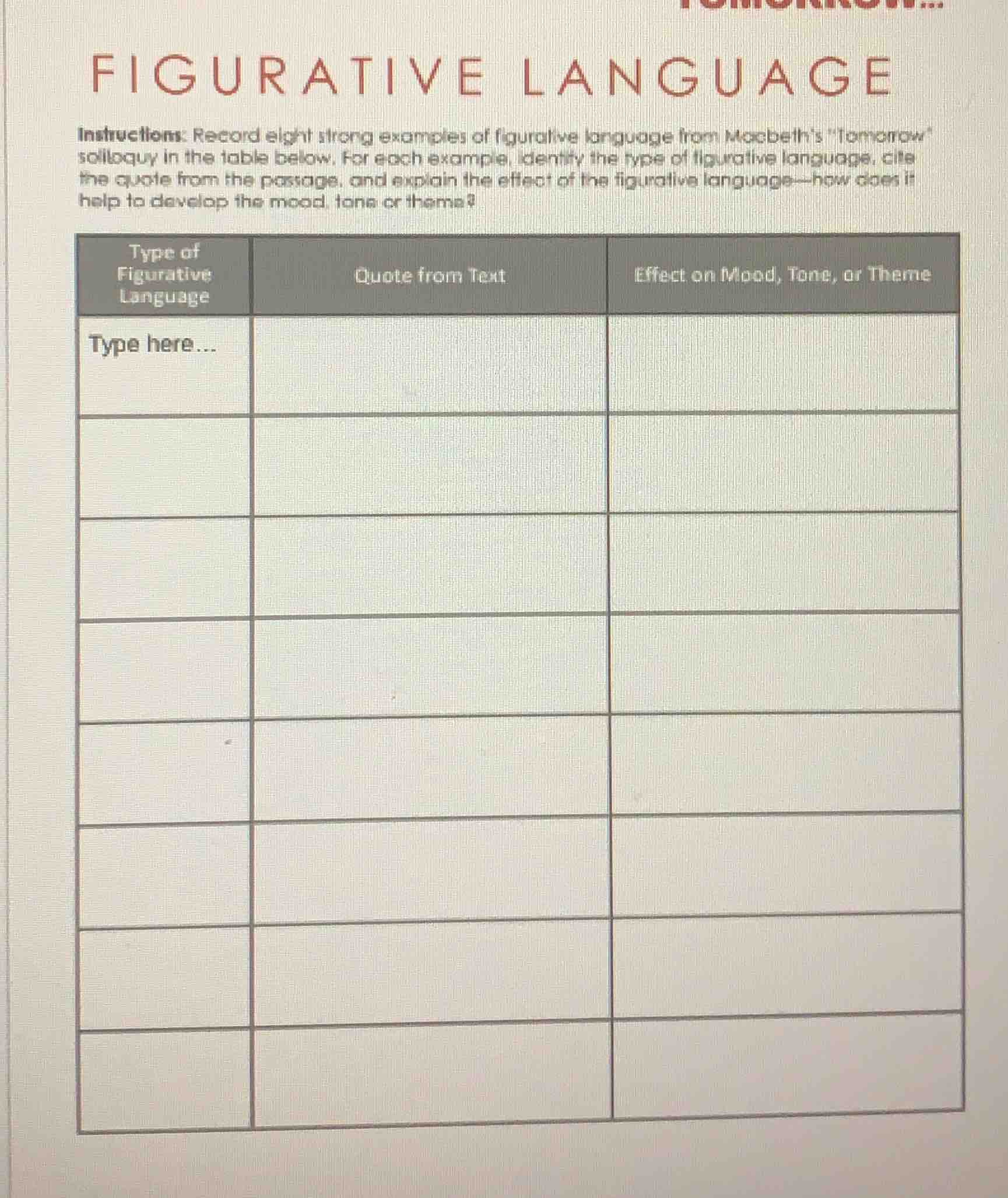
instructions: record eight strong examples of figurative language from macbeth’s “tomorrow” soliloquy in the table below. for each example, identify the type of figurative language, cite the quote from the passage, and explain the effect of the figurative language—how does it help to develop the mood, tone or theme?
| type of figurative language | quote from text | effect on mood, tone, or theme |
|---|---|---|
To solve this, we analyze Macbeth's "Tomorrow" soliloquy for figurative language. Here's one example to start:
Example 1: Metaphor
- Quote: "Life's but a walking shadow"
- Effect: Compares life to a shadow, emphasizing its transitory, insubstantial nature. This reinforces the theme of mortality and the emptiness of Macbeth's actions, creating a somber, despairing mood.
Example 2: Simile
- Quote: "And all our yesterdays have lighted fools / The way to dusty death"
- Effect: Compares "yesterdays" (past actions) to a light guiding fools to death, highlighting the inevitability of death and the folly of pursuing power, adding to the tragic tone.
Example 3: Alliteration
- Quote: "Signifying nothing"
- Effect: The repetition of "s" sounds creates a hissing effect, underscoring the emptiness and futility Macbeth feels, enhancing the melancholic mood.
Example 4: Personification
- Quote: "Tomorrow, and tomorrow, and tomorrow, / Creeps in this petty pace from day to day"
- Effect: Personifies "tomorrow" as creeping, emphasizing the slow, tedious passage of time and Macbeth's sense of hopelessness, deepening the somber tone.
Example 5: Metaphor
- Quote: "Out, out, brief candle!"
- Effect: Compares life to a brief candle, symbolizing its fragility and short duration, reinforcing the theme of mortality and creating a mournful mood.
Example 6: Alliteration
- Quote: "To the last syllable of recorded time"
- Effect: Repetition of "t" and "l" sounds creates a rhythmic, almost funereal effect, emphasizing the relentless march of time toward death, enhancing the tragic tone.
Example 7: Metaphor
- Quote: "And then is heard no more: it is a tale / Told by an idiot, full of sound and fury"
- Effect: Compares life to a tale told by an idiot, highlighting its meaningless noise, reinforcing the theme of futility and adding to the despairing mood.
Example 8: Imagery (Visual)
- Quote: "Dusty death"
- Effect: Evokes the image of death as a dusty, barren end, emphasizing the emptiness of life's achievements, deepening the somber and tragic mood.
Now, we can fill the table:
| Type of Figurative Language | Quote from Text | Effect on Mood, Tone, or Theme |
|---|---|---|
| Simile | "And all our yesterdays have lighted fools / The way to dusty death" | Compares past to a light guiding to death, highlights death's inevitability, tragic tone. |
| Alliteration | "Signifying nothing" | Hissing "s" sounds underscore emptiness, melancholic mood. |
| Personification | "Tomorrow, and tomorrow, and tomorrow, / Creeps in this petty pace from day to day" | Personifies time as creeping, emphasizes slow hopeless passage, somber tone. |
| Metaphor | "Out, out, brief candle!" | Compares life to a brief candle, symbolizes fragility, mortality theme, mournful mood. |
| Alliteration | "To the last syllable of recorded time" | Rhythmic, funereal effect, emphasizes time's march to death, tragic tone. |
| Metaphor | "And then is heard no more: it is a tale / Told by an idiot, full of sound and fury" | Compares life to a meaningless tale, reinforces futility, despairing mood. |
| Imagery (Visual) | "Dusty death" | Evokes barren death image, emphasizes life's empty achievements, somber mood. |
This provides eight strong examples, each with its type, quote, and effe…

Snap & solve any problem in the app
Get step-by-step solutions on Sovi AI
Photo-based solutions with guided steps
Explore more problems and detailed explanations
To solve this, we analyze Macbeth's "Tomorrow" soliloquy for figurative language. Here's one example to start:
Example 1: Metaphor
- Quote: "Life's but a walking shadow"
- Effect: Compares life to a shadow, emphasizing its transitory, insubstantial nature. This reinforces the theme of mortality and the emptiness of Macbeth's actions, creating a somber, despairing mood.
Example 2: Simile
- Quote: "And all our yesterdays have lighted fools / The way to dusty death"
- Effect: Compares "yesterdays" (past actions) to a light guiding fools to death, highlighting the inevitability of death and the folly of pursuing power, adding to the tragic tone.
Example 3: Alliteration
- Quote: "Signifying nothing"
- Effect: The repetition of "s" sounds creates a hissing effect, underscoring the emptiness and futility Macbeth feels, enhancing the melancholic mood.
Example 4: Personification
- Quote: "Tomorrow, and tomorrow, and tomorrow, / Creeps in this petty pace from day to day"
- Effect: Personifies "tomorrow" as creeping, emphasizing the slow, tedious passage of time and Macbeth's sense of hopelessness, deepening the somber tone.
Example 5: Metaphor
- Quote: "Out, out, brief candle!"
- Effect: Compares life to a brief candle, symbolizing its fragility and short duration, reinforcing the theme of mortality and creating a mournful mood.
Example 6: Alliteration
- Quote: "To the last syllable of recorded time"
- Effect: Repetition of "t" and "l" sounds creates a rhythmic, almost funereal effect, emphasizing the relentless march of time toward death, enhancing the tragic tone.
Example 7: Metaphor
- Quote: "And then is heard no more: it is a tale / Told by an idiot, full of sound and fury"
- Effect: Compares life to a tale told by an idiot, highlighting its meaningless noise, reinforcing the theme of futility and adding to the despairing mood.
Example 8: Imagery (Visual)
- Quote: "Dusty death"
- Effect: Evokes the image of death as a dusty, barren end, emphasizing the emptiness of life's achievements, deepening the somber and tragic mood.
Now, we can fill the table:
| Type of Figurative Language | Quote from Text | Effect on Mood, Tone, or Theme |
|---|---|---|
| Simile | "And all our yesterdays have lighted fools / The way to dusty death" | Compares past to a light guiding to death, highlights death's inevitability, tragic tone. |
| Alliteration | "Signifying nothing" | Hissing "s" sounds underscore emptiness, melancholic mood. |
| Personification | "Tomorrow, and tomorrow, and tomorrow, / Creeps in this petty pace from day to day" | Personifies time as creeping, emphasizes slow hopeless passage, somber tone. |
| Metaphor | "Out, out, brief candle!" | Compares life to a brief candle, symbolizes fragility, mortality theme, mournful mood. |
| Alliteration | "To the last syllable of recorded time" | Rhythmic, funereal effect, emphasizes time's march to death, tragic tone. |
| Metaphor | "And then is heard no more: it is a tale / Told by an idiot, full of sound and fury" | Compares life to a meaningless tale, reinforces futility, despairing mood. |
| Imagery (Visual) | "Dusty death" | Evokes barren death image, emphasizes life's empty achievements, somber mood. |
This provides eight strong examples, each with its type, quote, and effect, addressing the mood, tone, or theme as required.