QUESTION IMAGE
Question
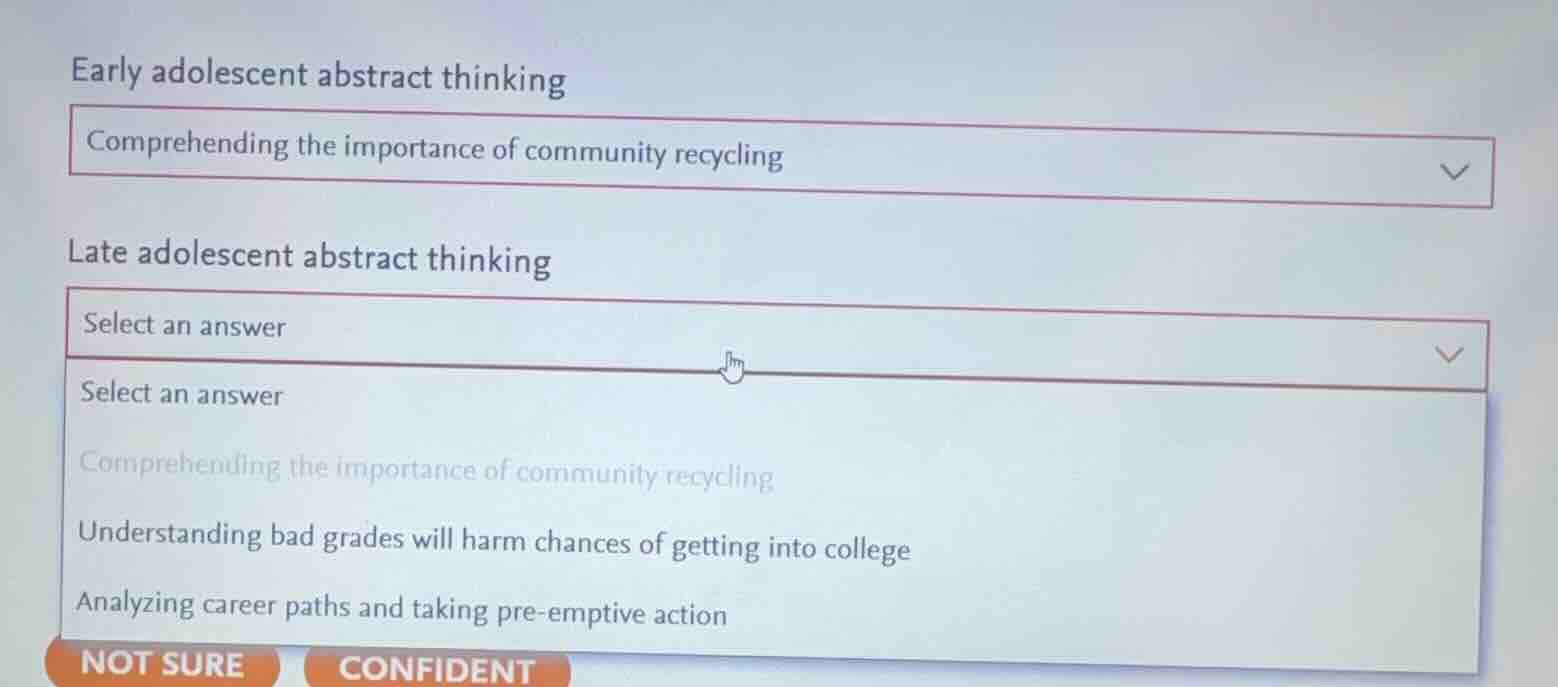
early adolescent abstract thinking
comprehending the importance of community recycling
late adolescent abstract thinking
select an answer
- comprehending the importance of community recycling
- understanding bad grades will harm chances of getting into college
- analyzing career paths and taking pre-emptive action
🆕 New Concept Discovered: Cognitive Development Stages
How abstract thinking evolves from simple to complex
Step 1: Understand the levels of abstract thinking
Abstract thinking develops gradually during adolescence.
- Early adolescence involves applying abstract principles to concrete, immediate, or highly structured situations (such as understanding why recycling is good for their immediate community).
- Middle adolescence involves thinking about future consequences that are personally relevant but still somewhat structured (such as connecting current school grades to future college opportunities).
- Late adolescence involves highly complex, systematic, and long-term planning. It requires not just understanding a future possibility, but actively analyzing multiple pathways, projecting far into the future, and taking independent, pre-emptive action to shape those outcomes.
Step 2: Evaluate the options for late adolescence
Let's look at the remaining choices in the dropdown menu:
- "Understanding bad grades will harm chances of getting into college": This represents middle adolescent thinking. It connects a current behavior (grades) to a future consequence (college), but it is a relatively straightforward cause-and-effect relationship.
- "Analyzing career paths and taking pre-emptive action": This represents late adolescent thinking. It requires complex decision-making, weighing multiple abstract future options (different careers), and self-directed planning (taking pre-emptive action) before the situation forces a choice.

Snap & solve any problem in the app
Get step-by-step solutions on Sovi AI
Photo-based solutions with guided steps
Explore more problems and detailed explanations
Analyzing career paths and taking pre-emptive action