QUESTION IMAGE
Question
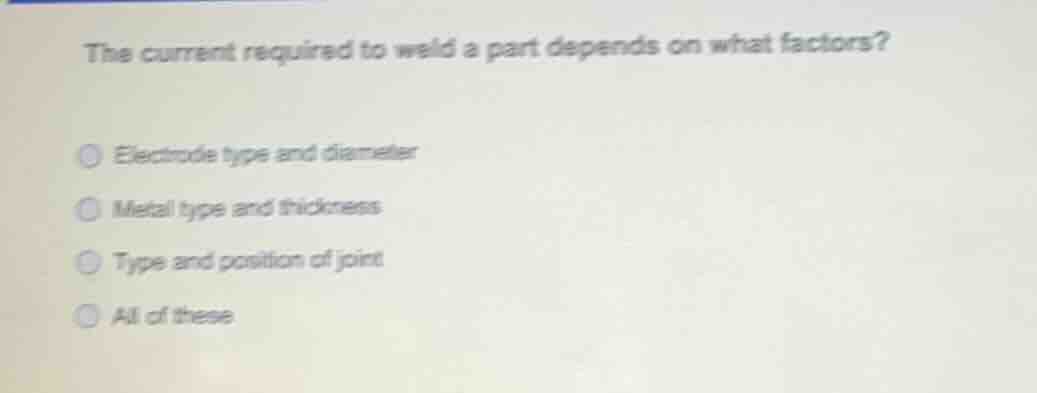
the current required to weld a part depends on what factors?
electrode type and diameter
metal type and thickness
type and position of joint
all of these
Analyze the influence of electrode properties
The type and diameter of the electrode directly dictate the current range. A thicker electrode requires higher current to melt properly, and different coatings/types (such as EXX18 vs EXX10 in SMAW) operate best within specific current limits. This relates to Electrode Selection.
Analyze the influence of base metal properties
The thickness and type of the metal being welded are critical. Thicker materials act as larger heat sinks, requiring higher current (heat input) to achieve proper penetration and fusion. Different metals also have varying thermal conductivities and melting points.
Analyze the influence of joint design and position
The geometry of the joint (e.g., butt joint, T-joint) and the welding position (flat, horizontal, vertical, overhead) significantly affect current settings. For example, vertical or overhead welding typically requires lower current to prevent the molten weld pool from spilling out due to gravity, which is a key consideration in Welding Joint Types.
Synthesize the factors
Since electrode characteristics, base metal properties, and joint configuration/position all directly determine the optimal welding current, all of the listed factors are correct.

Snap & solve any problem in the app
Get step-by-step solutions on Sovi AI
Photo-based solutions with guided steps
Explore more problems and detailed explanations
- Electrode type and diameter
- Metal type and thickness
- Type and position of joint
- All of these (Correct answer)