Sovi.AI - AI Math Tutor

Scan to solve math questions

QUESTION IMAGE

in chapter 41 of moby dick, which belief about society and nature does …

Question

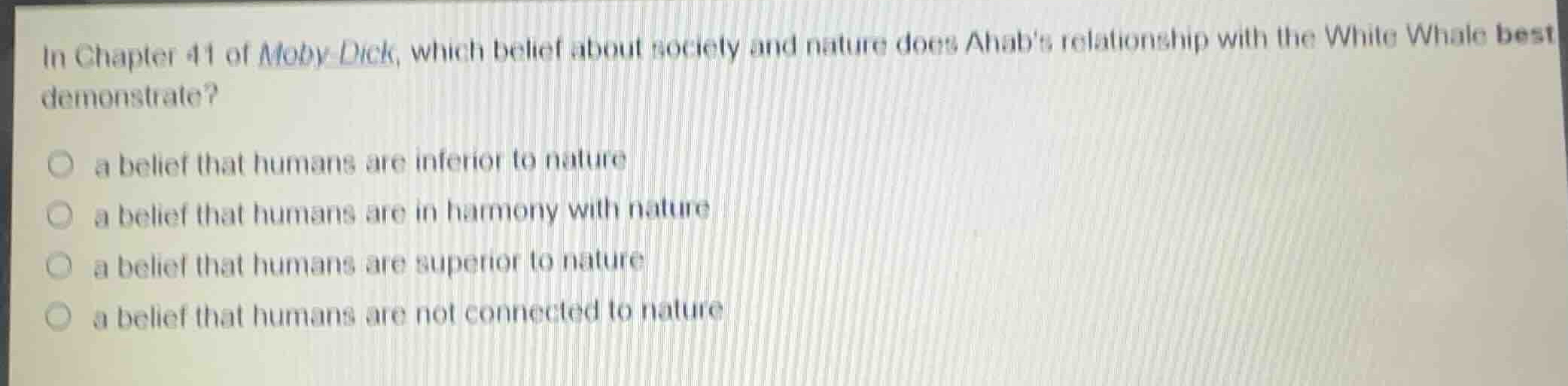
in chapter 41 of moby dick, which belief about society and nature does ahabs relationship with the white whale best demonstrate?

a belief that humans are inferior to nature
a belief that humans are in harmony with nature
a belief that humans are superior to nature
a belief that humans are not connected to nature

Explanation:

Response

<pre_analysis>
{
"quality": "clear",
"question_count": 1,
"skills_matched": [
"direct_cot",
"multiple_choice_formatter",
"explain_then_answer",
"tutor",
"mastery_adaptive_brevity"
],
"needs_drawing": false,
"concepts_used": [
"Moby-Dick Analysis",
"Thematic Analysis"
],
"new_concepts": [],
"current_concepts": [
"Moby-Dick Analysis",
"Thematic Analysis",
"Literary Symbolism"
]
}
</pre_analysis>

<reasoning>

Analyze Ahab's relationship with Moby Dick

Using the Moby-Dick Analysis knowledge point
In Chapter 41, Ahab projects all his rage, malice, and the collective frustrations of mankind onto the White Whale. His monomaniacal quest is driven by a refusal to accept human limitations, demonstrating a belief that human will and intellect should dominate and conquer the natural world.

Connect to the thematic options

Using the Thematic Analysis knowledge point
Ahab's pursuit is an assertion of human supremacy over the untamable forces of nature. He refuses to be inferior, is certainly not in harmony, and is deeply obsessed with (and thus connected to) nature, meaning his actions best demonstrate a belief that humans are superior to nature.
</reasoning>

<answer>
<mcq-option>a belief that humans are inferior to nature</mcq-option>
<mcq-option>a belief that humans are in harmony with nature</mcq-option>
<mcq-correct>a belief that humans are superior to nature</mcq-correct>
<mcq-option>a belief that humans are not connected to nature</mcq-option>
</answer>

<post_analysis>
{
"subject": "Others",
"question_type": "Multiple Choice",
"knowledge_point": [
"Others",
"Literature",
"Moby-Dick Analysis"
]
}
</post_analysis>

Answer:

<pre_analysis>
{
"quality": "clear",
"question_count": 1,
"skills_matched": [
"direct_cot",
"multiple_choice_formatter",
"explain_then_answer",
"tutor",
"mastery_adaptive_brevity"
],
"needs_drawing": false,
"concepts_used": [
"Moby-Dick Analysis",
"Thematic Analysis"
],
"new_concepts": [],
"current_concepts": [
"Moby-Dick Analysis",
"Thematic Analysis",
"Literary Symbolism"
]
}
</pre_analysis>

<reasoning>

Analyze Ahab's relationship with Moby Dick

Using the Moby-Dick Analysis knowledge point
In Chapter 41, Ahab projects all his rage, malice, and the collective frustrations of mankind onto the White Whale. His monomaniacal quest is driven by a refusal to accept human limitations, demonstrating a belief that human will and intellect should dominate and conquer the natural world.

Connect to the thematic options

Using the Thematic Analysis knowledge point
Ahab's pursuit is an assertion of human supremacy over the untamable forces of nature. He refuses to be inferior, is certainly not in harmony, and is deeply obsessed with (and thus connected to) nature, meaning his actions best demonstrate a belief that humans are superior to nature.
</reasoning>

<answer>
<mcq-option>a belief that humans are inferior to nature</mcq-option>
<mcq-option>a belief that humans are in harmony with nature</mcq-option>
<mcq-correct>a belief that humans are superior to nature</mcq-correct>
<mcq-option>a belief that humans are not connected to nature</mcq-option>
</answer>

<post_analysis>
{
"subject": "Others",
"question_type": "Multiple Choice",
"knowledge_point": [
"Others",
"Literature",
"Moby-Dick Analysis"
]
}
</post_analysis>