QUESTION IMAGE
Question
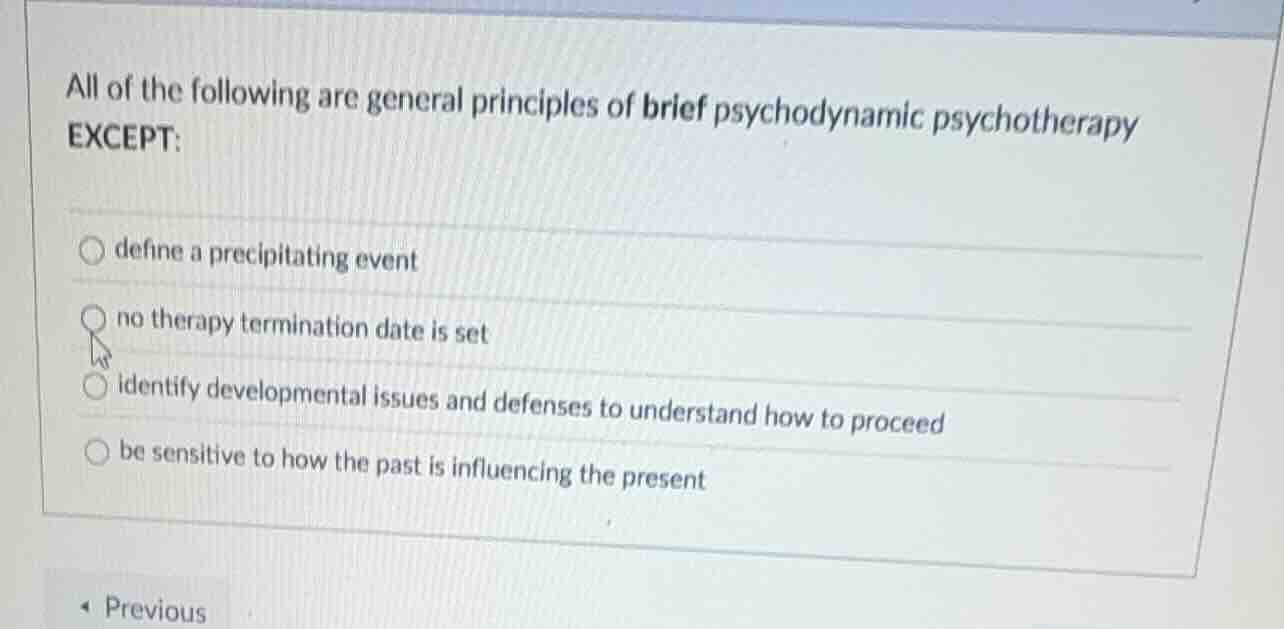
all of the following are general principles of brief psychodynamic psychotherapy except:
define a precipitating event
no therapy termination date is set
identify developmental issues and defenses to understand how to proceed
be sensitive to how the past is influencing the present
🆕 New Concept Discovered: Brief Psychodynamic Psychotherapy
Time-limited, focused psychodynamic intervention.
Step 1: Understand the Core Concept of Brief Psychodynamic Psychotherapy
Brief psychodynamic psychotherapy (BPP) is a time-limited, focused form of therapy (typically lasting 10 to 25 sessions). Because of its short duration, it relies on specific structural and clinical principles to remain effective:
- Clear Focus: The therapist and patient must quickly identify a central issue, often triggered by a specific precipitating event.
- Time Limitation: A defining characteristic of "brief" therapy is that a termination date or a strict limit on the number of sessions is established early in the treatment (often during the very first session). This creates a sense of urgency and helps keep the therapy focused.
- Psychodynamic Framework: It still utilizes core psychodynamic principles, such as identifying developmental conflicts, defense mechanisms, and understanding how past relationships and experiences influence present behavior.
Step 2: Evaluate the Options
- "define a precipitating event": This is a core principle. Because time is limited, the therapist must identify what specific event brought the patient to therapy to establish a clear focus.
- "no therapy termination date is set": This contradicts the fundamental definition of brief therapy. In BPP, setting a clear termination date or limit on sessions is essential to maintain focus and prevent the regression often seen in long-term, open-ended psychoanalysis.
- "identify developmental issues and defenses to understand how to proceed": This is a standard psychodynamic principle used to formulate the patient's core conflict quickly.
- "be sensitive to how the past is influencing the present": This is the foundational premise of all psychodynamic approaches, including brief ones.
Step 3: Identify the Exception
Since the question asks for the option that is EXCEPT a general principle of brief psychodynamic psychotherapy, the correct choice is the one that describes open-ended therapy rather than brief therapy.

Snap & solve any problem in the app
Get step-by-step solutions on Sovi AI
Photo-based solutions with guided steps
Explore more problems and detailed explanations
no therapy termination date is set