QUESTION IMAGE
Question
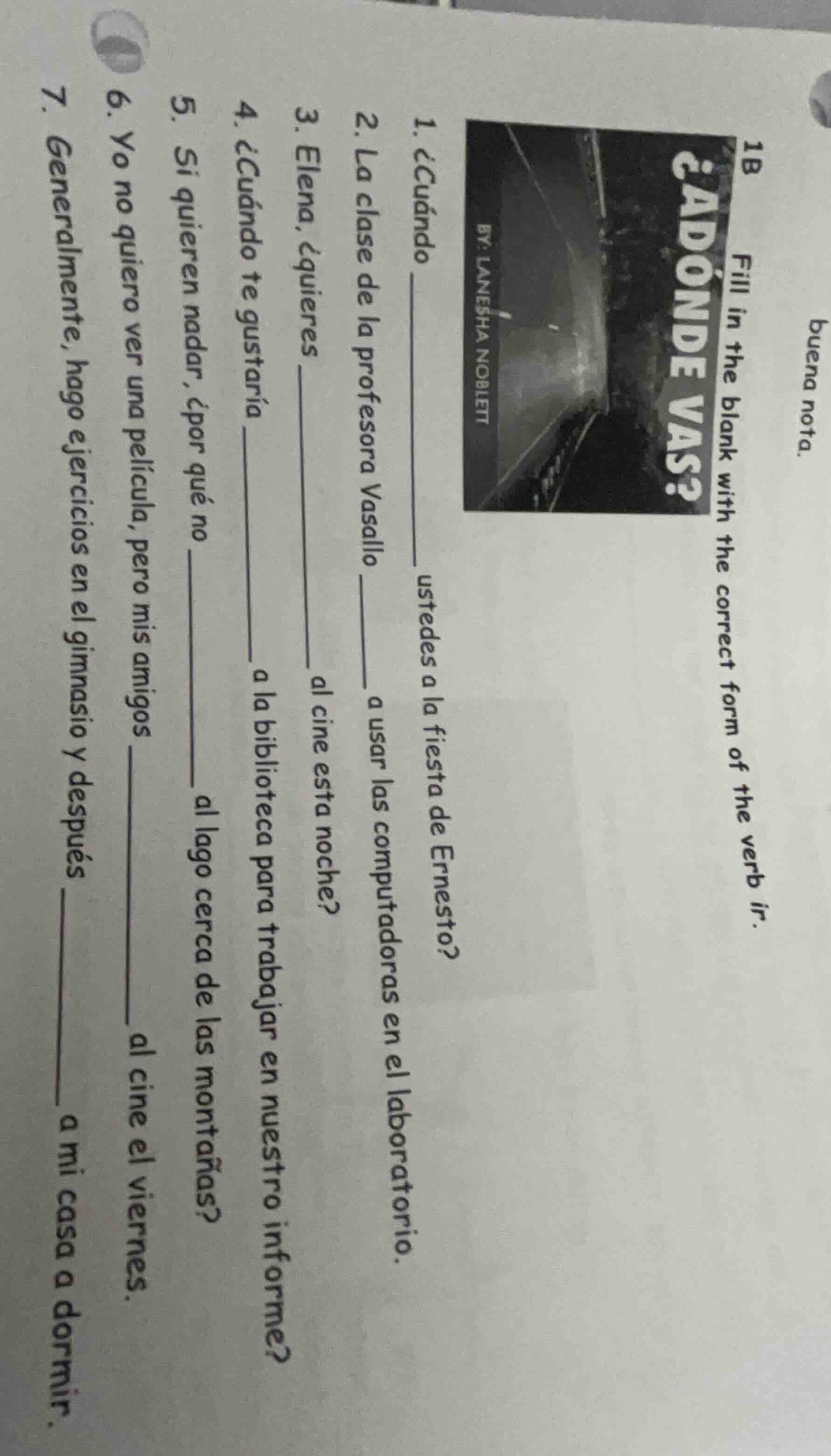
1b fill in the blank with the correct form of the verb ir. 1. ¿cuándo ____ ustedes a la fiesta de ernesto? 2. la clase de la profesora vasallo __ a usar las computadoras en el laboratorio. 3. elena, ¿quieres __ al cine esta noche? 4. ¿cuándo te gustaría __ a la biblioteca para trabajar en nuestro informe? 5. si quieren nadar, ¿por qué no __ al lago cerca de las montañas? 6. yo no quiero ver una película, pero mis amigos __ al cine el viernes. 7. generalmente, hago ejercicios en el gimnasio y después ____ a mi casa a dormir.
To solve these fill - in - the - blank questions, we need to use the correct form of the verb “ir” (to go) in Spanish. The conjugation of “ir” is: yo voy, tú vas, él/ella/usted va, nosotros/as vamos, vosotros/as vais, ellos/ellas/ustedes van.
Question 1
The subject is “ustedes” (you all, formal/plural). The conjugation of “ir” for “ustedes” is “van”. So we fill in “van”.
Question 2
The subject is “la profesora Vasallo” (she, third - person singular, formal “usted” can also be used, but here as a third - person singular subject, the conjugation of “ir” is “va”. So we fill in “va”.
Question 3
The subject is “Elena” (she, third - person singular, but in the question, it's a question to Elena (tú form, since it's a direct question to her). The conjugation of “ir” for “tú” is “vas”. So we fill in “vas”.
Question 4
The subject is “te” (tú, since it's a question to “you”). The phrase “te gustaría” is followed by the infinitive of the verb, but wait, no, the structure here is “¿Cuándo te gustaría ir...?”. Wait, the verb is “ir”, and in the context of “gustaría” (would like), we use the infinitive “ir”. Wait, maybe I made a mistake earlier. Wait, the question is “¿Cuándo te gustaría ______ a la biblioteca...?”. The verb is “ir”, and after “gustaría” (which is a conditional form of “gustar”), we use the infinitive. So we fill in “ir”.
Question 5
The subject is “ellos” (they, since “quieren” is the conjugation of “querer” for “ellos”). The verb “ir” in the context of “por qué no ____” (why not go) uses the infinitive “ir”. Wait, no, the subject is “ellos” (they) for the main verb “quieren”, and then “por qué no ____ al lago...”. The structure “por qué no + infinitive” is used, so we fill in “ir”.
Question 6
The subject is “mis amigos” (they, third - person plural). The verb “ir” in the context of “mis amigos ______ al cine” (my friends go to the movies). The conjugation of “ir” for “ellos” (mis amigos are “ellos”) is “van”. Wait, but the main clause is “Yo no quiero ver una película, pero mis amigos...”. So the subject is “mis amigos” (they), so the conjugation of “ir” is “van”. So we fill in “van”.
Question 7
The subject is “yo” (I). The verb “ir” in the context of “después ______ a mi casa” (after go to my house). The conjugation of “ir” for “yo” is “voy”. So we fill in “voy”.
Final Answers:
- van
- va
- vas
- ir
- ir
- van
- voy

Snap & solve any problem in the app
Get step-by-step solutions on Sovi AI
Photo-based solutions with guided steps
Explore more problems and detailed explanations
To solve these fill - in - the - blank questions, we need to use the correct form of the verb “ir” (to go) in Spanish. The conjugation of “ir” is: yo voy, tú vas, él/ella/usted va, nosotros/as vamos, vosotros/as vais, ellos/ellas/ustedes van.
Question 1
The subject is “ustedes” (you all, formal/plural). The conjugation of “ir” for “ustedes” is “van”. So we fill in “van”.
Question 2
The subject is “la profesora Vasallo” (she, third - person singular, formal “usted” can also be used, but here as a third - person singular subject, the conjugation of “ir” is “va”. So we fill in “va”.
Question 3
The subject is “Elena” (she, third - person singular, but in the question, it's a question to Elena (tú form, since it's a direct question to her). The conjugation of “ir” for “tú” is “vas”. So we fill in “vas”.
Question 4
The subject is “te” (tú, since it's a question to “you”). The phrase “te gustaría” is followed by the infinitive of the verb, but wait, no, the structure here is “¿Cuándo te gustaría ir...?”. Wait, the verb is “ir”, and in the context of “gustaría” (would like), we use the infinitive “ir”. Wait, maybe I made a mistake earlier. Wait, the question is “¿Cuándo te gustaría ______ a la biblioteca...?”. The verb is “ir”, and after “gustaría” (which is a conditional form of “gustar”), we use the infinitive. So we fill in “ir”.
Question 5
The subject is “ellos” (they, since “quieren” is the conjugation of “querer” for “ellos”). The verb “ir” in the context of “por qué no ____” (why not go) uses the infinitive “ir”. Wait, no, the subject is “ellos” (they) for the main verb “quieren”, and then “por qué no ____ al lago...”. The structure “por qué no + infinitive” is used, so we fill in “ir”.
Question 6
The subject is “mis amigos” (they, third - person plural). The verb “ir” in the context of “mis amigos ______ al cine” (my friends go to the movies). The conjugation of “ir” for “ellos” (mis amigos are “ellos”) is “van”. Wait, but the main clause is “Yo no quiero ver una película, pero mis amigos...”. So the subject is “mis amigos” (they), so the conjugation of “ir” is “van”. So we fill in “van”.
Question 7
The subject is “yo” (I). The verb “ir” in the context of “después ______ a mi casa” (after go to my house). The conjugation of “ir” for “yo” is “voy”. So we fill in “voy”.
Final Answers:
- van
- va
- vas
- ir
- ir
- van
- voy