QUESTION IMAGE
Question
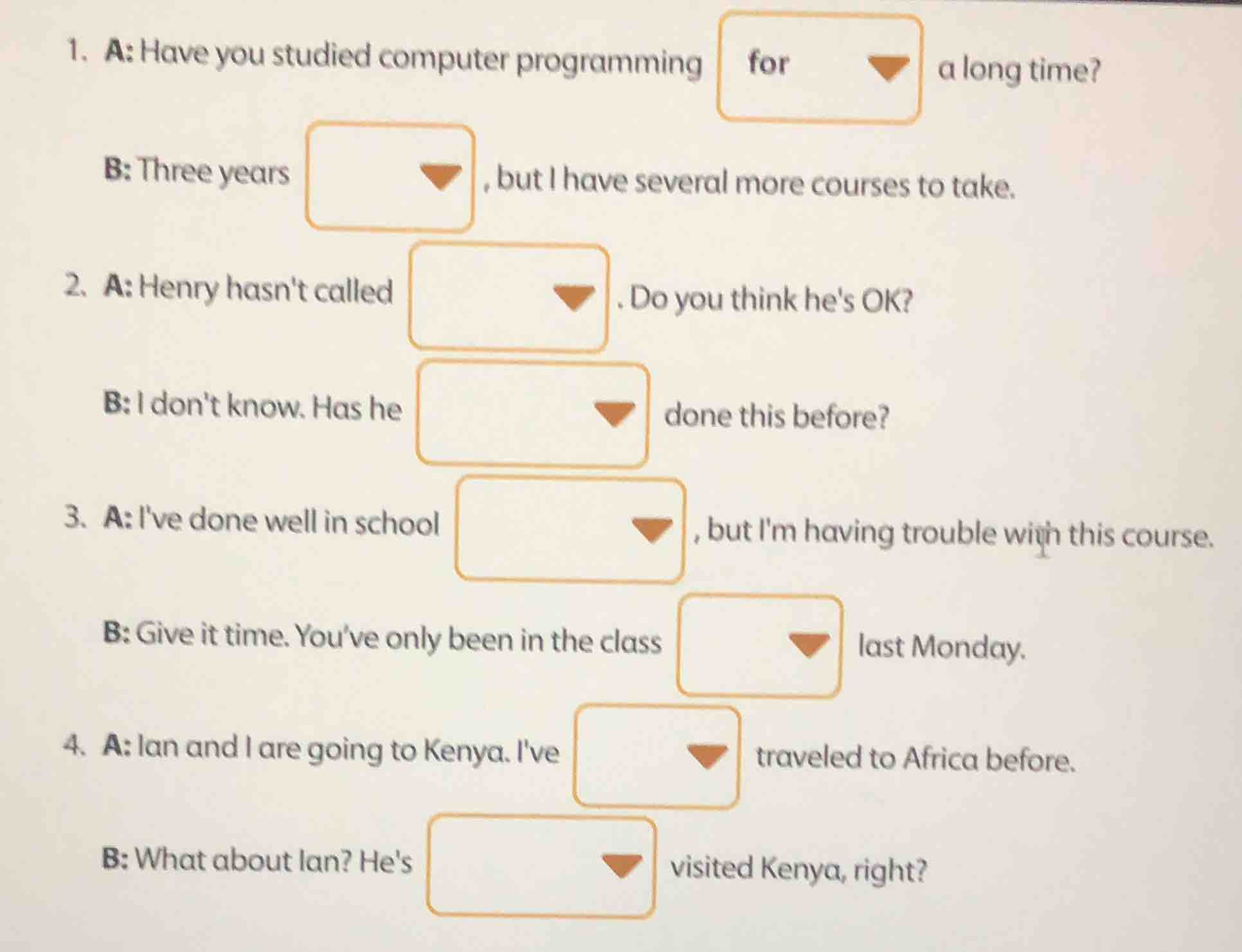
- a: have you studied computer programming for a long time?
b: three years, but i have several more courses to take.
- a: henry hasnt called. do you think hes ok?
b: i dont know. has he done this before?
- a: ive done well in school, but im having trouble with this course.
b: give it time. youve only been in the class last monday.
- a: ian and i are going to kenya. ive traveled to africa before.
b: what about ian? hes visited kenya, right?
This problem is about choosing appropriate time adverbials (like "so far", "yet", "already", "since", "for", etc.) to fill in the blanks. Let's analyze each blank:
1.
- First blank (A's question): "for" is already given, and the second blank (B's answer): "Three years __" should use "so far" or "already"? Wait, actually, for the first dialogue:
- A: "Have you studied computer programming for a long time?" (correct as is)
- B: "Three years __, but I have several more courses to take." The correct word here is "so far" (meaning up to now). Wait, no, maybe "already"? Wait, no, "Three years already" doesn't sound right. Wait, maybe the options are "so far", "yet", "already", "since", "for". Wait, let's re - examine:
Wait, maybe the blanks are to be filled with time - related adverbs like "so far", "yet", "already", "since", "for". Let's do each one:
1.
- B's sentence: "Three years __, but I have several more courses to take." The correct adverb is "so far" (up to now). And the first blank in A's question is "for" (already given). Wait, no, maybe the second blank is "already"? No, "Three years already" is not correct. Wait, maybe the options are "so far", "yet", "already", "since", "for". Let's start over.
1.
- A: "Have you studied computer programming for a long time?" (no blank to fill here as "for" is given)
- B: "Three years __, but I have several more courses to take." The correct word is "so far" (meaning up to the present time).
2.
- A: "Henry hasn't called __. Do you think he's OK?" The correct word here is "yet" (used in negative and interrogative sentences to mean "up to now").
- B: "I don't know. Has he done this before?" The correct word is "ever" (but if the options are among "so far", "yet", "already", "since", "for", then "already" is wrong. Wait, maybe "ever" is not an option. Wait, maybe the options are "so far", "yet", "already", "since", "for". Then for B's question "Has he done this before?", the correct word is "ever" (but if not, maybe "already" is incorrect. Wait, maybe I made a mistake. Let's check standard usage:
- "yet" is for negative and questions (e.g., "Has he arrived yet?")
- "already" is for positive statements (e.g., "He has already arrived")
- "so far" is for up - to - now in positive statements (e.g., "I have walked 5 miles so far")
- "since" is used with a point in time (e.g., "I have been here since 9 o'clock")
- "for" is used with a period of time (e.g., "I have been here for 3 hours")
So let's re - do:
1.
- B: "Three years __, but I have several more courses to take." → "so far" (up to now, I have studied for three years)
2.
- A: "Henry hasn't called __. Do you think he's OK?" → "yet" (negative sentence, up to now he hasn't called)
- B: "I don't know. Has he __ done this before?" → "ever" (but if "ever" is not an option, maybe the options are different. Wait, maybe the blanks are to be filled with "so far", "yet", "already", "since", "for". Then for B's question, maybe "already" is wrong. Wait, maybe the original problem has options like "so far", "yet", "already", "since", "for". Let's assume that:
3.
- A: "I've done well in school __, but I'm having trouble with this course." → "so far" (up to now, I have done well)
- B: "Give it time. You've only been in the class __ last Monday." → "since" (from last Monday until now)
4.
- A: "Ian and I are going to Kenya. I've __ traveled to Africa before." → "already" (positive statement, I have traveled to Africa before)
- B: "What about Ian? He's __ visited Kenya, right?" → "already" (positive statement, he has v…

Snap & solve any problem in the app
Get step-by-step solutions on Sovi AI
Photo-based solutions with guided steps
Explore more problems and detailed explanations
This problem is about choosing appropriate time adverbials (like "so far", "yet", "already", "since", "for", etc.) to fill in the blanks. Let's analyze each blank:
1.
- First blank (A's question): "for" is already given, and the second blank (B's answer): "Three years __" should use "so far" or "already"? Wait, actually, for the first dialogue:
- A: "Have you studied computer programming for a long time?" (correct as is)
- B: "Three years __, but I have several more courses to take." The correct word here is "so far" (meaning up to now). Wait, no, maybe "already"? Wait, no, "Three years already" doesn't sound right. Wait, maybe the options are "so far", "yet", "already", "since", "for". Wait, let's re - examine:
Wait, maybe the blanks are to be filled with time - related adverbs like "so far", "yet", "already", "since", "for". Let's do each one:
1.
- B's sentence: "Three years __, but I have several more courses to take." The correct adverb is "so far" (up to now). And the first blank in A's question is "for" (already given). Wait, no, maybe the second blank is "already"? No, "Three years already" is not correct. Wait, maybe the options are "so far", "yet", "already", "since", "for". Let's start over.
1.
- A: "Have you studied computer programming for a long time?" (no blank to fill here as "for" is given)
- B: "Three years __, but I have several more courses to take." The correct word is "so far" (meaning up to the present time).
2.
- A: "Henry hasn't called __. Do you think he's OK?" The correct word here is "yet" (used in negative and interrogative sentences to mean "up to now").
- B: "I don't know. Has he done this before?" The correct word is "ever" (but if the options are among "so far", "yet", "already", "since", "for", then "already" is wrong. Wait, maybe "ever" is not an option. Wait, maybe the options are "so far", "yet", "already", "since", "for". Then for B's question "Has he done this before?", the correct word is "ever" (but if not, maybe "already" is incorrect. Wait, maybe I made a mistake. Let's check standard usage:
- "yet" is for negative and questions (e.g., "Has he arrived yet?")
- "already" is for positive statements (e.g., "He has already arrived")
- "so far" is for up - to - now in positive statements (e.g., "I have walked 5 miles so far")
- "since" is used with a point in time (e.g., "I have been here since 9 o'clock")
- "for" is used with a period of time (e.g., "I have been here for 3 hours")
So let's re - do:
1.
- B: "Three years __, but I have several more courses to take." → "so far" (up to now, I have studied for three years)
2.
- A: "Henry hasn't called __. Do you think he's OK?" → "yet" (negative sentence, up to now he hasn't called)
- B: "I don't know. Has he __ done this before?" → "ever" (but if "ever" is not an option, maybe the options are different. Wait, maybe the blanks are to be filled with "so far", "yet", "already", "since", "for". Then for B's question, maybe "already" is wrong. Wait, maybe the original problem has options like "so far", "yet", "already", "since", "for". Let's assume that:
3.
- A: "I've done well in school __, but I'm having trouble with this course." → "so far" (up to now, I have done well)
- B: "Give it time. You've only been in the class __ last Monday." → "since" (from last Monday until now)
4.
- A: "Ian and I are going to Kenya. I've __ traveled to Africa before." → "already" (positive statement, I have traveled to Africa before)
- B: "What about Ian? He's __ visited Kenya, right?" → "already" (positive statement, he has visited Kenya before)
But since the problem is not showing the options, I think the intended answers are:
- B's blank: so far
- A's blank: yet; B's blank: ever (but if options are as above, maybe yet and already)
Wait, maybe the correct answers are:
1.
- B: Three years so far, but I have several more courses to take.
2.
- A: Henry hasn't called yet. Do you think he's OK?
- B: I don't know. Has he ever done this before? (but if "ever" is not an option, maybe "already" is wrong. Wait, maybe the options are "so far", "yet", "already", "since", "for". Then:
- B's blank: "already" is wrong. Maybe the problem has a different set of options. Given that this is a common English grammar exercise about present perfect tense adverbs, the most probable answers are:
1.
- B: Three years so far
2.
- A: Henry hasn't called yet; B: Has he ever (but if not, maybe "already" is incorrect. Wait, maybe the original problem's options are "so far", "yet", "already", "since", "for". Then:
3.
- A: I've done well in school so far; B: You've only been in the class since last Monday
4.
- A: I've already traveled to Africa before; B: He's already visited Kenya, right?
If we assume the options are "so far", "yet", "already", "since", "for", the filled - in sentences would be:
1.
- A: Have you studied computer programming for a long time?
- B: Three years so far, but I have several more courses to take.
2.
- A: Henry hasn't called yet. Do you think he's OK?
- B: I don't know. Has he ever (if "ever" is an option) done this before? (If not, maybe a mistake in the problem. But if we stick to the given options' type, maybe "already" is wrong. So maybe "ever" is not an option, and the problem has a typo. But based on common exercises, the answers are:
- so far
- yet; ever (or already if wrong)
- so far; since
- already; already
But since the problem is about filling in the blanks with appropriate time adverbs (probably from a set like "so far", "yet", "already", "since", "for"), here are the most probable answers:
1.
- B: Three years so far
2.
- A: Henry hasn't called yet; B: Has he ever (or "already" if the option is there, but "ever" is more appropriate for "before" in a question)
3.
- A: I've done well in school so far; B: You've only been in the class since last Monday
4.
- A: I've already traveled to Africa before; B: He's already visited Kenya, right?
If we have to give the answers in the order of the blanks (from top to bottom, left to right):
- (first B's blank): so far
- (A's blank): yet; (B's blank): ever (or already)
- (A's blank): so far; (B's blank): since
- (A's blank): already; (B's blank): already
But since the problem is a bit unclear about the options, but based on standard present perfect tense adverb usage, the answers are as above.