QUESTION IMAGE
Question
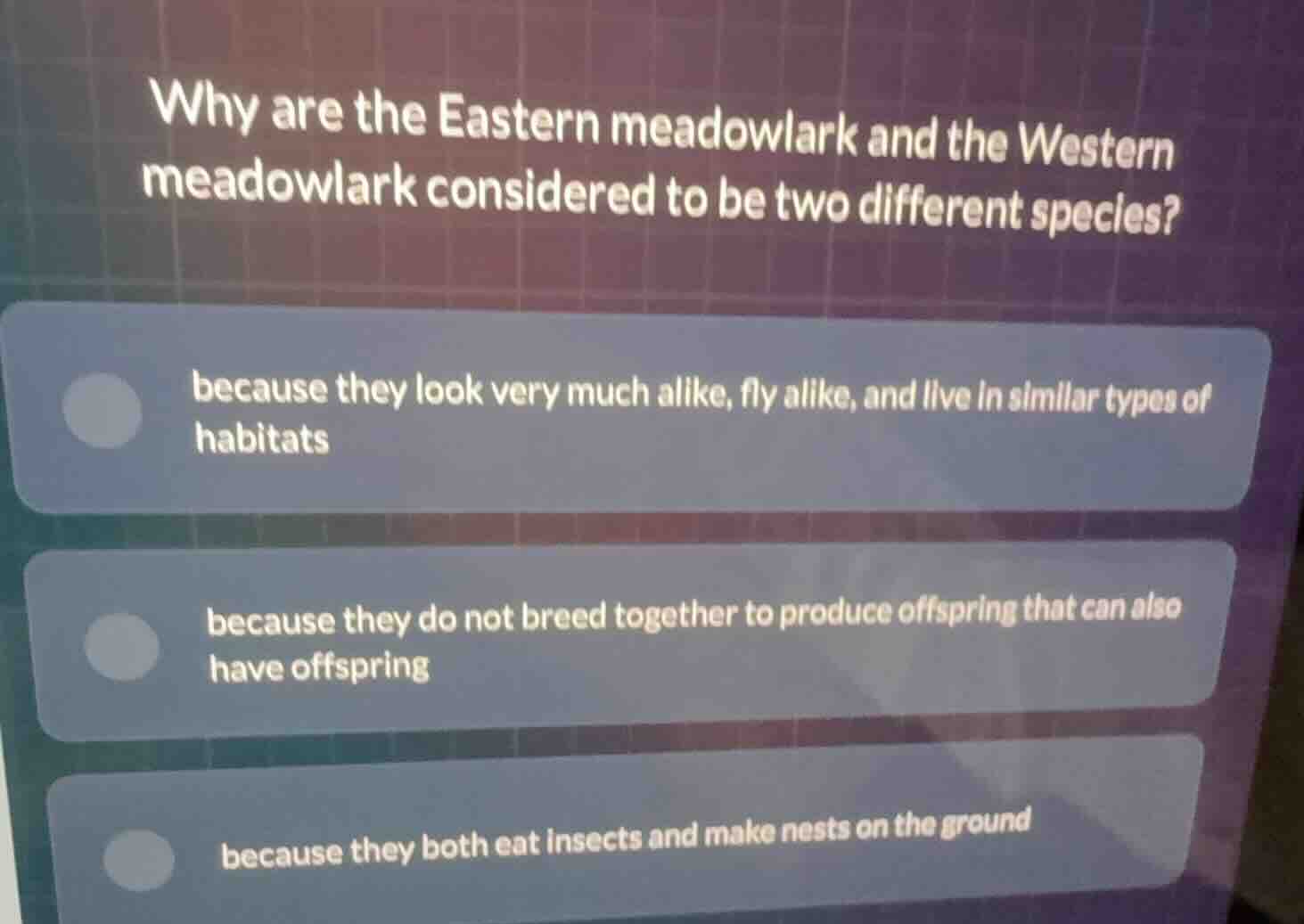
why are the eastern meadowlark and the western meadowlark considered to be two different species?
- because they look very much alike, fly alike, and live in similar types of habitats
- because they do not breed together to produce offspring that can also have offspring
- because they both eat insects and make nests on the ground
🆕 New Concept Discovered: Biological Species Concept
How we define what makes a species unique
Step 1: Define a biological species
The biological species concept is the primary standard used to define a species. Under this concept, a species is a group of organisms that can successfully interbreed in nature and produce viable, fertile offspring (offspring that can also reproduce).
If two groups of organisms cannot mate with each other to produce fertile offspring, they are considered distinct, separate species.
Step 2: Apply the definition to the meadowlarks
Even though the Eastern meadowlark and the Western meadowlark look almost identical and share similar behaviors, they do not successfully interbreed in the wild. Because they cannot mate to produce fertile offspring, they are classified as two different species.
Step 3: Evaluate the given options
- Option 1: "because they look very much alike, fly alike, and live in similar types of habitats" — This describes similarities, which would suggest they are the same species, not different ones.
- Option 2: "because they do not breed together to produce offspring that can also have offspring" — This directly aligns with the biological species concept definition of separate species.
- Option 3: "because they both eat insects and make nests on the ground" — This describes shared ecological niches, which does not explain why they are classified as separate species.

Snap & solve any problem in the app
Get step-by-step solutions on Sovi AI
Photo-based solutions with guided steps
Explore more problems and detailed explanations
because they do not breed together to produce offspring that can also have offspring