QUESTION IMAGE
Question
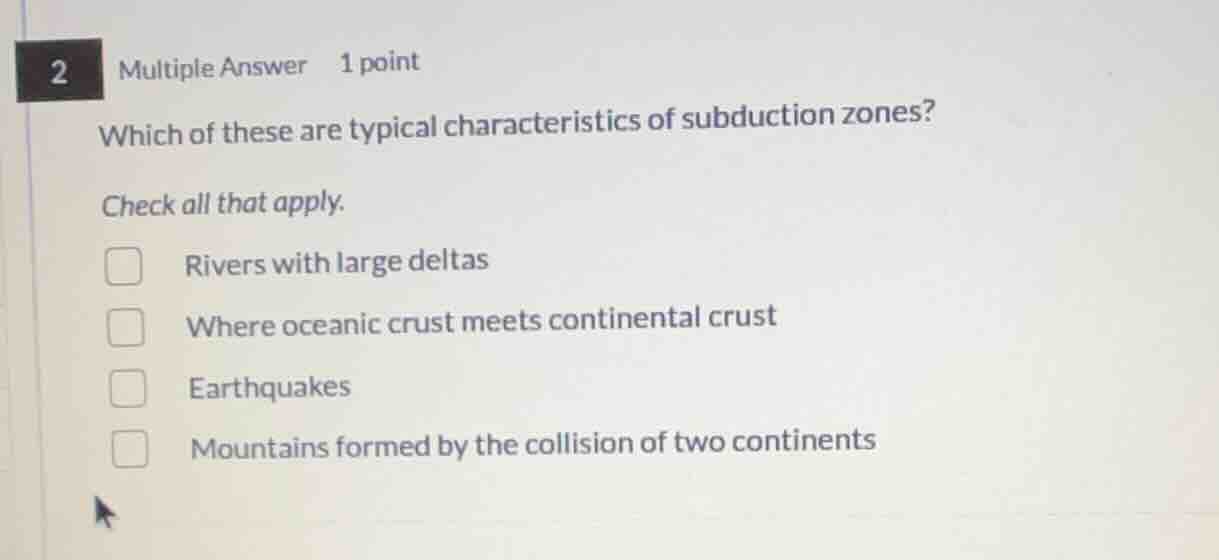
which of these are typical characteristics of subsubduction zones?
check all that apply.
rivers with large deltas
where oceanic crust meets continental crust
earthquakes
mountains formed by the collision of two continents
Analyze subduction zone characteristics
Subduction zones occur at convergent plate boundaries where one tectonic plate sinks beneath another into the mantle. This process typically involves an oceanic plate sliding under either a continental plate or another oceanic plate.
Evaluate each option
- Rivers with large deltas: This is a surface depositional feature unrelated to the tectonic processes of subduction.
- Where oceanic crust meets continental crust: This is a primary location for subduction zones, as the denser oceanic crust subducts beneath the less dense continental crust.
- Earthquakes: The friction and movement of the subducting plate generate intense seismic activity, making earthquakes highly characteristic of these zones.
- Mountains formed by the collision of two continents: Continental-continental collisions form massive mountain ranges (like the Himalayas) but do not result in subduction because both plates are too buoyant to sink.

Snap & solve any problem in the app
Get step-by-step solutions on Sovi AI
Photo-based solutions with guided steps
Explore more problems and detailed explanations
- Rivers with large deltas
- Where oceanic crust meets continental crust (Correct answer)
- Earthquakes (Correct answer)
- Mountains formed by the collision of two continents