QUESTION IMAGE
Question
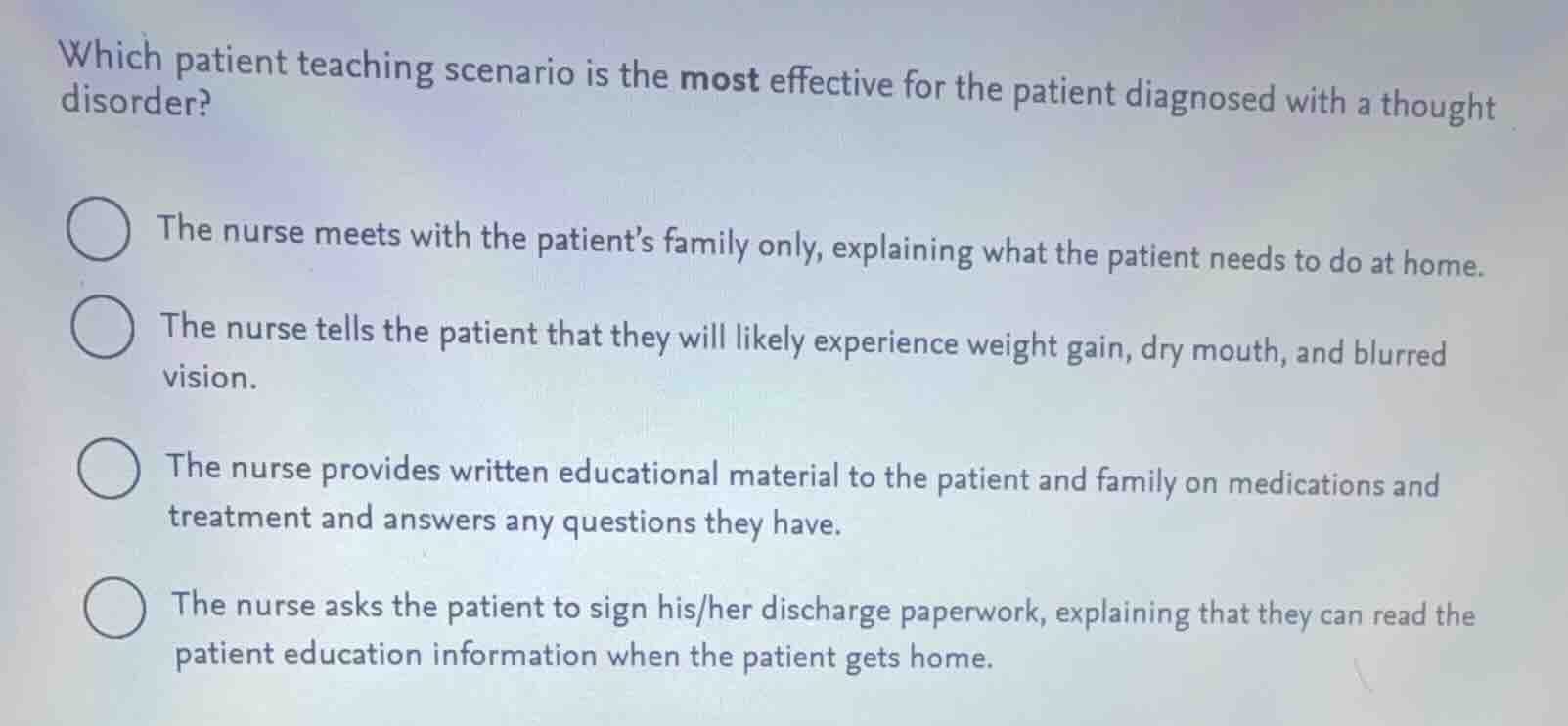
which patient teaching scenario is the most effective for the patient diagnosed with a thought disorder?
the nurse meets with the patients family only, explaining what the patient needs to do at home.
the nurse tells the patient that they will likely experience weight gain, dry mouth, and blurred vision.
the nurse provides written educational material to the patient and family on medications and treatment and answers any questions they have.
the nurse asks the patient to sign his/her discharge paperwork, explaining that they can read the patient education information when the patient gets home.
Analyze the learning needs of a patient with a thought disorder
Patients with thought disorders (such as schizophrenia) often experience cognitive deficits, concrete thinking, and difficulty processing complex verbal information. Effective teaching strategies must involve both the patient and their support system (family), use multiple modalities (written and verbal), and allow opportunities for reinforcement and clarification.
Evaluate the given options
- Option 1: Meeting only with the family excludes the patient, violating patient autonomy and self-care principles.
- Option 2: Telling the patient about side effects verbally without written reinforcement or family involvement is insufficient for a patient with cognitive/processing difficulties.
- Option 3: Providing written educational materials to both the patient and family, combined with verbal discussion and answering questions, utilizes multiple senses, reinforces learning, involves the support system, and allows verification of understanding.
- Option 4: Asking the patient to sign paperwork and read the information later at home is unsafe and ineffective, as it does not assess comprehension or provide immediate support.
Determine the most effective scenario
Option 3 is the most comprehensive, patient-centered, and evidence-based teaching method for this population.

Snap & solve any problem in the app
Get step-by-step solutions on Sovi AI
Photo-based solutions with guided steps
Explore more problems and detailed explanations
- (A) The nurse meets with the patient's family only, explaining what the patient needs to do at home.
- (B) The nurse tells the patient that they will likely experience weight gain, dry mouth, and blurred vision.
- (C) The nurse provides written educational material to the patient and family on medications and treatment and answers any questions they have. (Correct answer)
- (D) The nurse asks the patient to sign his/her discharge paperwork, explaining that they can read the patient education information when the patient gets home.