QUESTION IMAGE
Question
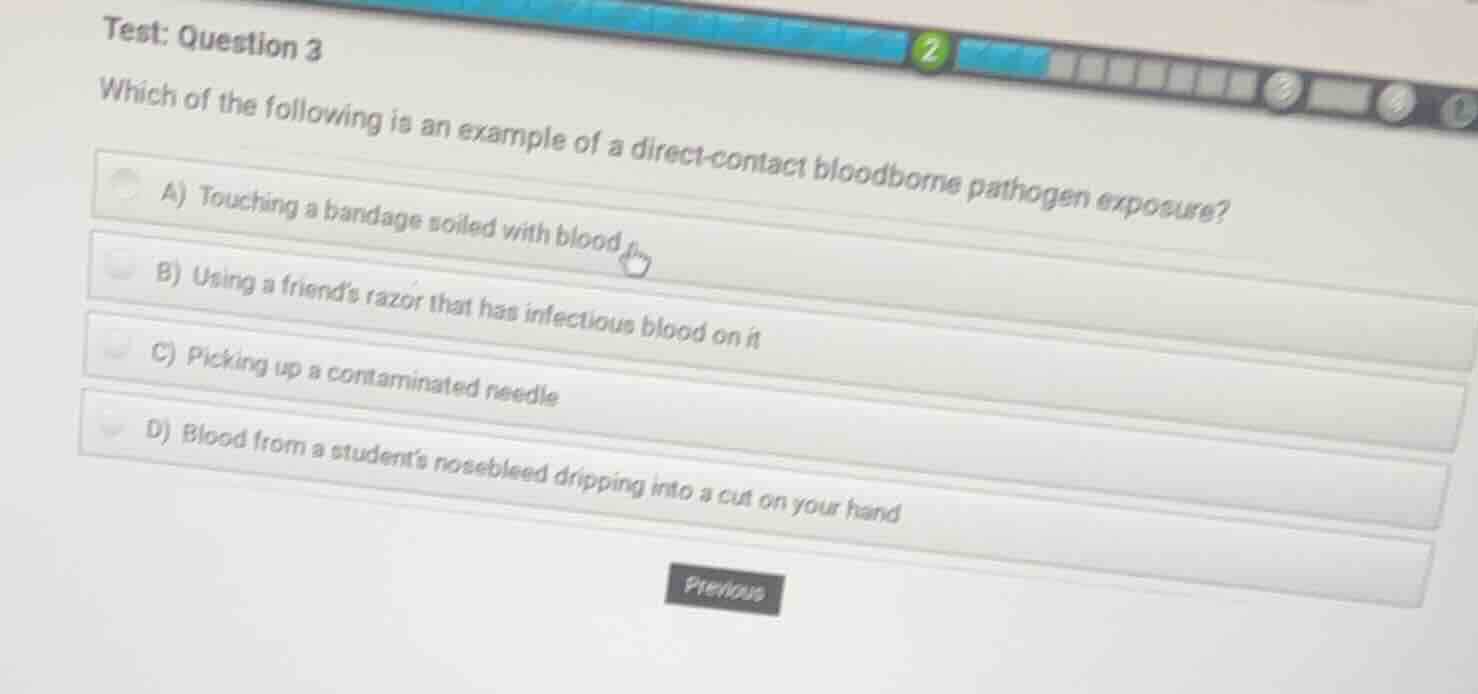
which of the following is an example of a direct-contact bloodborne pathogen exposure?
a) touching a bandage soiled with blood
b) using a friends razor that has infectious blood on it
c) picking up a contaminated needle
d) blood from a students nosebleed dripping into a cut on your hand
Define direct-contact exposure
Direct-contact transmission occurs when there is physical contact between an infected person's body fluids (such as blood) and a susceptible person's open wound, cut, or mucous membrane.
Analyze indirect-contact options
Options A, B, and C involve touching or using contaminated objects (a soiled bandage, a razor, or a needle). These are examples of indirect-contact exposure because an intermediate object transfers the pathogen.
Evaluate the direct-contact option
Option D describes blood from an infected individual (a student's nosebleed) directly entering an open wound (a cut on your hand) without an intermediate object. This fits the definition of direct-contact exposure.
Relate to pathogen transmission
Understanding how Viral Pathogens spread helps prevent infection. Direct contact is a highly efficient transmission route for bloodborne pathogens.

Snap & solve any problem in the app
Get step-by-step solutions on Sovi AI
Photo-based solutions with guided steps
Explore more problems and detailed explanations
- A) Touching a bandage soiled with blood
- B) Using a friend's razor that has infectious blood on it
- C) Picking up a contaminated needle
- D) Blood from a student's nosebleed dripping into a cut on your hand (Correct answer)