QUESTION IMAGE
Question
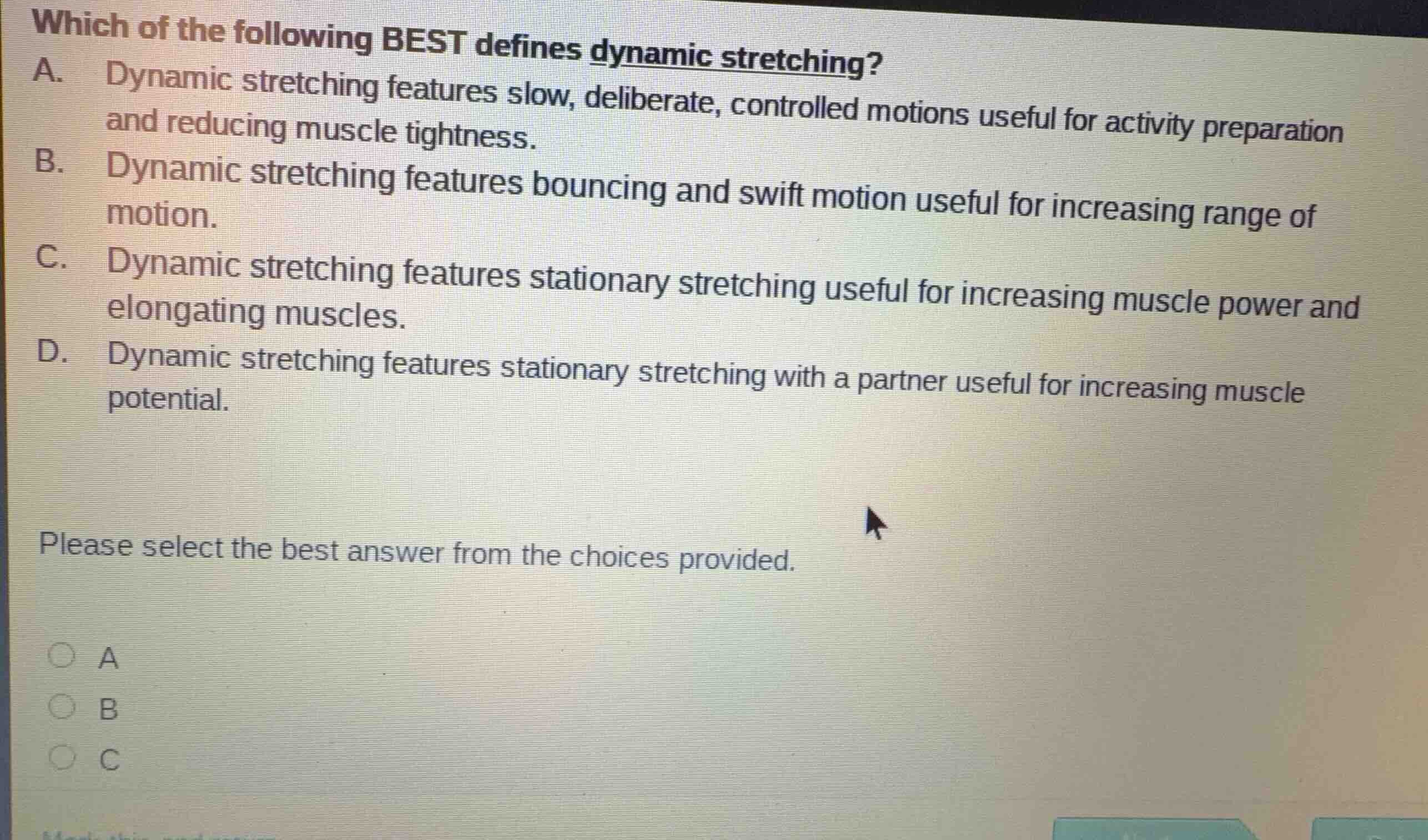
which of the following best defines dynamic stretching?
a. dynamic stretching features slow, deliberate, controlled motions useful for activity preparation and reducing muscle tightness.
b. dynamic stretching features bouncing and swift motion useful for increasing range of motion.
c. dynamic stretching features stationary stretching useful for increasing muscle power and elongating muscles.
d. dynamic stretching features stationary stretching with a partner useful for increasing muscle potential.
please select the best answer from the choices provided.
Analyze dynamic stretching
Dynamic stretching involves moving parts of your body and gradually increasing reach, speed of movement, or both. It consists of controlled, deliberate, and slow physical movements that mimic the activity you are preparing to perform. This is different from other Types of Stretching.
Evaluate Option A
Option A states that dynamic stretching features slow, deliberate, controlled motions useful for activity preparation and reducing muscle tightness. This aligns perfectly with the scientific definition of dynamic stretching, which prepares muscles for performance through active movement.
Evaluate Option B
Option B describes bouncing and swift motion. This is the definition of Ballistic Stretching, which uses momentum and bouncing to force a joint beyond its normal range of motion. It is not dynamic stretching.
Evaluate Option C
Option C describes stationary stretching. Stationary stretching held in place is known as Static Stretching, not dynamic stretching.
Evaluate Option D
Option D describes stationary stretching with a partner. This refers to passive stretching or Proprioceptive Neuromuscular Facilitation (PNF), not dynamic stretching.

Snap & solve any problem in the app
Get step-by-step solutions on Sovi AI
Photo-based solutions with guided steps
Explore more problems and detailed explanations
- (A) Dynamic stretching features slow, deliberate, controlled motions useful for activity preparation and reducing muscle tightness. (Correct answer)
- (B) Dynamic stretching features bouncing and swift motion useful for increasing range of motion.
- (C) Dynamic stretching features stationary stretching useful for increasing muscle power and elongating muscles.
- (D) Dynamic stretching features stationary stretching with a partner useful for increasing muscle potential.