Sovi.AI - AI Math Tutor

Scan to solve math questions

QUESTION IMAGE

which of the following best defines decompensated shock? when the heart…

Question

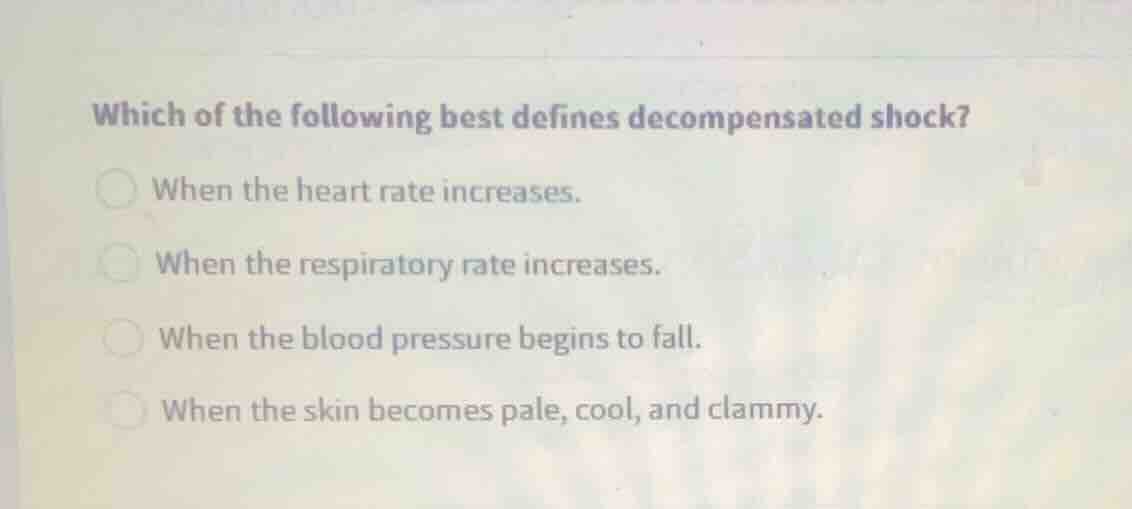
which of the following best defines decompensated shock?

when the heart rate increases.
when the respiratory rate increases.
when the blood pressure begins to fall.
when the skin becomes pale, cool, and clammy.

Explanation:

Response

<pre_analysis>
{
"quality": "clear",
"question_count": 1,
"skills_matched": [
"direct_cot",
"multiple_choice_formatter",
"explain_then_answer",
"tutor",
"mastery_adaptive_brevity"
],
"needs_drawing": false,
"concepts_used": [
"Shock Stages",
"Decompensated Shock"
],
"new_concepts": [],
"current_concepts": [
"Shock Stages",
"Decompensated Shock"
]
}
</pre_analysis>

<reasoning>

Define shock stages

Using the Shock Stages knowledge point, shock progresses from compensated to decompensated when physiological mechanisms fail to maintain perfusion.

Identify decompensated shock indicators

Using the Decompensated Shock knowledge point, a key clinical indicator of decompensation is a drop in blood pressure (hypotension), signaling that compensatory mechanisms are exhausted.

Evaluate the options

  • Increased heart rate, increased respiratory rate, and pale, cool, clammy skin are early compensatory mechanisms.
  • A falling blood pressure represents the transition to decompensation.

</reasoning>

<answer>
<mcq-option>When the heart rate increases.</mcq-option>
<mcq-option>When the respiratory rate increases.</mcq-option>
<mcq-correct>When the blood pressure begins to fall.</mcq-correct>
<mcq-option>When the skin becomes pale, cool, and clammy.</mcq-option>
</answer>

<post_analysis>
{
"subject": "Natural Science",
"question_type": "Multiple Choice",
"knowledge_point": [
"Natural Science",
"Medicine",
"Decompensated Shock"
]
}
</post_analysis>

Answer:

<pre_analysis>
{
"quality": "clear",
"question_count": 1,
"skills_matched": [
"direct_cot",
"multiple_choice_formatter",
"explain_then_answer",
"tutor",
"mastery_adaptive_brevity"
],
"needs_drawing": false,
"concepts_used": [
"Shock Stages",
"Decompensated Shock"
],
"new_concepts": [],
"current_concepts": [
"Shock Stages",
"Decompensated Shock"
]
}
</pre_analysis>

<reasoning>

Define shock stages

Using the Shock Stages knowledge point, shock progresses from compensated to decompensated when physiological mechanisms fail to maintain perfusion.

Identify decompensated shock indicators

Using the Decompensated Shock knowledge point, a key clinical indicator of decompensation is a drop in blood pressure (hypotension), signaling that compensatory mechanisms are exhausted.

Evaluate the options

  • Increased heart rate, increased respiratory rate, and pale, cool, clammy skin are early compensatory mechanisms.
  • A falling blood pressure represents the transition to decompensation.

</reasoning>

<answer>
<mcq-option>When the heart rate increases.</mcq-option>
<mcq-option>When the respiratory rate increases.</mcq-option>
<mcq-correct>When the blood pressure begins to fall.</mcq-correct>
<mcq-option>When the skin becomes pale, cool, and clammy.</mcq-option>
</answer>

<post_analysis>
{
"subject": "Natural Science",
"question_type": "Multiple Choice",
"knowledge_point": [
"Natural Science",
"Medicine",
"Decompensated Shock"
]
}
</post_analysis>