QUESTION IMAGE
Question
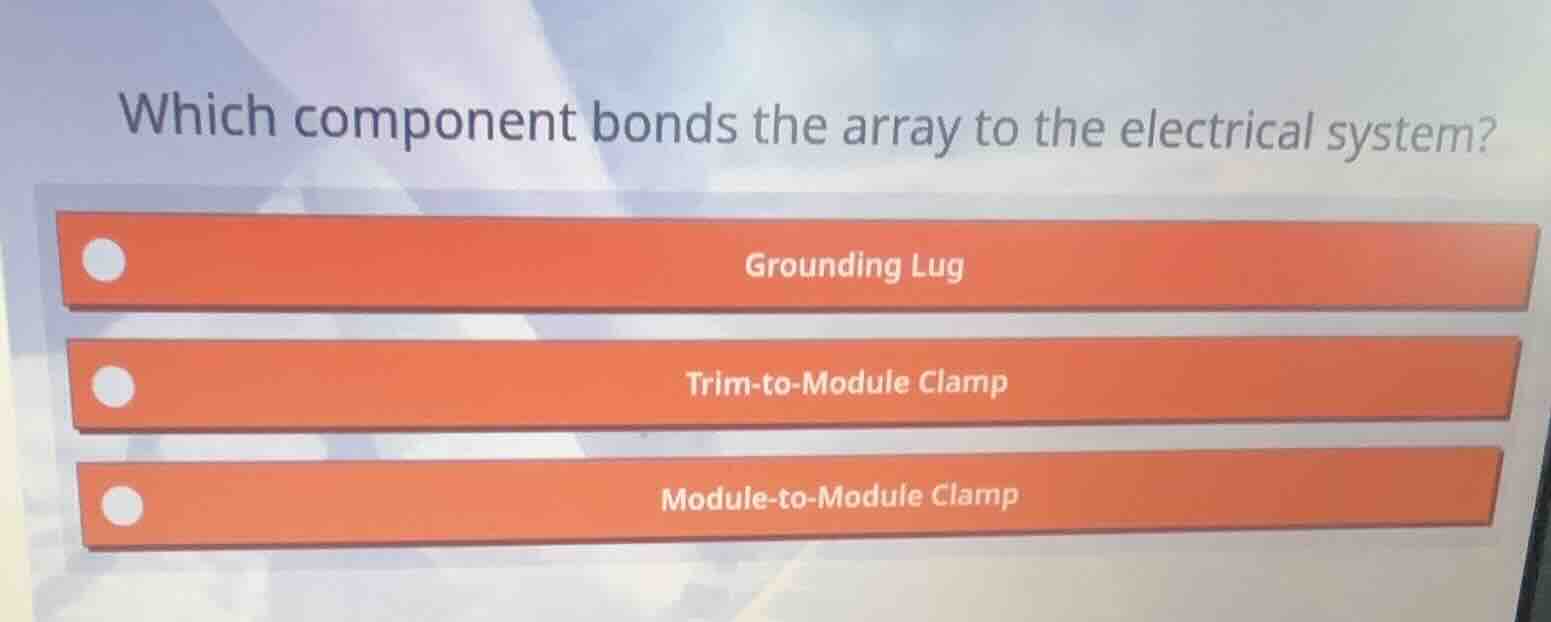
which component bonds the array to the electrical system?
- grounding lug
- trim-to-module clamp
- module-to-module clamp
🆕 New Concept Discovered: Electrical Bonding and Grounding
Connecting conductive parts to create a safe path for electricity.
Step 1: Understand the function of bonding in solar arrays
In solar photovoltaic (PV) installations, "bonding" refers to electrically connecting all exposed metal parts (such as the solar panels and mounting racks) to create a continuous, low-resistance path to the ground. This prevents dangerous electrical shocks and protects the system from lightning surges.
Step 2: Analyze the options
- Grounding Lug: A heavy-duty terminal designed to connect the entire bonded metal structure (the array) to the system's equipment grounding conductor (the electrical system's ground). This serves as the final link connecting the array to the main electrical grounding system.
- Trim-to-Module Clamp: A mechanical clamp used to secure the edges of solar modules to the racking system. While it may provide local bonding between the frame and the rail, its primary purpose is structural mounting.
- Module-to-Module Clamp: A clamp used to secure two adjacent solar modules to the racking. Like the trim clamp, its primary function is structural, though it may also provide local bonding between adjacent modules.
Step 3: Identify the component that connects the entire array to the electrical system
While clamps bond individual components together to form a single conductive unit, the Grounding Lug is the specific component used to connect that entire bonded array structure directly to the ground wire of the electrical system.

Snap & solve any problem in the app
Get step-by-step solutions on Sovi AI
Photo-based solutions with guided steps
Explore more problems and detailed explanations
Grounding Lug