QUESTION IMAGE
Question
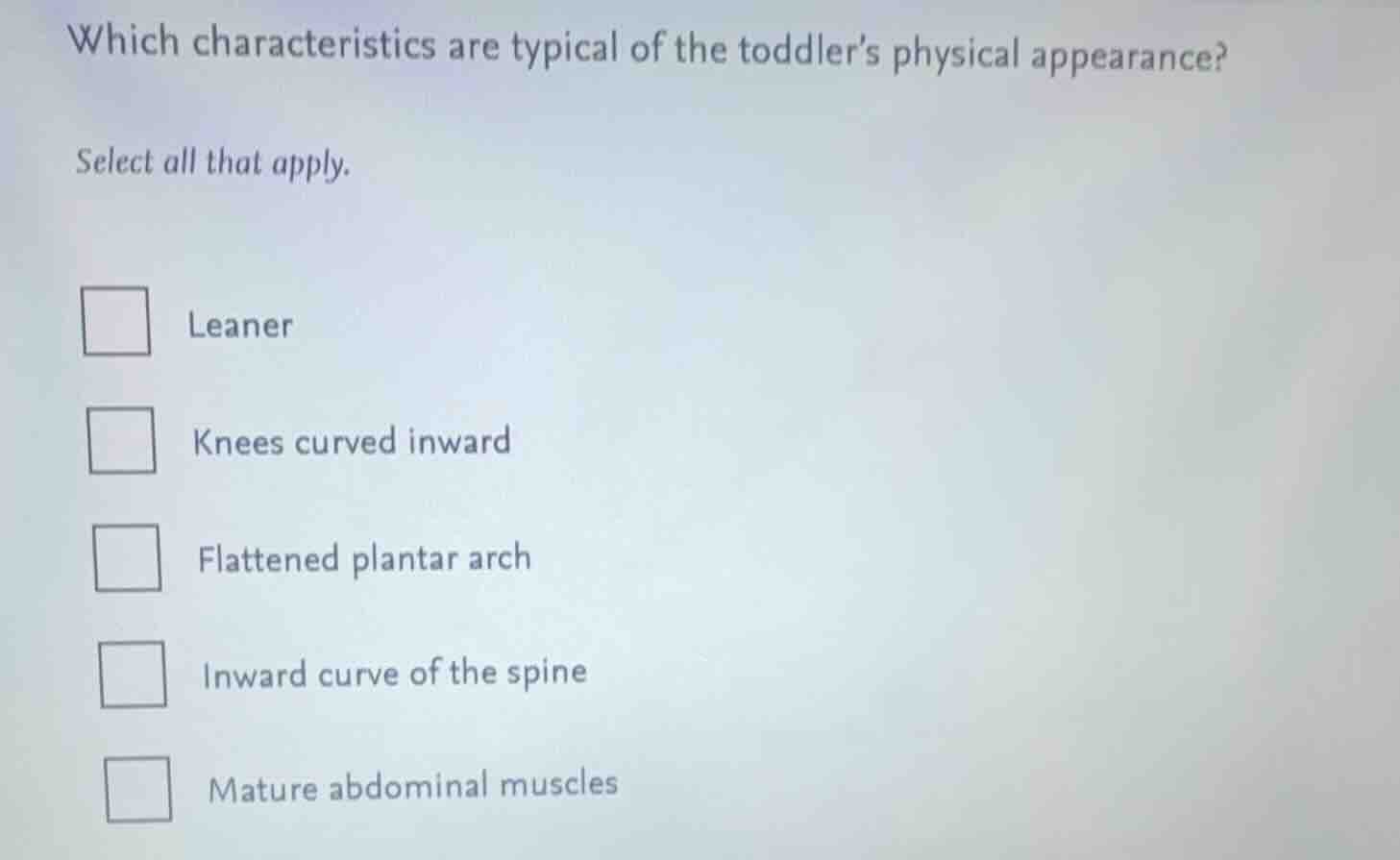
which characteristics are typical of the toddlers physical appearance?
select all that apply.
leaner
knees curved inward
flattened plantar arch
inward curve of the spine
mature abdominal muscles
🆕 New Concept Discovered: Pediatric Growth and Development
Physical milestones and body proportions from infancy to toddlerhood.
Step 1: Analyze the physical changes from infancy to toddlerhood
As an infant transitions into a toddler (typically ages 1 to 3 years), their body proportions and physical appearance undergo distinct developmental changes:
- Body fat distribution: Toddlers lose the chubby, baby-fat appearance of infancy and become significantly leaner as they walk, run, and become more active.
- Spinal alignment: Toddlers typically present with a protruding abdomen and a pronounced inward curve of the lower spine (known as lordosis or "toddler lordosis") because their abdominal muscles are still weak and underdeveloped.
- Foot structure: The feet of toddlers appear flat because of a natural flattened plantar arch protected by a fat pad. The arch of the foot does not fully develop until later in childhood.
Step 2: Evaluate the incorrect options
- Knees curved inward: Toddlers typically exhibit a bow-legged appearance (genu varum, where knees curve outward) rather than knock-knees (genu valgum, where knees curve inward). Knock-knees are more common in preschool-aged children (ages 3 to 4).
- Mature abdominal muscles: Toddlers have weak, immature abdominal muscles, which contributes to their characteristic "potbelly" appearance.

Snap & solve any problem in the app
Get step-by-step solutions on Sovi AI
Photo-based solutions with guided steps
Explore more problems and detailed explanations
- Leaner
- Flattened plantar arch
- Inward curve of the spine