QUESTION IMAGE
Question
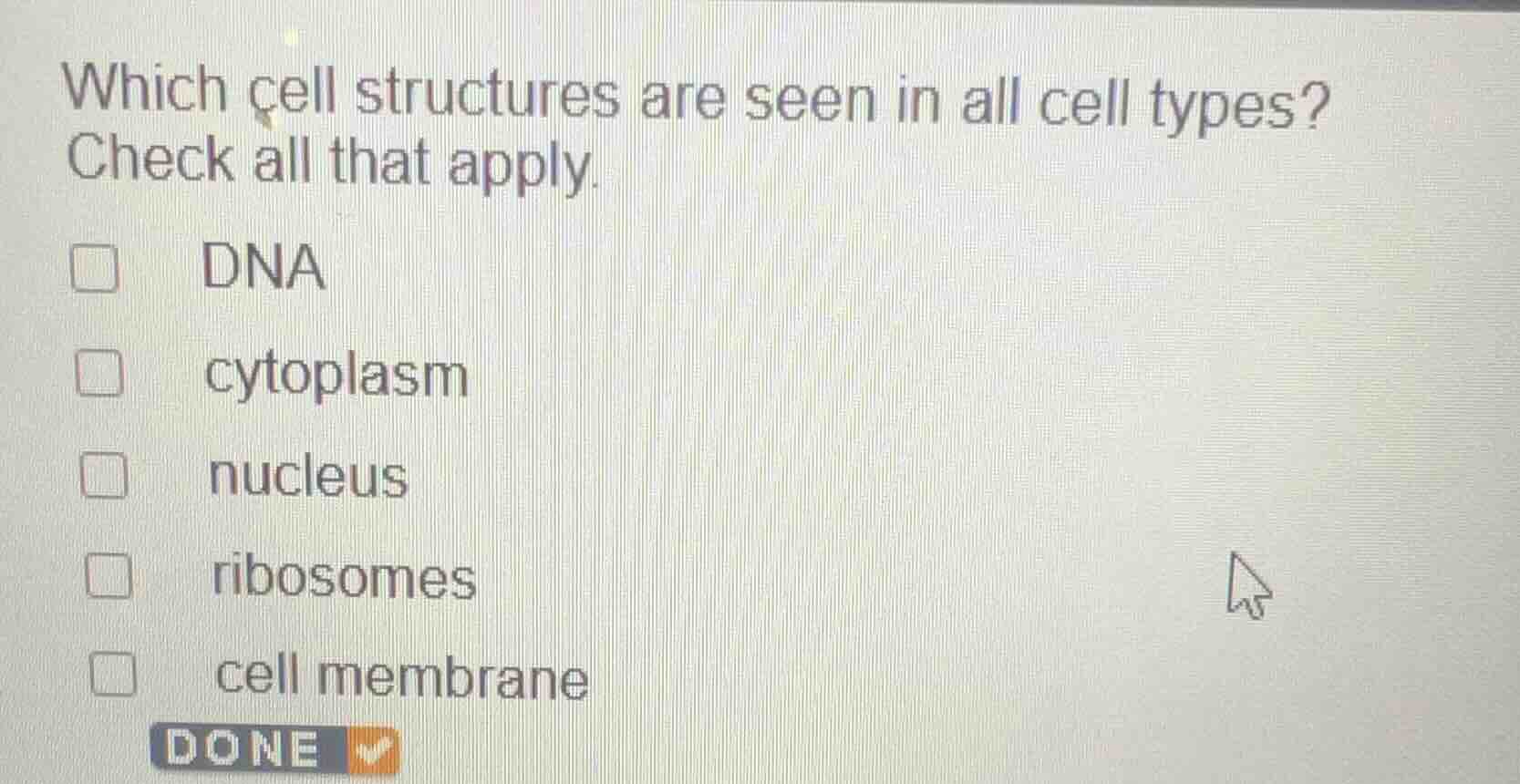
which cell structures are seen in all cell types? check all that apply. dna cytoplasm nucleus ribosomes cell membrane done
Brief Explanations
All cells (prokaryotic and eukaryotic) share core structures:
- DNA: Stores genetic information for all cells.
- Cytoplasm: Gel-like matrix holding cell components, present in all cells.
- Ribosomes: Synthesize proteins, found in all cells.
- Cell membrane: Encloses the cell, regulates material transport, universal to all cells.
The nucleus is only present in eukaryotic cells, so it is excluded.

Snap & solve any problem in the app
Get step-by-step solutions on Sovi AI
Photo-based solutions with guided steps
Explore more problems and detailed explanations
- DNA
- cytoplasm
- ribosomes
- cell membrane