QUESTION IMAGE
Question
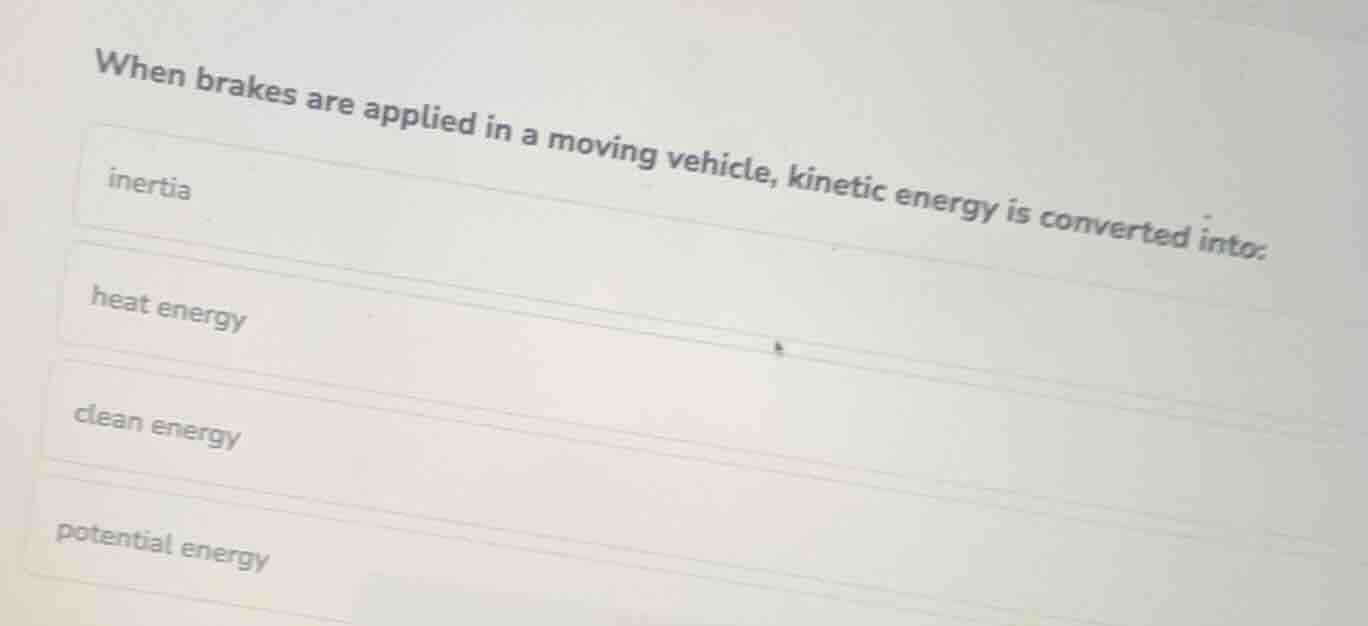
when brakes are applied in a moving vehicle, kinetic energy is converted into:
inertia
heat energy
clean energy
potential energy
Analyze the energy transformation during braking
Using the Kinetic Energy and Conservation of Energy knowledge points
When a vehicle is moving, it possesses kinetic energy due to its motion. Applying the brakes creates mechanical friction between the brake pads and the rotating rotors or drums. According to the law of conservation of energy, this kinetic energy cannot be destroyed; instead, the friction converts the vehicle's kinetic energy into thermal energy, which is released as heat.
Evaluate the given options
- inertia: This is a property of matter resisting changes in motion, not a form of energy.
- heat energy: This is the thermal energy generated by friction as the vehicle slows down.
- clean energy: This is a classification of energy sources, not a physical form of energy.
- potential energy: This is stored energy, which is not the primary product of standard mechanical braking.

Snap & solve any problem in the app
Get step-by-step solutions on Sovi AI
Photo-based solutions with guided steps
Explore more problems and detailed explanations
- inertia
- heat energy (Correct answer)
- clean energy
- potential energy