QUESTION IMAGE
Question
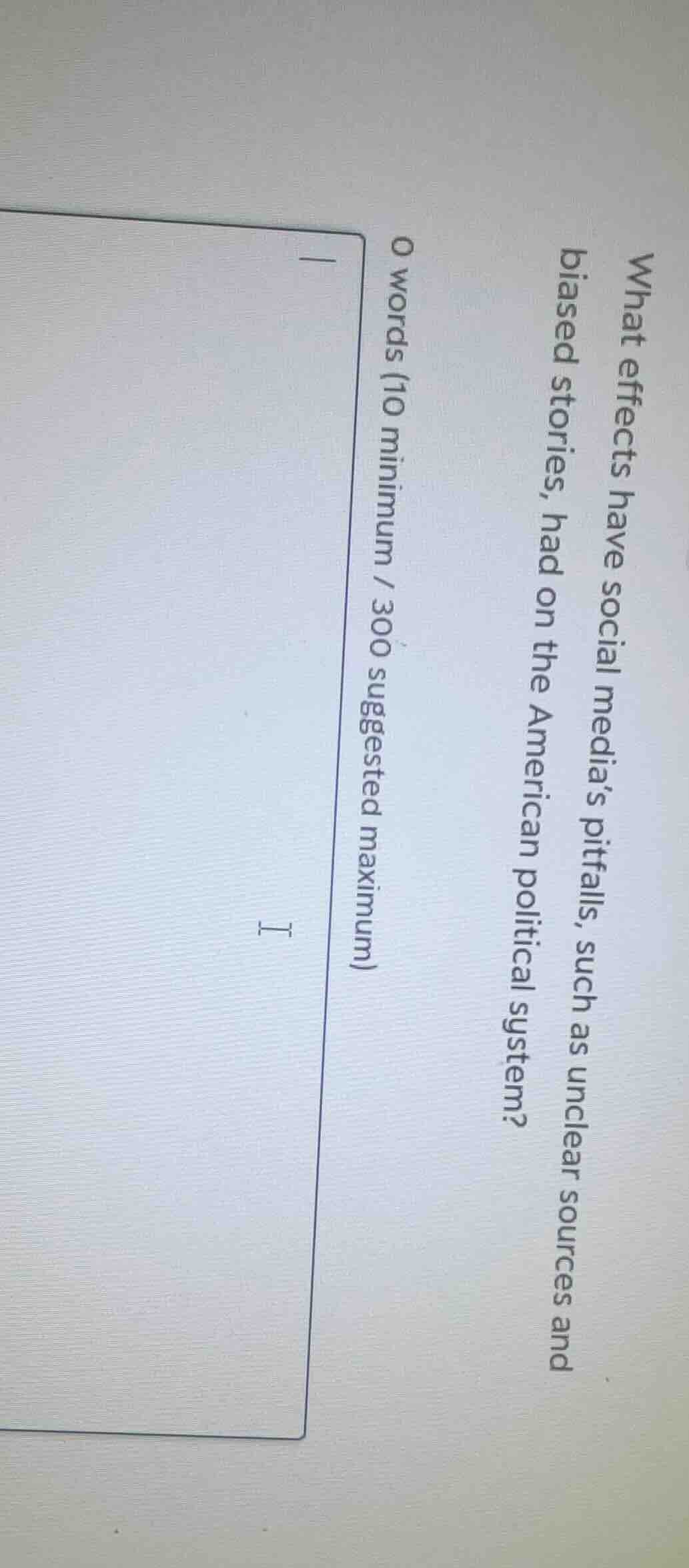
what effects have social media’s pitfalls, such as unclear sources and biased stories, had on the american political system?
0 words (10 minimum / 300 suggested maximum)
Brief Explanations
- Eroded Public Trust: Unclear sources and biased social media content have made the public skeptical of official political institutions, mainstream media, and elected officials, as users struggle to verify factual information, weakening confidence in the system's legitimacy.
- Political Polarization: Biased stories amplify ideological divides, as social media algorithms often push users toward content that aligns with their existing beliefs. This creates echo chambers, making compromise between opposing political groups harder and increasing hostility in political discourse.
- Undermined Election Integrity: False or biased content (including misinformation about voting processes or candidates) has been used to cast doubt on election results, leading to challenges to legitimate outcomes and eroding the public's faith in fair electoral procedures.
- Distorted Policy Debates: Unverified, biased content can skew public understanding of key policy issues (e.g., healthcare, climate change), making it harder for policymakers to build consensus around evidence-based solutions.

Snap & solve any problem in the app
Get step-by-step solutions on Sovi AI
Photo-based solutions with guided steps
Explore more problems and detailed explanations
Social media's pitfalls like unclear sources and biased stories have had several damaging effects on the American political system:
- They have eroded public trust in political institutions, mainstream media, and elected officials, as the public struggles to distinguish fact from fiction.
- They have deepened political polarization by reinforcing ideological echo chambers, reducing opportunities for cross-partisan dialogue and compromise.
- They have undermined election integrity, with false or biased content used to cast doubt on legitimate election results and voting processes.
- They have distorted policy debates, skewing public understanding of key issues and hindering the adoption of evidence-based policy solutions.