QUESTION IMAGE
Question
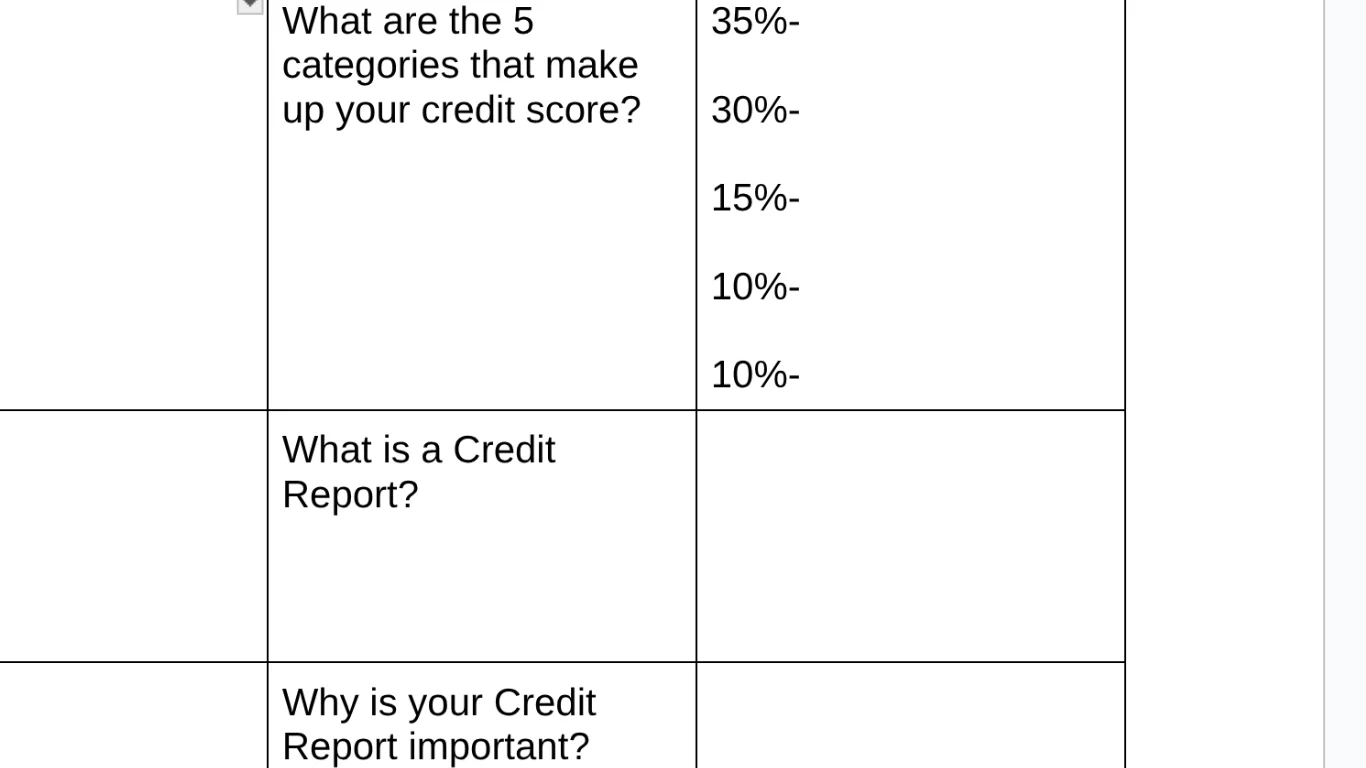
what are the 5 categories that make up your credit score? 35%- 30%- 15%- 10%- 10%- what is a credit report? why is your credit report important?
For the first question "What are the 5 categories that make up your credit score?":
The five categories that make up a credit score (e.g., FICO score) along with their typical weightages are:
- Payment History (around 35%): This looks at whether you've paid your bills on time, including any late payments, defaults, bankruptcies, etc.
- Amounts Owed (around 30%): This considers how much you owe on your credit accounts, the proportion of your available credit you're using (credit utilization), and the types of accounts with balances.
- Length of Credit History (around 15%): This is about how long your credit accounts have been open, with a longer history generally being better (assuming responsible use).
- New Credit (around 10%): This factors in how many new credit accounts you've opened recently, as well as credit inquiries (both hard and soft inquiries can impact this, though soft inquiries usually don't hurt your score).
- Credit Mix (around 10%): This looks at the variety of credit accounts you have, such as a mix of credit cards, installment loans (like auto loans, mortgages), and retail accounts.
A credit report is a detailed record of an individual's credit - related activities. It is compiled by credit bureaus (like Equifax, Experian, TransUnion in the US). It includes information such as:
- Personal identifying information (name, address, Social Security number, date of birth).
- Credit accounts (details of credit cards, loans, mortgages, including opening dates, credit limits or loan amounts, balances, payment history).
- Public records (like bankruptcies, tax liens, civil judgments).
- Credit inquiries (both hard inquiries when you apply for credit and soft inquiries like when you check your own score or a pre - approved offer is generated).
Lenders, landlords, and other entities may use credit reports to assess an individual's creditworthiness.
A credit report is important for several reasons:
- Lending Decisions: Lenders (banks, credit card companies, mortgage lenders) use it to decide whether to approve a loan or credit application and what interest rate to offer. A good credit report with a high credit score can lead to better loan terms (lower interest rates, higher credit limits).
- Rental Applications: Landlords often check credit reports to evaluate if a potential tenant is likely to pay rent on time and be a responsible tenant.
- Employment Screening: Some employers, especially in financial or sensitive roles, may check credit reports as part of a background check to assess an individual's financial responsibility.
- Insurance Premiums: In some cases, insurance companies (especially for auto or home insurance) may use credit - based insurance scores (derived from credit reports) to set premiums, as there's a correlation between financial responsibility and the likelihood of filing claims.
- Identity Theft Detection: Regularly checking your credit report can help you spot unauthorized accounts or activities, which is a key way to detect identity theft early.

Snap & solve any problem in the app
Get step-by-step solutions on Sovi AI
Photo-based solutions with guided steps
Explore more problems and detailed explanations
- Payment History (≈35%) - Tracks on - time bill payments, defaults, etc.
- Amounts Owed (≈30%) - Considers debt levels and credit utilization.
- Length of Credit History (≈15%) - Reflects how long credit accounts have been open.
- New Credit (≈10%) - Involves recent credit applications and new accounts.
- Credit Mix (≈10%) - Looks at the variety of credit account types.