QUESTION IMAGE
Question
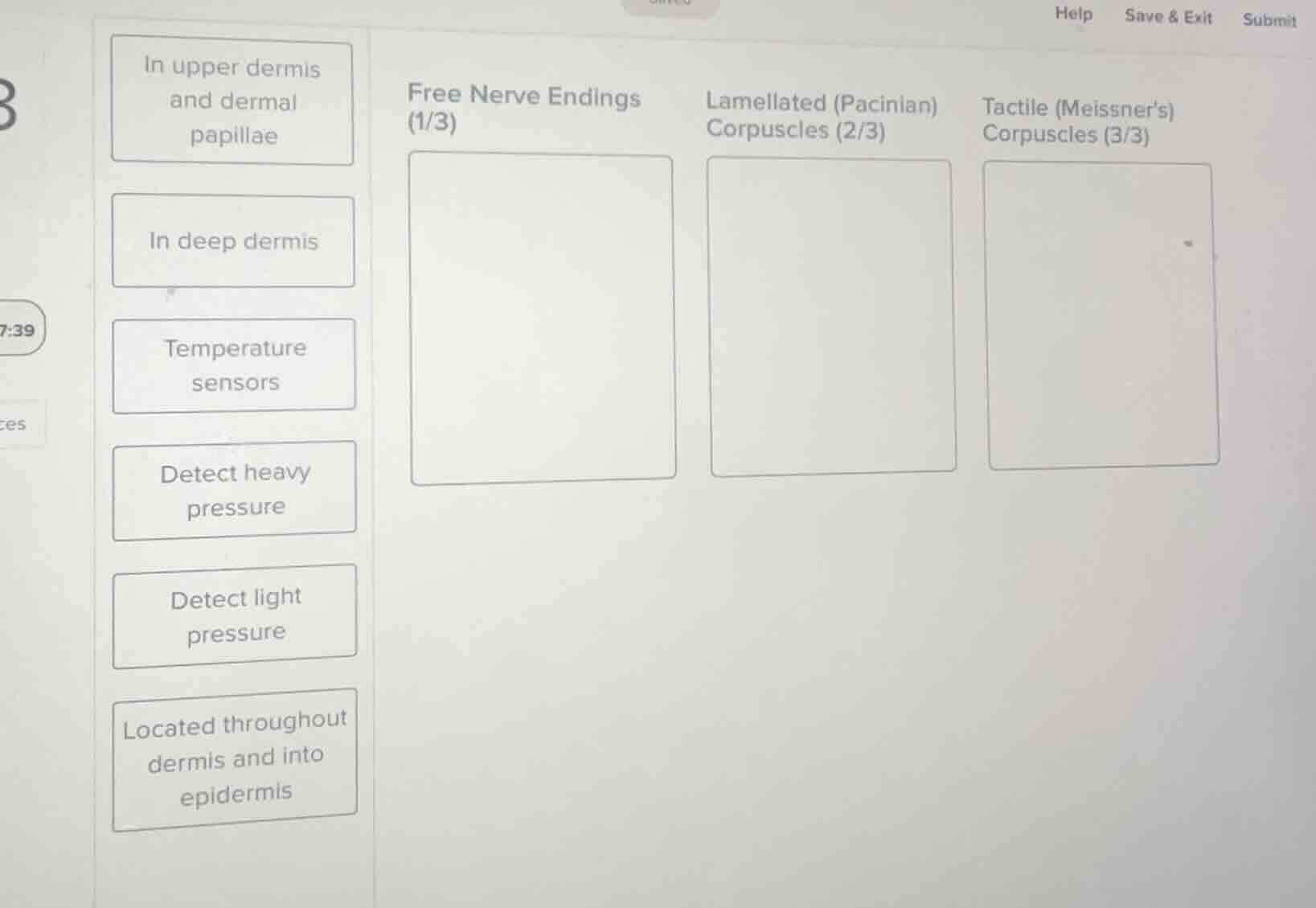
in upper dermis and dermal papillae
in deep dermis
temperature sensors
detect heavy pressure
detect light pressure
located throughout dermis and into epidermis
free nerve endings (1/3)
lamellated (pacinian) corpuscles (2/3)
tactile (meissners) corpuscles (3/3)
Analyze receptor structures
Using the Integumentary System and Accessory Structures knowledge points, we identify the anatomical locations and physiological functions of the three cutaneous sensory receptors shown:
- Free Nerve Endings:
- Location: Located throughout the dermis and extending into the epidermis.
- Function: Act primarily as temperature sensors (thermoreceptors) and pain receptors (nociceptors).
- Lamellated (Pacinian) Corpuscles:
- Location: Situated deep in the dermis or subcutaneous layer.
- Function: Detect deep, heavy pressure and high-frequency vibration.
- Tactile (Meissner's) Corpuscles:
- Location: Found in the upper dermis, specifically within the dermal papillae.
- Function: Detect light touch and light pressure.
Match descriptions to categories
We group the six draggable cards on the left into their corresponding receptor categories based on their anatomical and functional properties:
- Free Nerve Endings (1/3):
- "Temperature sensors"
- "Located throughout dermis and into epidermis"
- Lamellated (Pacinian) Corpuscles (2/3):
- "In deep dermis"
- "Detect heavy pressure"
- Tactile (Meissner's) Corpuscles (3/3):
- "In upper dermis and dermal papillae"
- "Detect light pressure"

Snap & solve any problem in the app
Get step-by-step solutions on Sovi AI
Photo-based solutions with guided steps
Explore more problems and detailed explanations
| Receptor Category | Matched Descriptions |
|---|---|
| Lamellated (Pacinian) Corpuscles | <ul><li>In deep dermis</li><li>Detect heavy pressure</li></ul> |
| Tactile (Meissner's) Corpuscles | <ul><li>In upper dermis and dermal papillae</li><li>Detect light pressure</li></ul> |