QUESTION IMAGE
Question
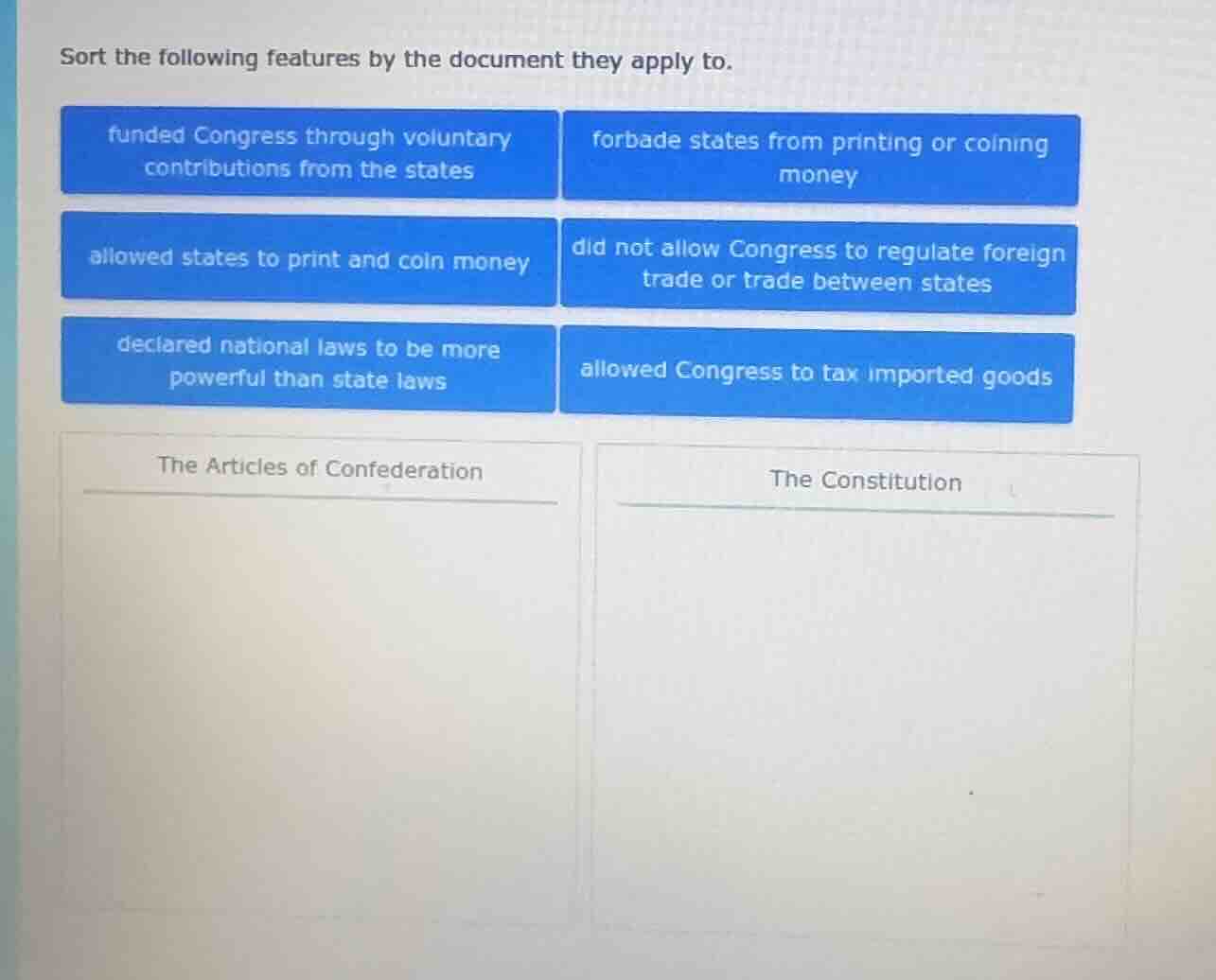
sort the following features by the document they apply to. funded congress through voluntary contributions from the states forbade states from printing or coining money allowed states to print and coin money did not allow congress to regulate foreign trade or trade between states declared national laws to be more powerful than state laws allowed congress to tax imported goods the articles of confederation the constitution
To solve this, we recall the key differences between the Articles of Confederation (weak central govt, strong states) and the Constitution (stronger central govt, defined powers).
- Articles of Confederation:
- Relied on states for funding (voluntary contributions).
- Gave states power over money (print/coin).
- Limited Congress (no trade regulation).
- Constitution:
- Forbids states from money production (central control).
- National laws supreme over state.
- Congress can tax imports and regulate trade.

Snap & solve any problem in the app
Get step-by-step solutions on Sovi AI
Photo-based solutions with guided steps
Explore more problems and detailed explanations
The Articles of Confederation
- funded Congress through voluntary contributions from the states
- allowed states to print and coin money
- did not allow Congress to regulate foreign trade or trade between states
The Constitution
- forbade states from printing or coining money
- declared national laws to be more powerful than state laws
- allowed Congress to tax imported goods