Sovi.AI - AI Math Tutor

Scan to solve math questions

QUESTION IMAGE

select the characteristics of bullying * happens between equals differe…

Question

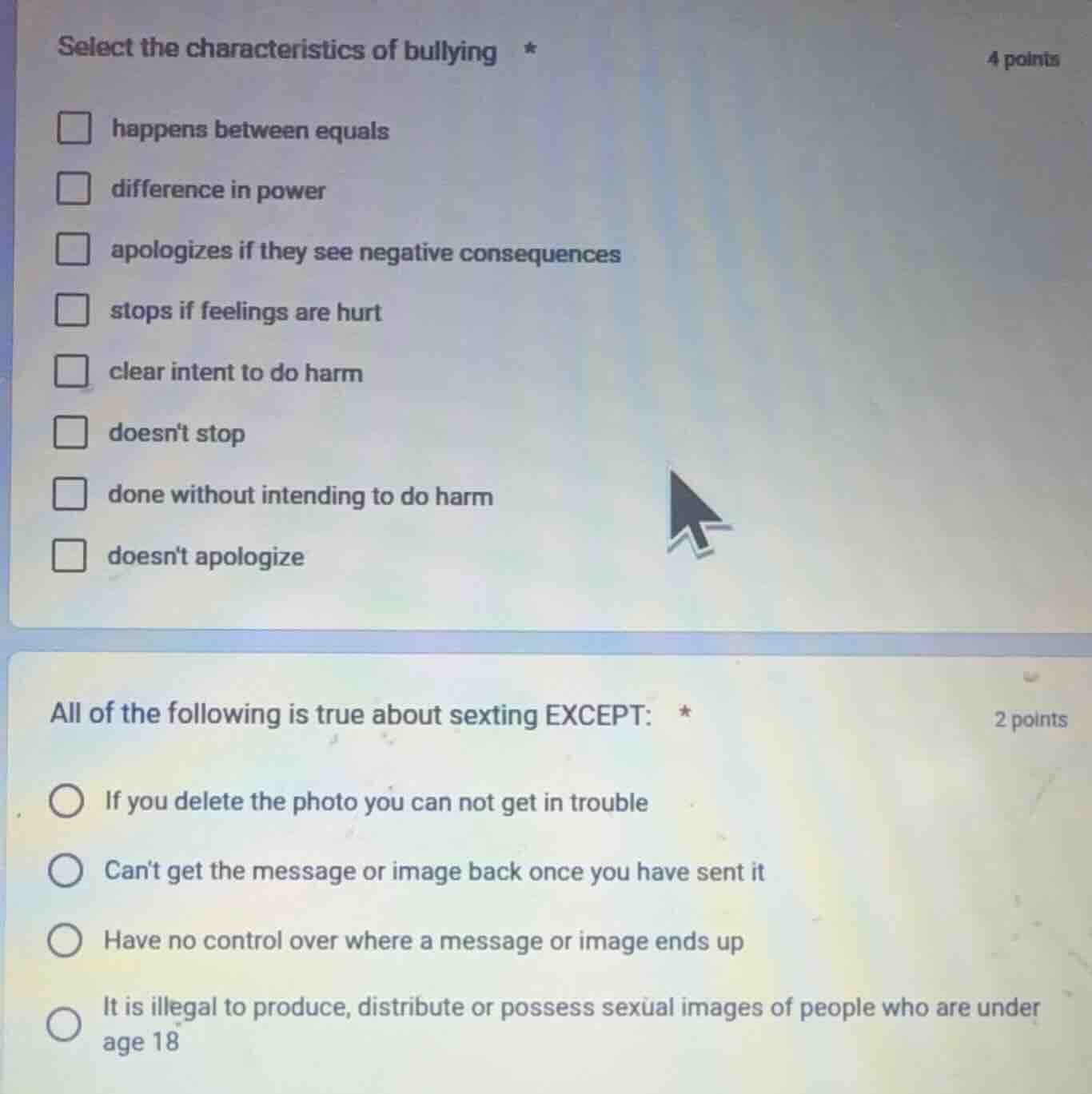
select the characteristics of bullying *
happens between equals
difference in power
apologizes if they see negative consequences
stops if feelings are hurt
clear intent to do harm
doesnt stop
done without intending to do harm
doesnt apologize

all of the following is true about sexting except: *
if you delete the photo you can not get in trouble
cant get the message or image back once you have sent it
have no control over where a message or image ends up
it is illegal to produce, distribute or possess sexual images of people who are under age 18

Explanation:

Response

<pre_analysis>
{
"quality": "clear",
"question_count": 2,
"skills_matched": [
"direct_cot",
"multiple_choice_formatter",
"explain_then_answer",
"tutor"
],
"needs_drawing": false,
"concepts_used": [],
"new_concepts": [
"Bullying Characteristics",
"Digital Safety and Sexting"
],
"current_concepts": [
"Bullying Characteristics",
"Digital Safety and Sexting"
]
}
</pre_analysis>

<reasoning>

Analyze characteristics of bullying

Bullying is defined by specific behavioral patterns. It involves an imbalance of power, repetitive behavior, and a clear intent to cause harm.

  • "happens between equals": Incorrect. Bullying typically involves a power imbalance.
  • "difference in power": Correct. This is a core characteristic of bullying.
  • "apologizes if they see negative consequences": Incorrect. Bullies generally do not apologize or stop when they see negative outcomes.
  • "stops if feelings are hurt": Incorrect. Bullying behavior persists despite hurt feelings.
  • "clear intent to do harm": Correct. Bullying is deliberate and intended to cause distress.
  • "doesn't stop": Correct. Bullying is characterized by repetitive, ongoing behavior.
  • "done without intending to do harm": Incorrect. Bullying is intentional.
  • "doesn't apologize": Correct. Bullies typically show a lack of remorse and do not apologize.

Analyze statements about sexting

We need to identify the false statement ("EXCEPT") regarding sexting.

  • "If you delete the photo you can not get in trouble": This is false. Once a digital image is sent, it can be saved, screenshotted, or retrieved, meaning legal and social consequences remain even if the sender deletes it.
  • "Can't get the message or image back once you have sent it": This is true.
  • "Have no control over where a message or image ends up": This is true.
  • "It is illegal to produce, distribute or possess sexual images of people who are under age 18": This is true under child pornography laws.

</reasoning>

<answer>

Question 1

<mcq-option>happens between equals</mcq-option>
<mcq-correct>difference in power</mcq-correct>
<mcq-option>apologizes if they see negative consequences</mcq-option>
<mcq-option>stops if feelings are hurt</mcq-option>
<mcq-correct>clear intent to do harm</mcq-correct>
<mcq-correct>doesn't stop</mcq-correct>
<mcq-option>done without intending to do harm</mcq-option>
<mcq-correct>doesn't apologize</mcq-correct>

Question 2

<mcq-correct>If you delete the photo you can not get in trouble</mcq-correct>
<mcq-option>Can't get the message or image back once you have sent it</mcq-option>
<mcq-option>Have no control over where a message or image ends up</mcq-option>
<mcq-option>It is illegal to produce, distribute or possess sexual images of people who are under age 18</mcq-option>
</answer>

<post_analysis>
{
"subject": "Others",
"question_type": "Multi-part",
"knowledge_point": [
"Others",
"Health and Physical Education",
"Digital Safety and Bullying Prevention"
]
}
</post_analysis>

Answer:

<pre_analysis>
{
"quality": "clear",
"question_count": 2,
"skills_matched": [
"direct_cot",
"multiple_choice_formatter",
"explain_then_answer",
"tutor"
],
"needs_drawing": false,
"concepts_used": [],
"new_concepts": [
"Bullying Characteristics",
"Digital Safety and Sexting"
],
"current_concepts": [
"Bullying Characteristics",
"Digital Safety and Sexting"
]
}
</pre_analysis>

<reasoning>

Analyze characteristics of bullying

Bullying is defined by specific behavioral patterns. It involves an imbalance of power, repetitive behavior, and a clear intent to cause harm.

  • "happens between equals": Incorrect. Bullying typically involves a power imbalance.
  • "difference in power": Correct. This is a core characteristic of bullying.
  • "apologizes if they see negative consequences": Incorrect. Bullies generally do not apologize or stop when they see negative outcomes.
  • "stops if feelings are hurt": Incorrect. Bullying behavior persists despite hurt feelings.
  • "clear intent to do harm": Correct. Bullying is deliberate and intended to cause distress.
  • "doesn't stop": Correct. Bullying is characterized by repetitive, ongoing behavior.
  • "done without intending to do harm": Incorrect. Bullying is intentional.
  • "doesn't apologize": Correct. Bullies typically show a lack of remorse and do not apologize.

Analyze statements about sexting

We need to identify the false statement ("EXCEPT") regarding sexting.

  • "If you delete the photo you can not get in trouble": This is false. Once a digital image is sent, it can be saved, screenshotted, or retrieved, meaning legal and social consequences remain even if the sender deletes it.
  • "Can't get the message or image back once you have sent it": This is true.
  • "Have no control over where a message or image ends up": This is true.
  • "It is illegal to produce, distribute or possess sexual images of people who are under age 18": This is true under child pornography laws.

</reasoning>

<answer>

Question 1

<mcq-option>happens between equals</mcq-option>
<mcq-correct>difference in power</mcq-correct>
<mcq-option>apologizes if they see negative consequences</mcq-option>
<mcq-option>stops if feelings are hurt</mcq-option>
<mcq-correct>clear intent to do harm</mcq-correct>
<mcq-correct>doesn't stop</mcq-correct>
<mcq-option>done without intending to do harm</mcq-option>
<mcq-correct>doesn't apologize</mcq-correct>

Question 2

<mcq-correct>If you delete the photo you can not get in trouble</mcq-correct>
<mcq-option>Can't get the message or image back once you have sent it</mcq-option>
<mcq-option>Have no control over where a message or image ends up</mcq-option>
<mcq-option>It is illegal to produce, distribute or possess sexual images of people who are under age 18</mcq-option>
</answer>

<post_analysis>
{
"subject": "Others",
"question_type": "Multi-part",
"knowledge_point": [
"Others",
"Health and Physical Education",
"Digital Safety and Bullying Prevention"
]
}
</post_analysis>