QUESTION IMAGE
Question
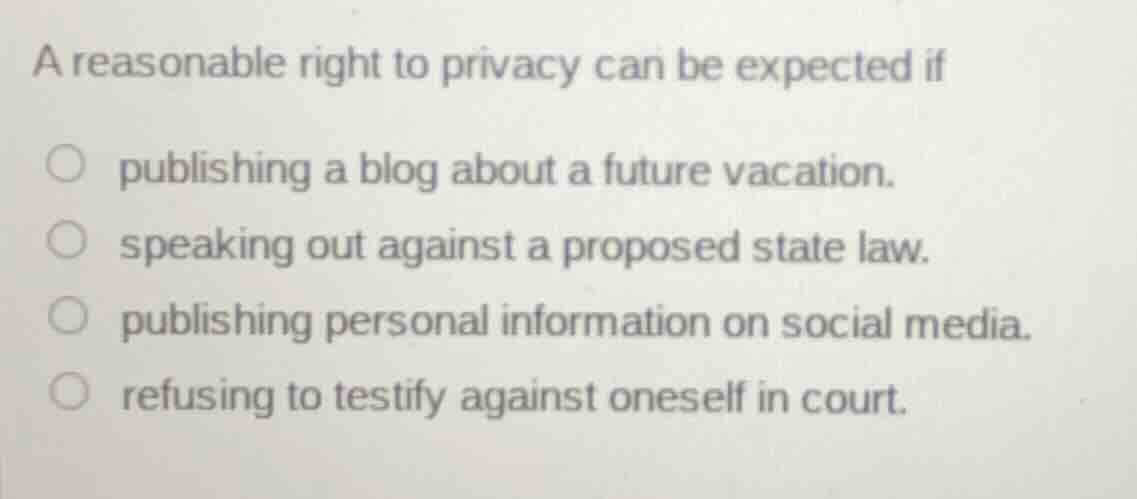
a reasonable right to privacy can be expected if
publishing a blog about a future vacation.
speaking out against a proposed state law.
publishing personal information on social media.
refusing to testify against oneself in court.
Brief Explanations
A reasonable right to privacy involves protecting personal, non-public information or avoiding self-incrimination. The other options involve voluntary public disclosure or free speech, which do not relate to privacy rights. Refusing self-testimony is protected under legal privacy/self-incrimination rights.

Snap & solve any problem in the app
Get step-by-step solutions on Sovi AI
Photo-based solutions with guided steps
Explore more problems and detailed explanations
D. refusing to testify against oneself in court.