QUESTION IMAGE
Question
question 4
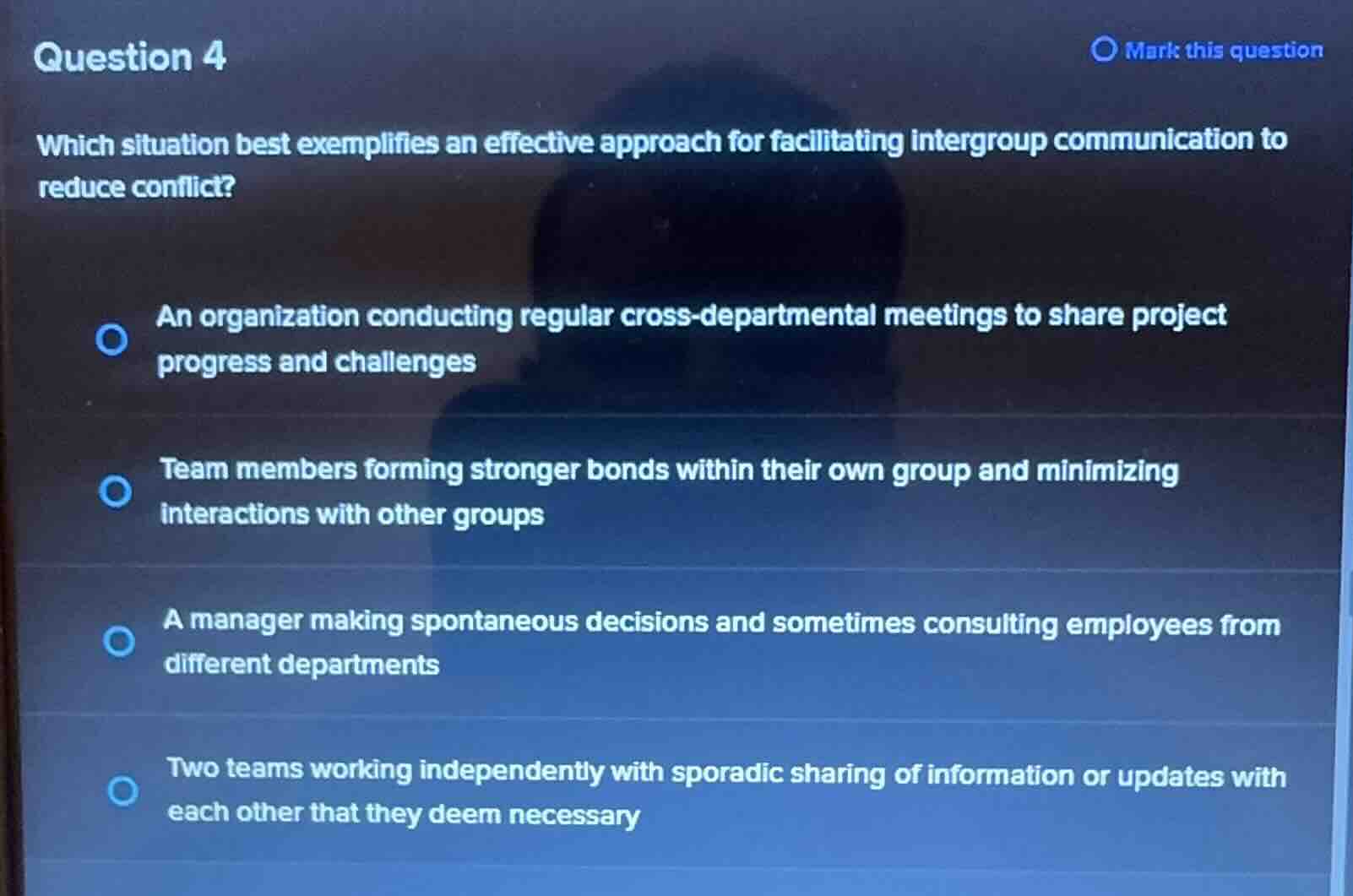
which situation best exemplifies an effective approach for facilitating intergroup communication to reduce conflict?
an organization conducting regular cross-departmental meetings to share project progress and challenges
team members forming stronger bonds within their own group and minimizing interactions with other groups
a manager making spontaneous decisions and sometimes consulting employees from different departments
two teams working independently with sporadic sharing of information or updates with each other that they deem necessary
Analyze the core objective
The question asks for a situation that best exemplifies an effective approach for facilitating intergroup communication to reduce conflict.
Evaluate the options
Using the Cross-Departmental Collaboration knowledge point:
- Option 1: Conducting regular cross-departmental meetings to share project progress and challenges directly facilitates structured, open, and consistent intergroup communication, which helps align goals and reduce misunderstandings (conflict).
- Option 2: Minimizing interactions with other groups increases isolation and in-group bias, which typically escalates intergroup conflict.
- Option 3: Spontaneous decisions and occasional consultation do not represent a structured or reliable approach to facilitating intergroup communication.
- Option 4: Working independently with sporadic sharing of information limits collaboration and keeps communication reactive rather than proactive.
Select the best option
The first option is the most proactive, structured, and effective method to foster collaboration and mitigate conflict.

Snap & solve any problem in the app
Get step-by-step solutions on Sovi AI
Photo-based solutions with guided steps
Explore more problems and detailed explanations
- (A) An organization conducting regular cross-departmental meetings to share project progress and challenges (Correct answer)
- (B) Team members forming stronger bonds within their own group and minimizing interactions with other groups
- (C) A manager making spontaneous decisions and sometimes consulting employees from different departments
- (D) Two teams working independently with sporadic sharing of information or updates with each other that they deem necessary