Sovi.AI - AI Math Tutor

Scan to solve math questions

QUESTION IMAGE

question 7 the correct definition of candidiasis is: a tissue that grow…

Question

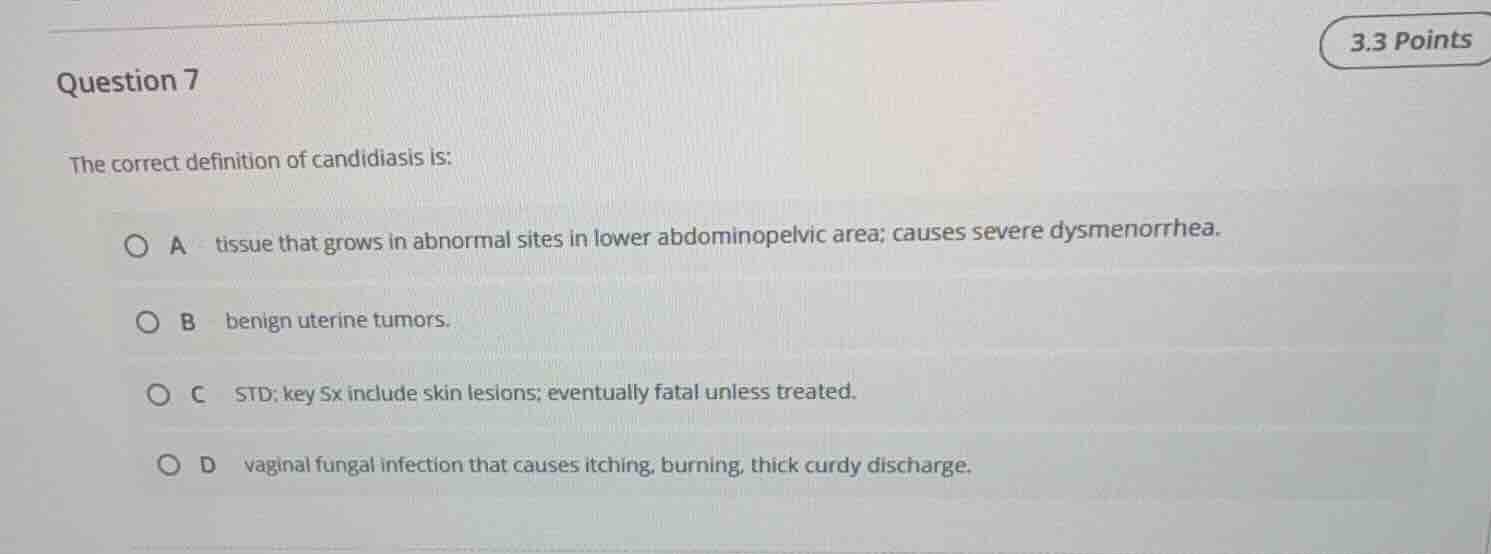
question 7

the correct definition of candidiasis is:

a tissue that grows in abnormal sites in lower abdominopelvic area; causes severe dysmenorrhea.
b benign uterine tumors.
c std; key sx include skin lesions; eventually fatal unless treated.
d vaginal fungal infection that causes itching, burning, thick curdy discharge.

Explanation:

Response

<pre_analysis>
{
"quality": "clear",
"question_count": 1,
"skills_matched": [
"direct_cot",
"multiple_choice_formatter",
"explain_then_answer",
"tutor"
],
"needs_drawing": false,
"concepts_used": [
"Reproductive System Pathology"
],
"new_concepts": [
"Candidiasis Definition"
],
"current_concepts": [
"Reproductive System Pathology",
"Candidiasis Definition"
]
}
</pre_analysis>

<reasoning>

Analyze the term candidiasis

Candidiasis is a fungal infection caused by yeasts that belong to the genus Candida. In the context of gynecology and Reproductive System Pathology, vulvovaginal candidiasis is a common infection of the vagina.

Evaluate the given options

  • Option A describes endometriosis, where endometrial tissue grows outside the uterus.
  • Option B describes uterine fibroids (leiomyomas).
  • Option C describes syphilis, a bacterial sexually transmitted disease (STD) presenting with chancres (skin lesions) that can be fatal if untreated.
  • Option D describes vaginal candidiasis (yeast infection), characterized by itching, burning, and a thick, white, curdy (cottage cheese-like) discharge.

Select the correct definition

Option D accurately defines the clinical presentation and etiology of vaginal candidiasis.
</reasoning>

<answer>
<mcq-option>(A) tissue that grows in abnormal sites in lower abdominopelvic area; causes severe dysmenorrhea.</mcq-option>
<mcq-option>(B) benign uterine tumors.</mcq-option>
<mcq-option>(C) STD; key Sx include skin lesions; eventually fatal unless treated.</mcq-option>
<mcq-correct>(D) vaginal fungal infection that causes itching, burning, thick curdy discharge.</mcq-correct>
</answer>

<post_analysis>
{
"subject": "Natural Science",
"question_type": "Multiple Choice",
"knowledge_point": [
"Natural Science",
"Medicine",
"Reproductive System Pathology"
]
}
</post_analysis>

Answer:

<pre_analysis>
{
"quality": "clear",
"question_count": 1,
"skills_matched": [
"direct_cot",
"multiple_choice_formatter",
"explain_then_answer",
"tutor"
],
"needs_drawing": false,
"concepts_used": [
"Reproductive System Pathology"
],
"new_concepts": [
"Candidiasis Definition"
],
"current_concepts": [
"Reproductive System Pathology",
"Candidiasis Definition"
]
}
</pre_analysis>

<reasoning>

Analyze the term candidiasis

Candidiasis is a fungal infection caused by yeasts that belong to the genus Candida. In the context of gynecology and Reproductive System Pathology, vulvovaginal candidiasis is a common infection of the vagina.

Evaluate the given options

  • Option A describes endometriosis, where endometrial tissue grows outside the uterus.
  • Option B describes uterine fibroids (leiomyomas).
  • Option C describes syphilis, a bacterial sexually transmitted disease (STD) presenting with chancres (skin lesions) that can be fatal if untreated.
  • Option D describes vaginal candidiasis (yeast infection), characterized by itching, burning, and a thick, white, curdy (cottage cheese-like) discharge.

Select the correct definition

Option D accurately defines the clinical presentation and etiology of vaginal candidiasis.
</reasoning>

<answer>
<mcq-option>(A) tissue that grows in abnormal sites in lower abdominopelvic area; causes severe dysmenorrhea.</mcq-option>
<mcq-option>(B) benign uterine tumors.</mcq-option>
<mcq-option>(C) STD; key Sx include skin lesions; eventually fatal unless treated.</mcq-option>
<mcq-correct>(D) vaginal fungal infection that causes itching, burning, thick curdy discharge.</mcq-correct>
</answer>

<post_analysis>
{
"subject": "Natural Science",
"question_type": "Multiple Choice",
"knowledge_point": [
"Natural Science",
"Medicine",
"Reproductive System Pathology"
]
}
</post_analysis>