QUESTION IMAGE
Question
question 8
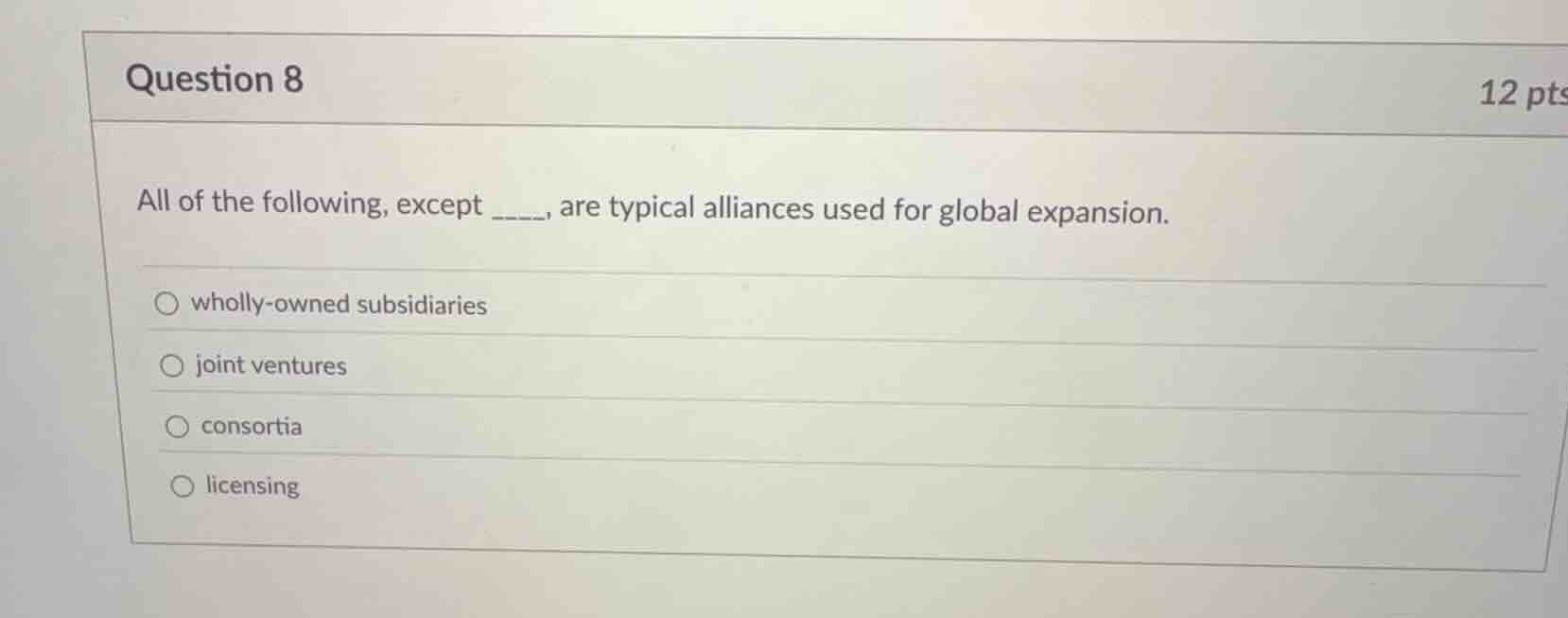
all of the following, except ____, are typical alliances used for global expansion.
wholly-owned subsidiaries
joint ventures
consortia
licensing
Define strategic alliances in global expansion
In international business and organizational strategy, strategic alliances are collaborative arrangements between two or more independent organizations to cooperate in the development, manufacture, or sale of products or services. They involve shared control, shared risk, and mutual dependency.
Analyze the given options
- joint ventures: A classic form of strategic alliance where two or more partner firms create a third, legally independent entity to share assets, risks, and revenues.
- consortia: Large-scale, multi-partner alliances typically formed to address major projects, research initiatives, or capital-intensive ventures.
- licensing: A contractual alliance where a firm (licensor) grants rights to intangible property to another entity (licensee) for a specified period in return for royalties.
- wholly-owned subsidiaries: An entry mode where a parent company owns 100% of the stock of a subsidiary in a foreign market. This represents sole ownership and full control, rather than a collaborative alliance with an external partner.
Identify the exception
Because wholly-owned subsidiaries involve complete ownership and control by a single parent firm without a partner, they are classified as a sole entry mode rather than a collaborative alliance. Therefore, it is the correct exception.

Snap & solve any problem in the app
Get step-by-step solutions on Sovi AI
Photo-based solutions with guided steps
Explore more problems and detailed explanations
- wholly-owned subsidiaries (Correct answer)
- joint ventures
- consortia
- licensing