QUESTION IMAGE
Question
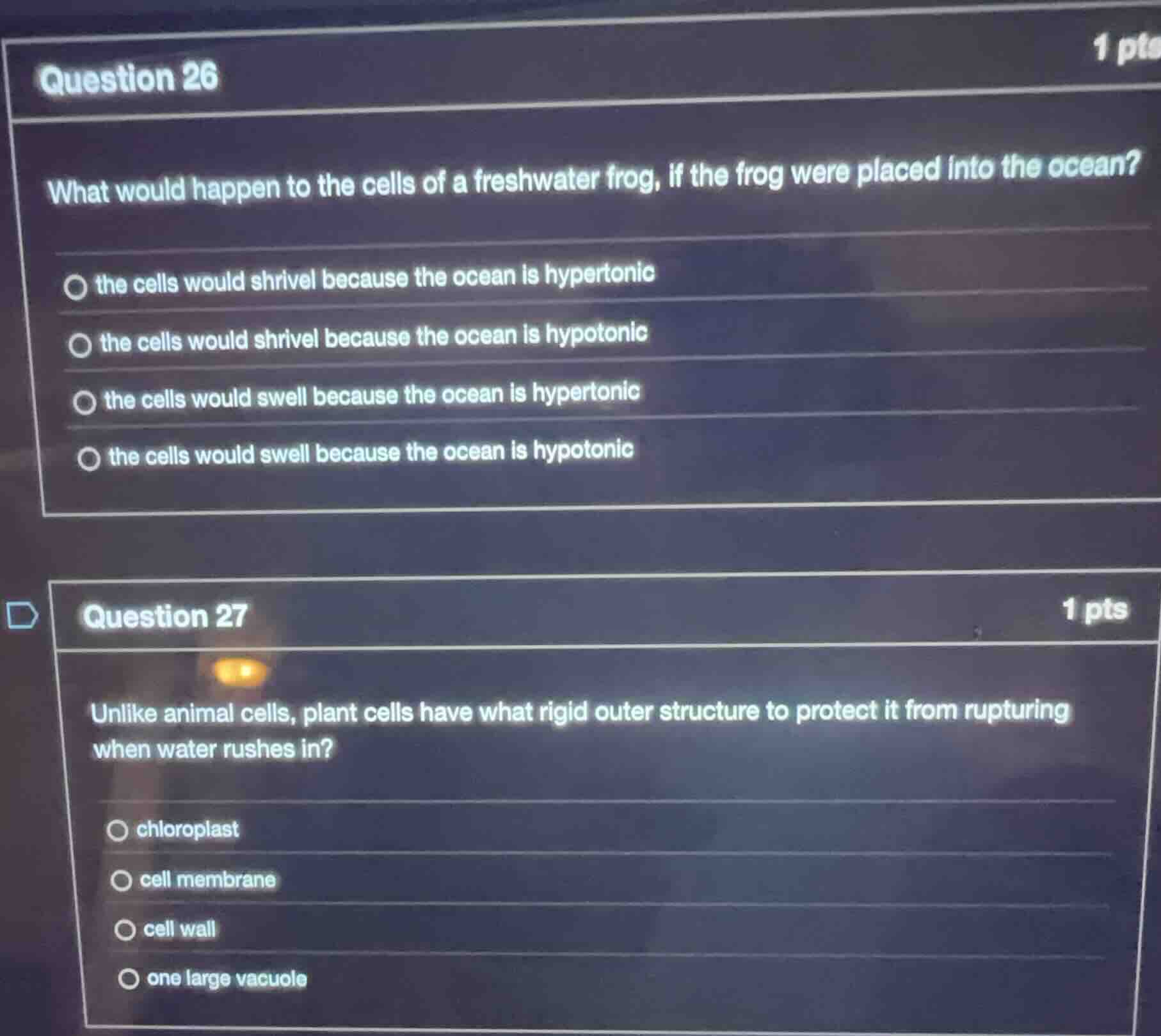
question 26
what would happen to the cells of a freshwater frog, if the frog were placed into the ocean?
the cells would shrivel because the ocean is hypertonic
the cells would shrivel because the ocean is hypotonic
the cells would swell because the ocean is hypertonic
the cells would swell because the ocean is hypotonic
question 27
unlike animal cells, plant cells have what rigid outer structure to protect it from rupturing when water rushes in?
chloroplast
cell membrane
cell wall
one large vacuole
Analyze Question 26
Using the Tonicity knowledge point
The ocean has a much higher solute (salt) concentration than the internal environment of a freshwater frog's cells. Therefore, the ocean is a hypertonic environment relative to the frog's cells. Due to osmosis, water will leave the cells to balance solute concentrations, causing the cells to shrivel.
Analyze Question 27
Using the Cell Wall Distribution knowledge point
Plant cells possess a rigid outer layer called the cell wall, which is absent in animal cells. When water enters a plant cell via osmosis, the cell swells, and the plasma membrane pushes against this rigid cell wall, creating turgor pressure. This structure prevents the cell from lysing (rupturing) in hypotonic environments.

Snap & solve any problem in the app
Get step-by-step solutions on Sovi AI
Photo-based solutions with guided steps
Explore more problems and detailed explanations
Question 26
- the cells would shrivel because the ocean is hypertonic (Correct answer)
- the cells would shrivel because the ocean is hypotonic
- the cells would swell because the ocean is hypertonic
- the cells would swell because the ocean is hypotonic
Question 27
- chloroplast
- cell membrane
- cell wall (Correct answer)
- one large vacuole