QUESTION IMAGE
Question
question 18
1 pts
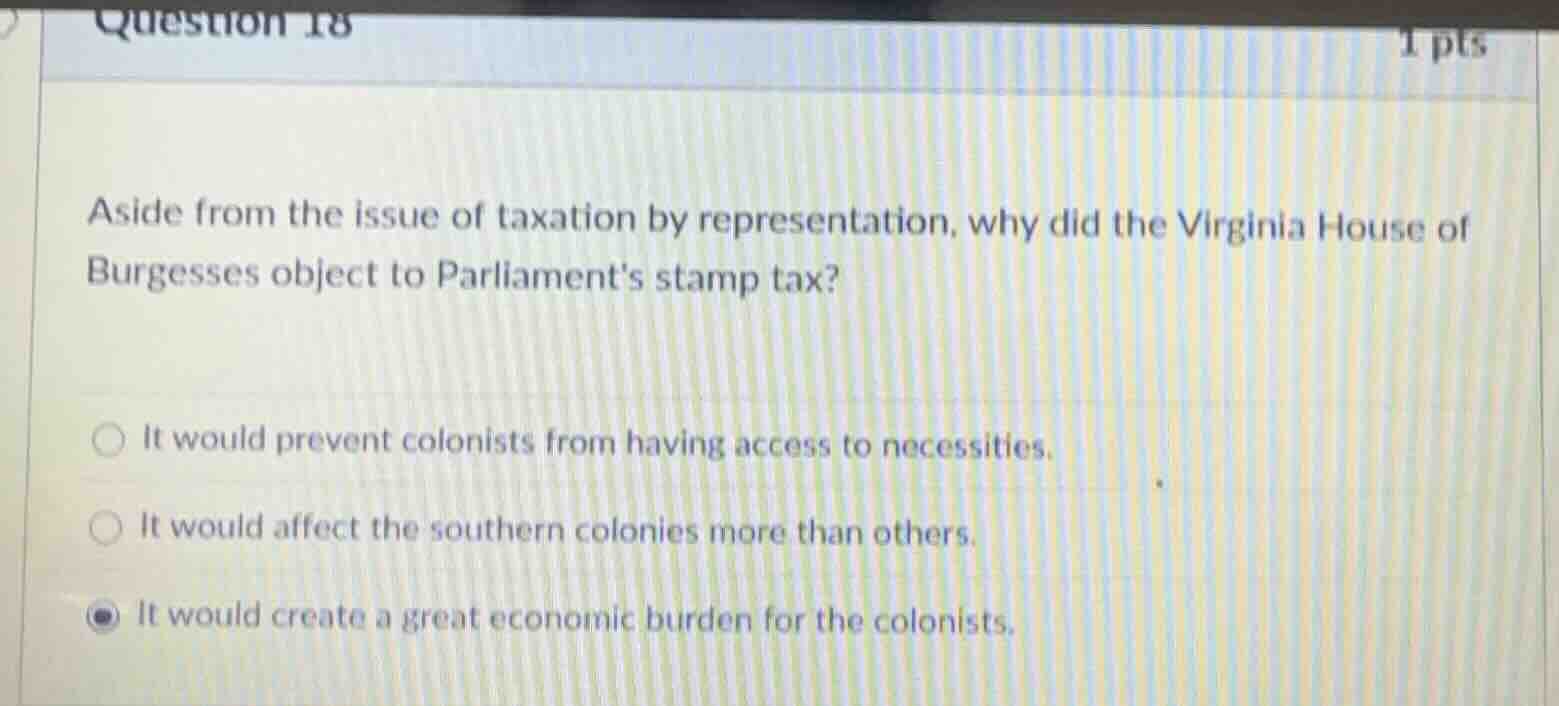
aside from the issue of taxation by representation, why did the virginia house of burgesses object to parliaments stamp tax?
it would prevent colonists from having access to necessities.
it would affect the southern colonies more than others.
it would create a great economic burden for the colonists.
🆕 New Concept Discovered: Colonial Opposition to British Taxation
Understanding the economic and constitutional arguments of early American colonists.
Step 1: Analyze the Question
The question asks for a reason why the Virginia House of Burgesses objected to the Stamp Act of 1765, aside from the famous constitutional argument of "no taxation without representation."
Step 2: Evaluate the Historical Context
When the British Parliament passed the Stamp Act, the Virginia House of Burgesses passed the Virginia Resolves. While their primary constitutional objection was that only their own elected representatives had the right to tax them, they also raised practical and economic objections.
- Economic Burden: The colonists argued that they were already heavily in debt from fighting the French and Indian War and that draining hard currency (specie) from the colonies to pay a direct tax to London would cause severe economic hardship and ruin their local economy.
- Necessities: The stamp tax applied to paper goods, legal documents, playing cards, and newspapers. While inconvenient and costly, these were not strictly physical survival "necessities" like food or water.
- Sectional Impact: The tax applied universally to all thirteen colonies, not specifically targeting the southern colonies more than the northern ones (in fact, it heavily impacted northern merchants and lawyers).
Therefore, the objection centered on the severe economic strain and drain of currency it would impose on the colonial population.

Snap & solve any problem in the app
Get step-by-step solutions on Sovi AI
Photo-based solutions with guided steps
Explore more problems and detailed explanations
It would create a great economic burden for the colonists.