QUESTION IMAGE
Question
question 16
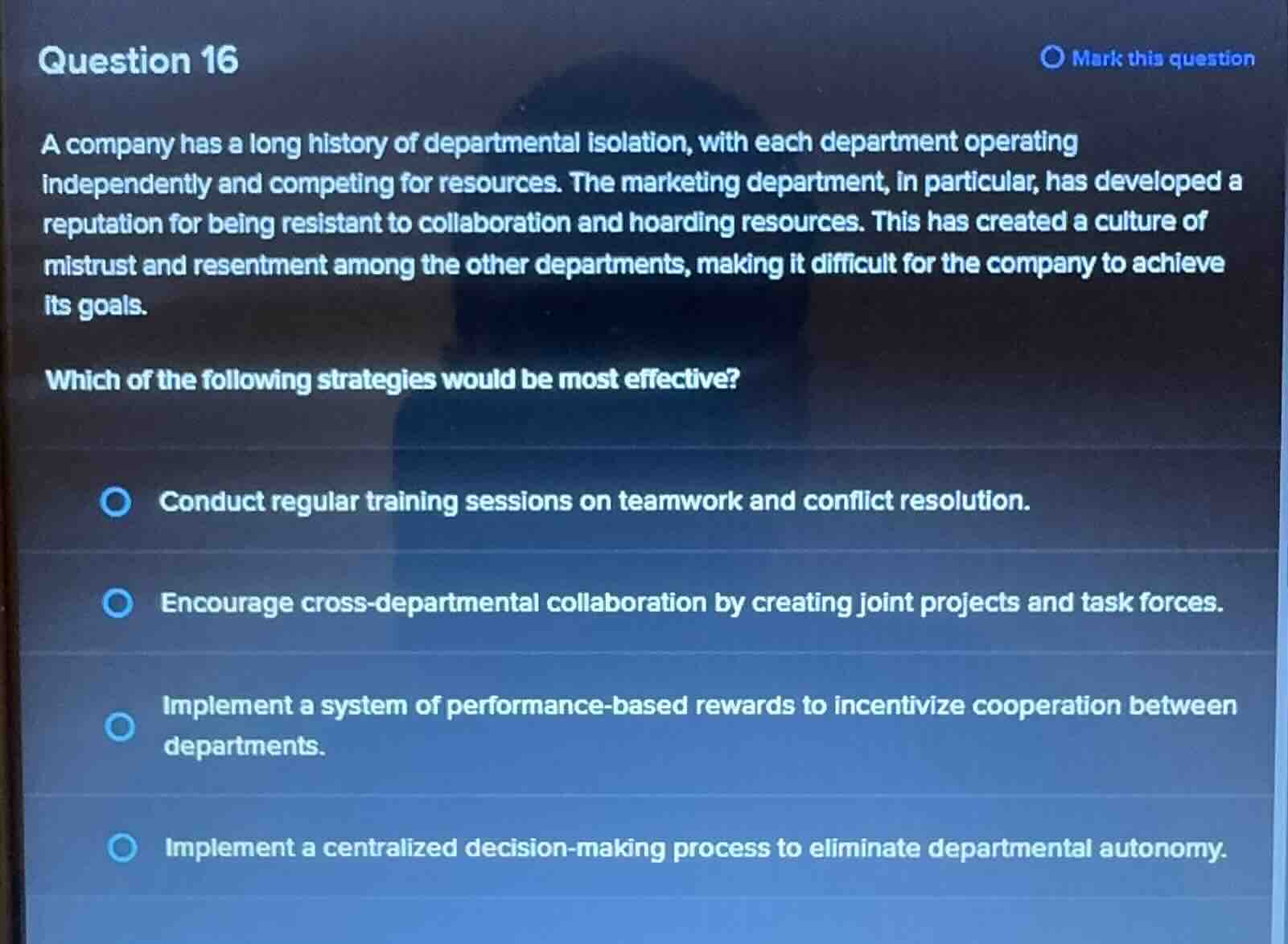
a company has a long history of departmental isolation, with each department operating independently and competing for resources. the marketing department, in particular, has developed a reputation for being resistant to collaboration and hoarding resources. this has created a culture of mistrust and resentment among the other departments, making it difficult for the company to achieve its goals.
which of the following strategies would be most effective?
conduct regular training sessions on teamwork and conflict resolution.
encourage cross-departmental collaboration by creating joint projects and task forces.
implement a system of performance-based rewards to incentivize cooperation between departments.
implement a centralized decision-making process to eliminate departmental autonomy.
Analyze the organizational challenge
The scenario describes a deep-seated issue of departmental isolation (silos), resource hoarding, and a lack of trust, particularly involving the marketing department. This is a classic structural and cultural barrier that prevents the organization from achieving its collective goals.
Evaluate the strategic options
Using the Cross-Departmental Collaboration knowledge point:
- Conduct regular training sessions on teamwork and conflict resolution: While training is helpful, it does not directly alter the structural workflows or day-to-day operational habits that cause isolation.
- Encourage cross-departmental collaboration by creating joint projects and task forces: This directly targets the structural isolation. By physically and operationally grouping employees from different departments into joint projects and task forces, it breaks down silos, builds interpersonal trust, and forces shared accountability.
- Implement a system of performance-based rewards to incentivize cooperation between departments: While incentives help, without structural mechanisms (like joint projects) to actually work together, incentives alone cannot easily overcome long-standing cultural mistrust.
- Implement a centralized decision-making process to eliminate departmental autonomy: Centralization reduces autonomy and can increase resentment, rather than fostering organic cooperation and trust.
Therefore, creating joint projects and task forces is the most direct and effective structural intervention to foster collaboration.

Snap & solve any problem in the app
Get step-by-step solutions on Sovi AI
Photo-based solutions with guided steps
Explore more problems and detailed explanations
- Conduct regular training sessions on teamwork and conflict resolution.
- Encourage cross-departmental collaboration by creating joint projects and task forces. (Correct answer)
- Implement a system of performance-based rewards to incentivize cooperation between departments.
- Implement a centralized decision-making process to eliminate departmental autonomy.