QUESTION IMAGE
Question
question 14 of 20
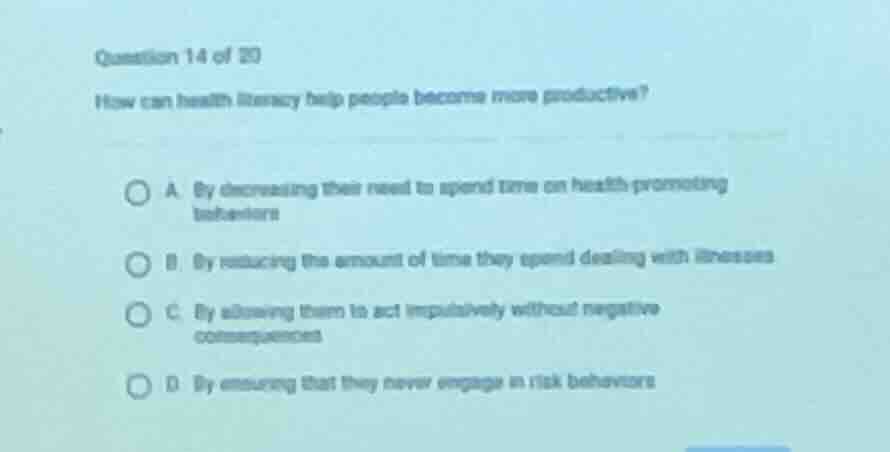
how can health literacy help people become more productive?
a. by decreasing their need to spend time on health promoting behaviors
b. by reducing the amount of time they spend dealing with illnesses
c. by allowing them to act impulsively without negative consequences
d. by ensuring that they never engage in risk behaviors
Define health literacy
Health literacy is the ability to find, understand, and use information and services to inform health-related decisions and actions for oneself and others.
Analyze the connection to productivity
When individuals possess high health literacy, they make informed decisions that prevent diseases, manage chronic conditions effectively, and seek timely medical care. This directly reduces the frequency and duration of illnesses, meaning they spend less time sick and more time being active and productive in their daily lives, work, or school.
Evaluate the given options
- Option A suggests decreasing the need for health-promoting behaviors, which is incorrect because health literacy actually encourages more health-promoting behaviors.
- Option B states that it reduces the amount of time spent dealing with illnesses. This is correct because better health management leads to fewer sick days and less time managing preventable health crises.
- Option C suggests acting impulsively without negative consequences, which is false; health literacy promotes deliberate, informed decision-making.
- Option D claims it ensures they never engage in risk behaviors. While it reduces risk behaviors, it cannot guarantee a person will "never" engage in them.

Snap & solve any problem in the app
Get step-by-step solutions on Sovi AI
Photo-based solutions with guided steps
Explore more problems and detailed explanations
- (A) By decreasing their need to spend time on health promoting behaviors
- (B) By reducing the amount of time they spend dealing with illnesses (Correct answer)
- (C) By allowing them to act impulsively without negative consequences
- (D) By ensuring that they never engage in risk behaviors