QUESTION IMAGE
Question
question 13 of 20
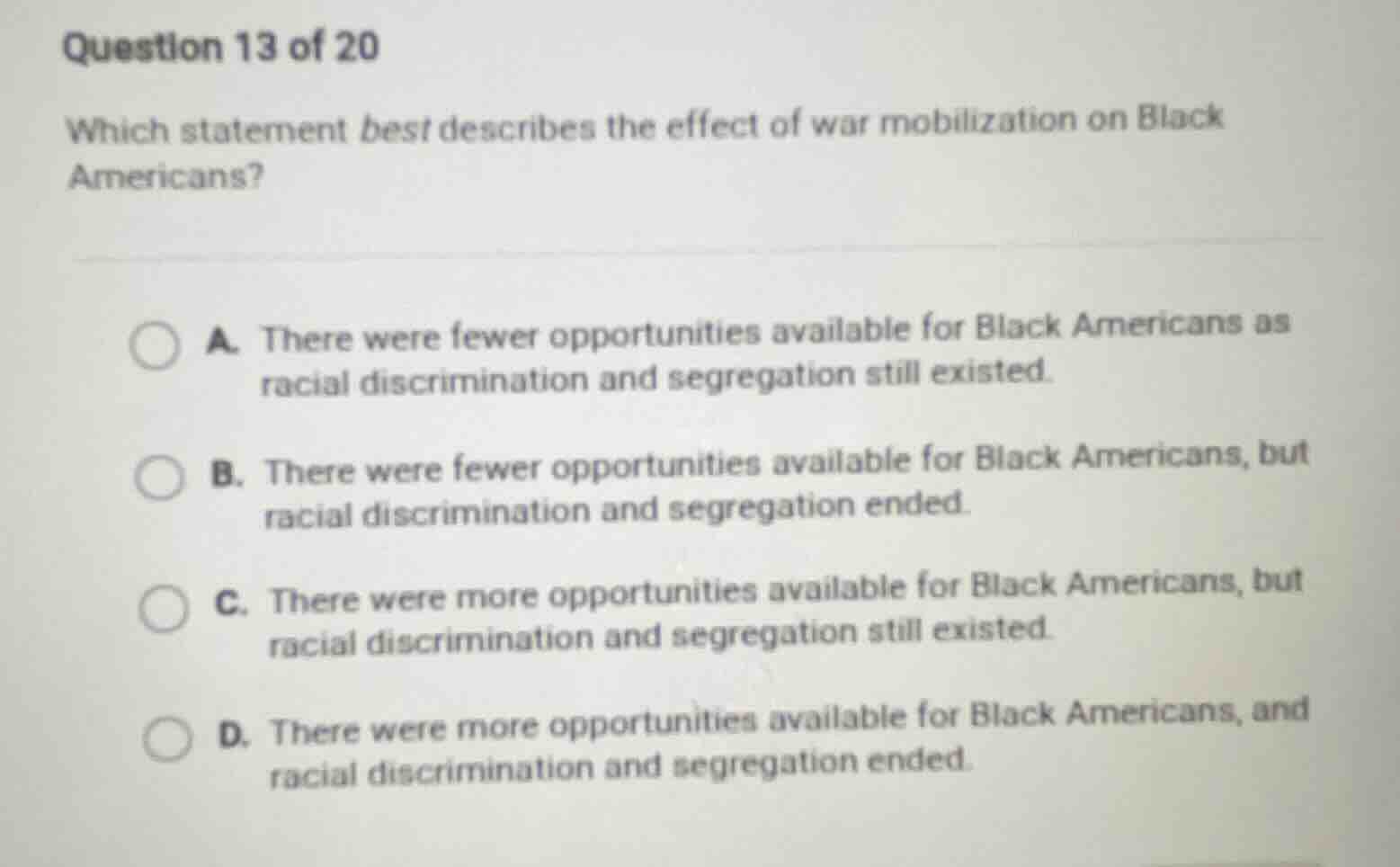
which statement best describes the effect of war mobilization on black americans?
a. there were fewer opportunities available for black americans as racial discrimination and segregation still existed.
b. there were fewer opportunities available for black americans, but racial discrimination and segregation ended.
c. there were more opportunities available for black americans, but racial discrimination and segregation still existed.
d. there were more opportunities available for black americans, and racial discrimination and segregation ended.
Analyze the impact of war mobilization
During World War II, WWII Home Front Economics and military mobilization created a massive demand for labor and service members. This opened up significant new employment opportunities in defense industries and expanded roles in the military for Black Americans, leading to major migrations to industrial centers.
Evaluate the persistence of discrimination
Despite these expanded opportunities, systemic racial discrimination, disenfranchisement, and segregation remained deeply entrenched in both civilian life and the military. This dual reality of fighting fascism abroad while facing racism at home motivated the Double V Campaign (victory over fascism abroad and victory over discrimination at home). Therefore, while opportunities increased, discrimination and segregation did not end.
Match with the correct option
- Option A is incorrect because there were more, not fewer, opportunities.
- Option B is incorrect because opportunities increased, and discrimination did not end.
- Option C correctly states that there were more opportunities available, but racial discrimination and segregation still existed.
- Option D is incorrect because racial discrimination and segregation did not end during the war.

Snap & solve any problem in the app
Get step-by-step solutions on Sovi AI
Photo-based solutions with guided steps
Explore more problems and detailed explanations
- (A) There were fewer opportunities available for Black Americans as racial discrimination and segregation still existed.
- (B) There were fewer opportunities available for Black Americans, but racial discrimination and segregation ended.
- (C) There were more opportunities available for Black Americans, but racial discrimination and segregation still existed. (Correct answer)
- (D) There were more opportunities available for Black Americans, and racial discrimination and segregation ended.