QUESTION IMAGE
Question
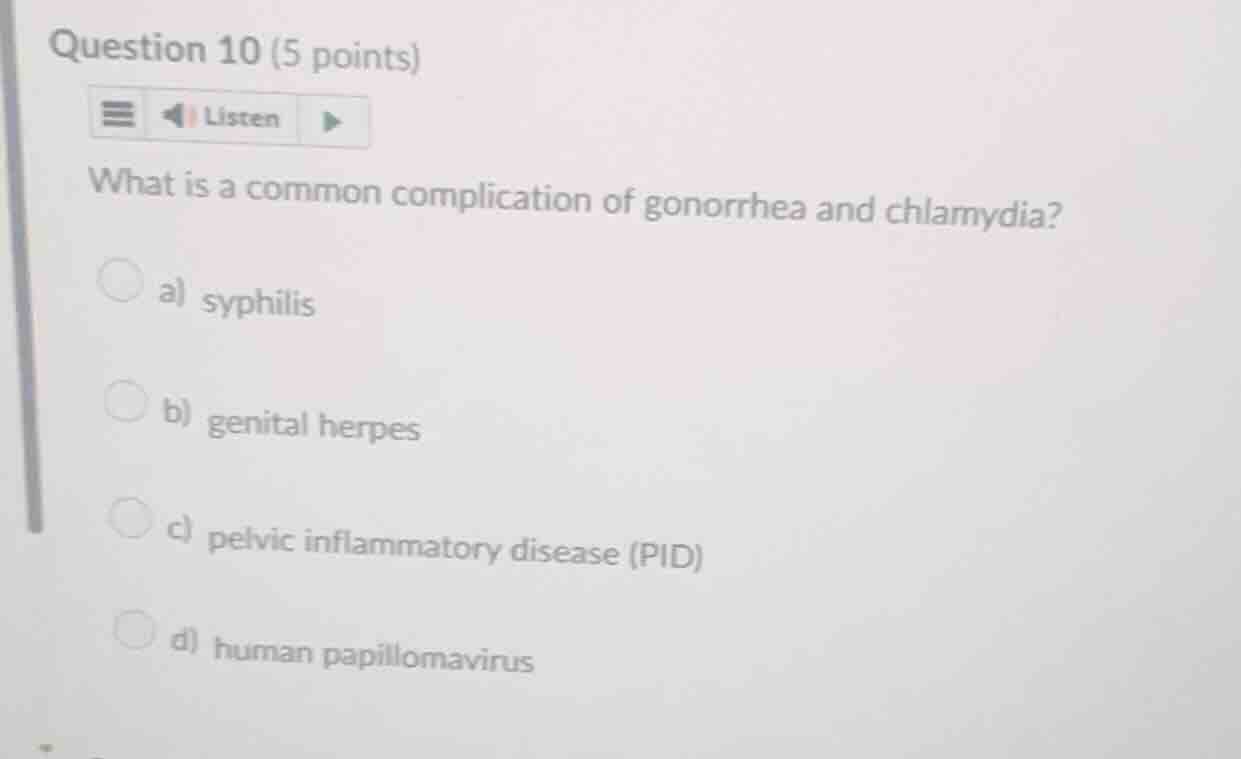
question 10 (5 points)
what is a common complication of gonorrhea and chlamydia?
a) syphilis
b) genital herpes
c) pelvic inflammatory disease (pid)
d) human papillomavirus
🆕 New Concept Discovered: Pathology of Sexually Transmitted Infections
Understanding how untreated bacterial infections spread in the reproductive tract.
Step 1: Analyze the question and options
The question asks for a common complication of two bacterial sexually transmitted infections (STIs): gonorrhea and chlamydia.
Let's evaluate the given options:
- a) syphilis: This is a distinct STI caused by the bacterium Treponema pallidum, not a complication of gonorrhea or chlamydia.
- b) genital herpes: This is a viral infection caused by the herpes simplex virus (HSV), not a complication of bacterial infections.
- c) pelvic inflammatory disease (PID): This is an infection of the female reproductive organs (uterus, fallopian tubes, and ovaries) that often occurs when untreated sexually transmitted bacteria, such as gonorrhea and chlamydia, ascend from the vagina or cervix.
- d) human papillomavirus (HPV): This is a distinct viral infection, not a complication of bacterial STIs.
Step 2: Identify the correct complication
When infections like gonorrhea and chlamydia are left untreated in women, the bacteria can travel upward from the cervix into the uterus, fallopian tubes, and ovaries. This upward spread causes widespread inflammation and scarring, a condition clinically known as pelvic inflammatory disease (PID). PID can lead to long-term consequences such as chronic pelvic pain, ectopic pregnancy, and infertility.

Snap & solve any problem in the app
Get step-by-step solutions on Sovi AI
Photo-based solutions with guided steps
Explore more problems and detailed explanations
c) pelvic inflammatory disease (PID)