QUESTION IMAGE
Question
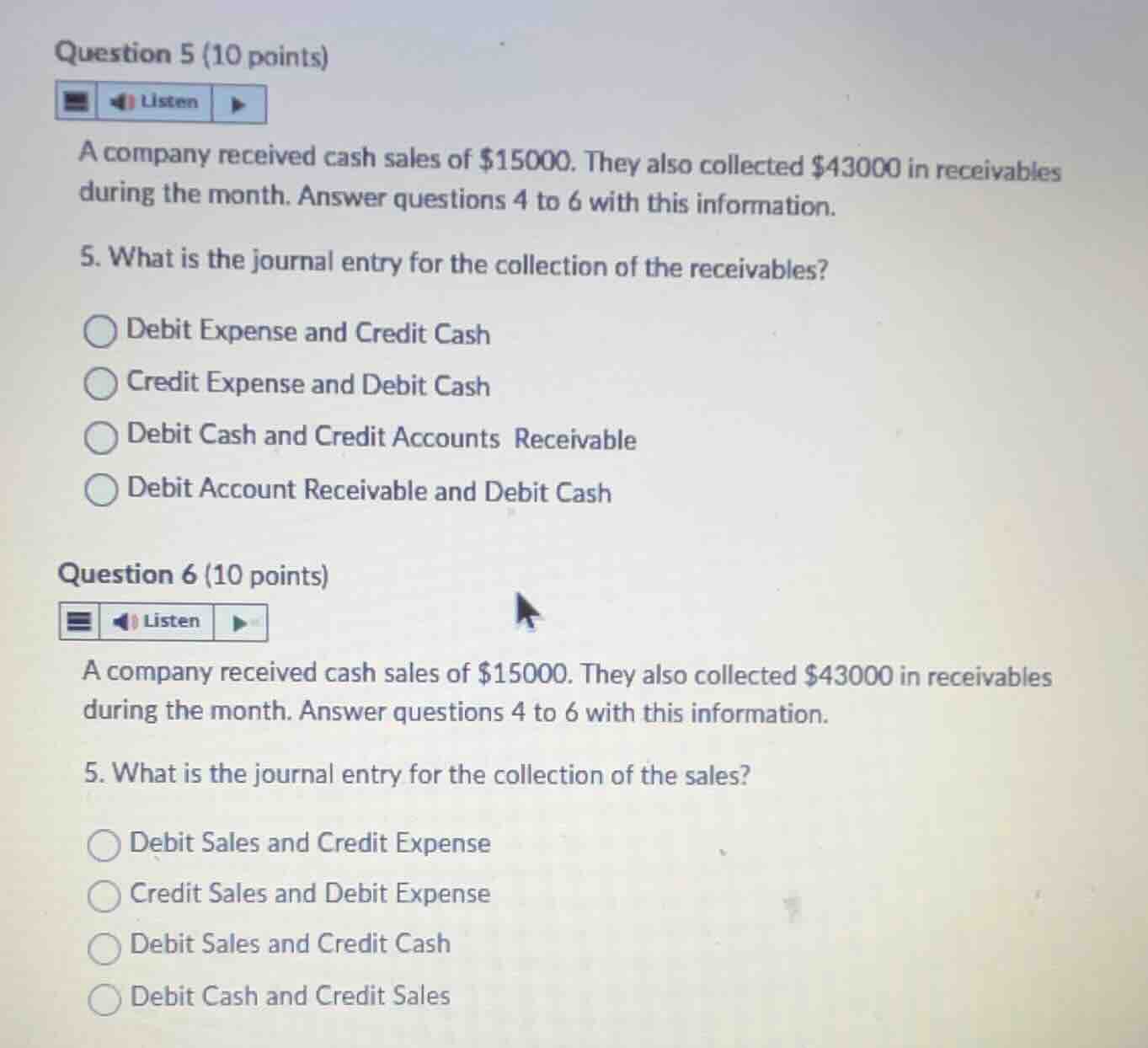
question 5 (10 points)
a company received cash sales of $15000. they also collected $43000 in receivables during the month. answer questions 4 to 6 with this information.
- what is the journal entry for the collection of the receivables?
- debit expense and credit cash
- credit expense and debit cash
- debit cash and credit accounts receivable
- debit account receivable and debit cash
question 6 (10 points)
a company received cash sales of $15000. they also collected $43000 in receivables during the month. answer questions 4 to 6 with this information.
- what is the journal entry for the collection of the sales?
- debit sales and credit expense
- credit sales and debit expense
- debit sales and credit cash
- debit cash and credit sales
Analyze the collection of receivables
Using the Accounts Receivable Collection Journal Entry knowledge point:
- Collecting receivables means receiving cash from customers who previously purchased on credit.
- Cash increases, which requires a debit to the Cash account.
- Accounts Receivable decreases, which requires a credit to the Accounts Receivable account.
- Therefore, the correct entry is Debit Cash and Credit Accounts Receivable.
Analyze the collection of cash sales
For the second question (labeled as "5. What is the journal entry for the collection of the sales?" under the Question 6 header):
- Receiving cash from immediate sales increases Cash.
- Cash is an asset, so increasing it requires a debit to Cash.
- Sales revenue increases, which requires a credit to Sales.
- Therefore, the correct entry is Debit Cash and Credit Sales.

Snap & solve any problem in the app
Get step-by-step solutions on Sovi AI
Photo-based solutions with guided steps
Explore more problems and detailed explanations
Question 5
- (A) Debit Expense and Credit Cash
- (B) Credit Expense and Debit Cash
- (C) Debit Cash and Credit Accounts Receivable (Correct answer)
- (D) Debit Account Receivable and Debit Cash
Question 6
- (A) Debit Sales and Credit Expense
- (B) Credit Sales and Debit Expense
- (C) Debit Sales and Credit Cash
- (D) Debit Cash and Credit Sales (Correct answer)